
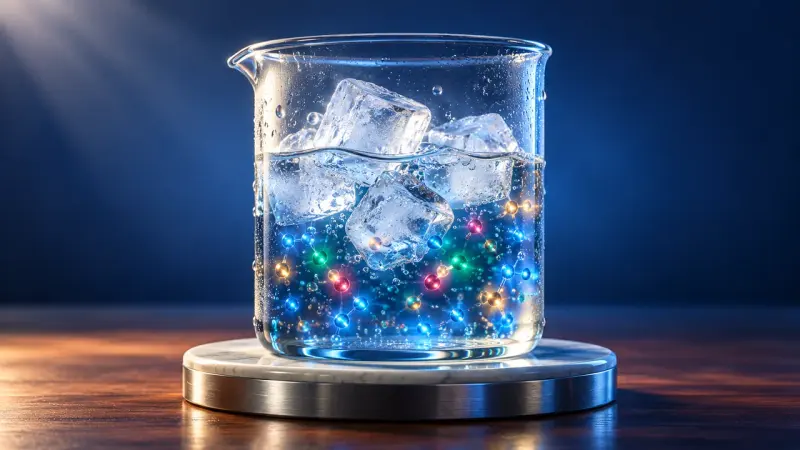
Particle model and temperature
Ice melts, water boils, and the temperature stops rising meanwhile. The particles show where the energy goes in between.
Motion, forces, oscillations, circuits and light as on-screen experiments – with measurements and graphs.
All units of a grade with matching simulations.
Choose your federal state via the gear icon at the top – the grades of its curriculum then appear here.
Ordered by the Baden-Württemberg curriculum · Gymnasium. Change the federal state via the gear icon at the top. All grades at a glance
Ice melts, water boils, and the temperature stops rising meanwhile. The particles show where the energy goes in between.
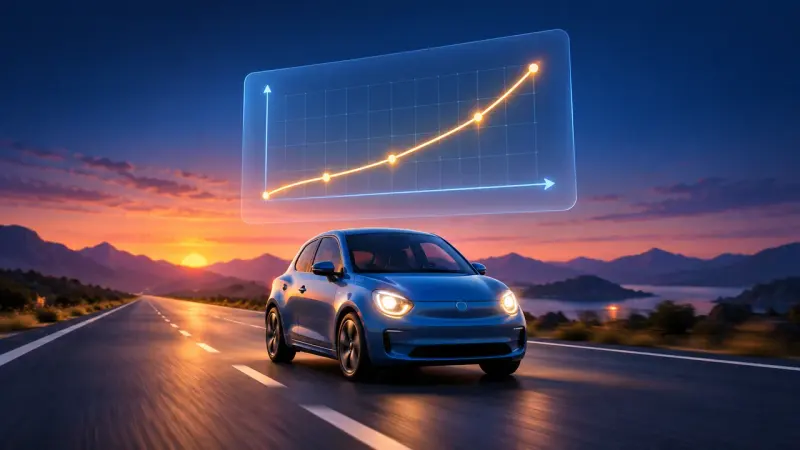
A car drives at a steady speed or speeds up. The graphs for distance, speed and acceleration are drawn live.
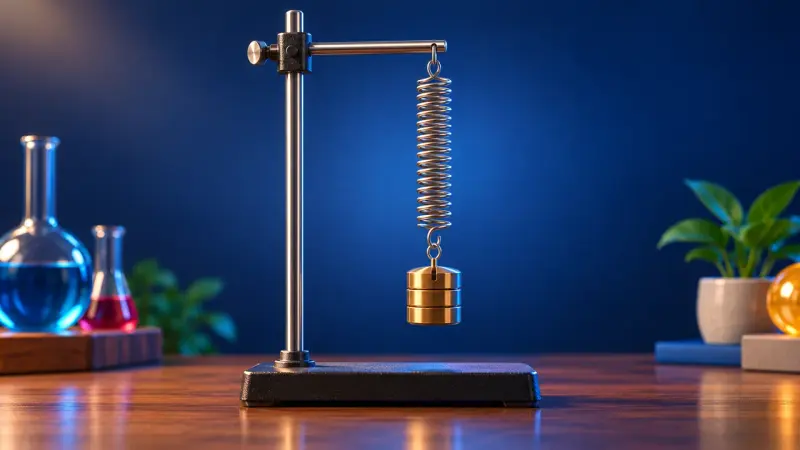
Hang weights on a spring and measure how far it stretches. Double the force means double the stretch.

How can a child lift an adult on a seesaw? With the longer arm. Wheelbarrows and bottle openers use the same trick.
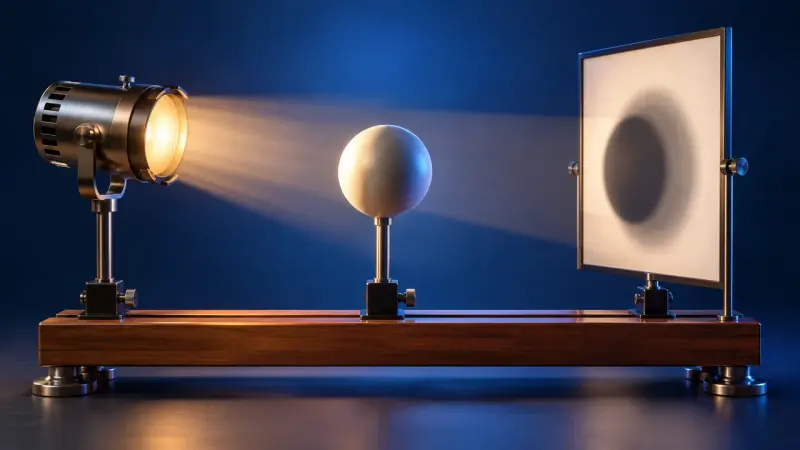
One lamp casts a sharp shadow, two lamps a penumbra. Solar and lunar eclipses form in just the same way.
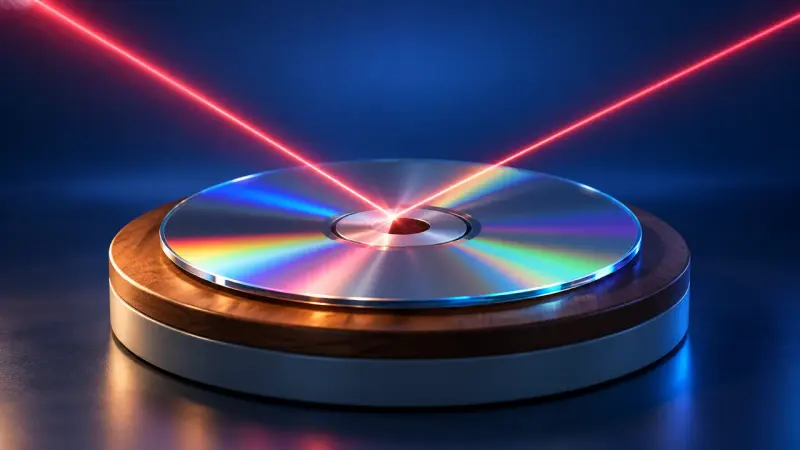
Laser at the mirror, measure the angles: angle of incidence equals angle of reflection, every time. And why does the candle appear just as far behind the mirror?

A light ray bends when it passes into glass or water. At a shallow angle it cannot get out at all: total internal reflection, as in an optical fibre.
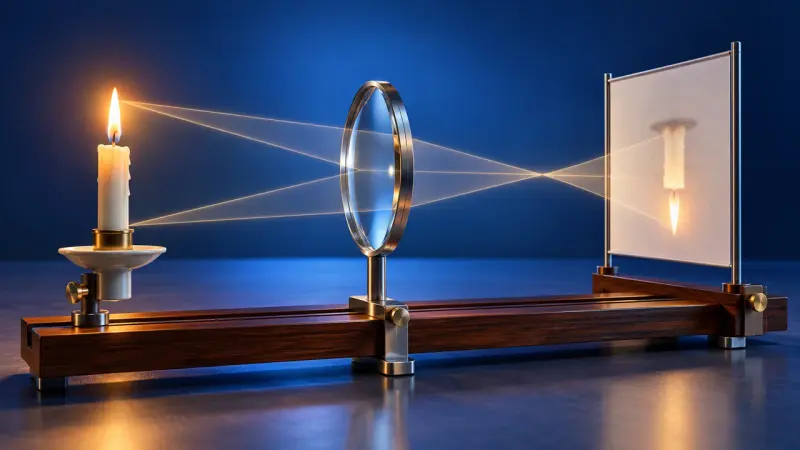
Move a candle in front of a lens and construct the image with three special rays. It becomes sharp on the screen.
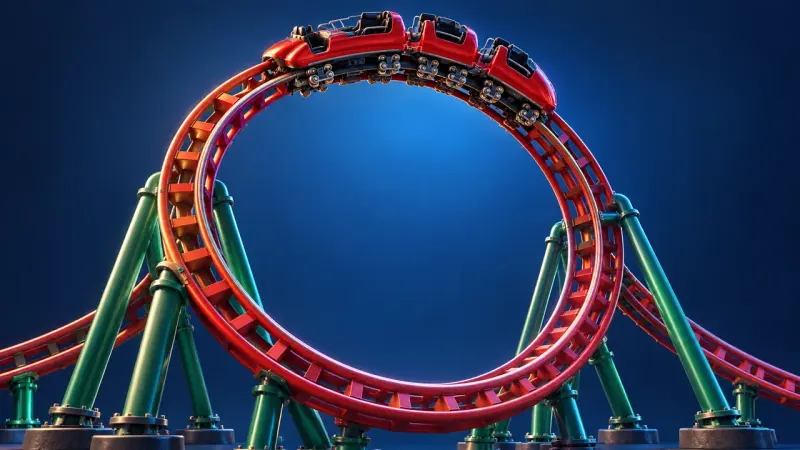
A car rides a roller coaster: energy bars show how potential and kinetic energy turn into each other.

Connect lamps in series or in parallel and measure current and voltage at different points.
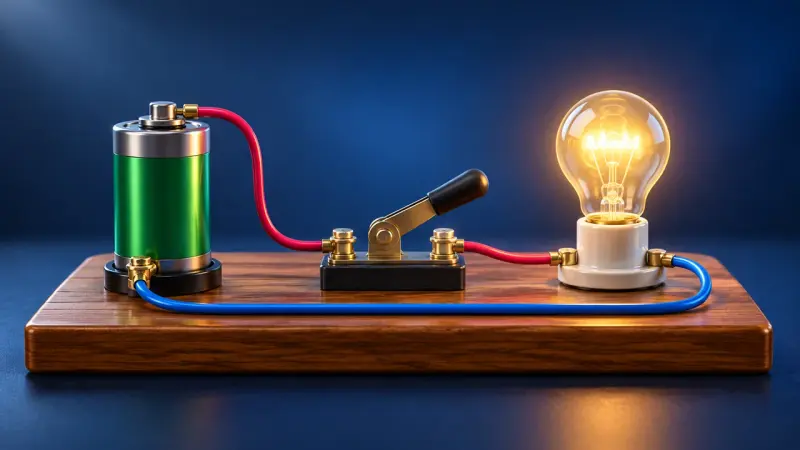
Build a circuit with a battery, a switch and a lamp, as a set-up and as a circuit diagram. When the circuit is closed, the lamp lights up.
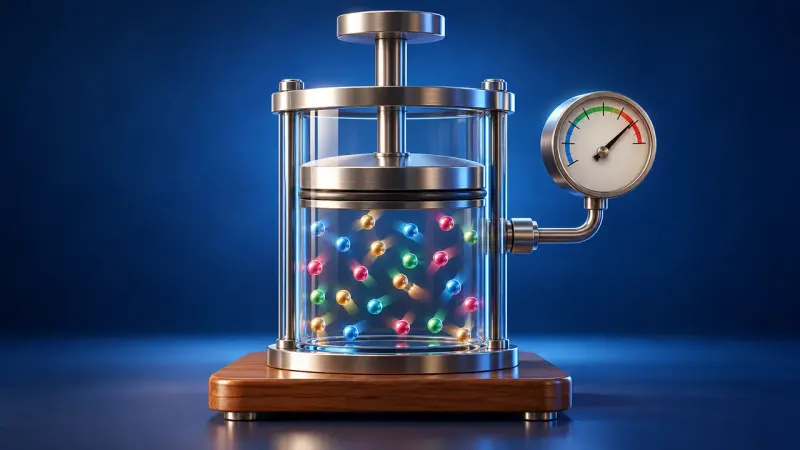
Push the piston halfway in and the pressure doubles. Heat the gas and it pushes the piston out. Pressure, volume and temperature are tightly linked.
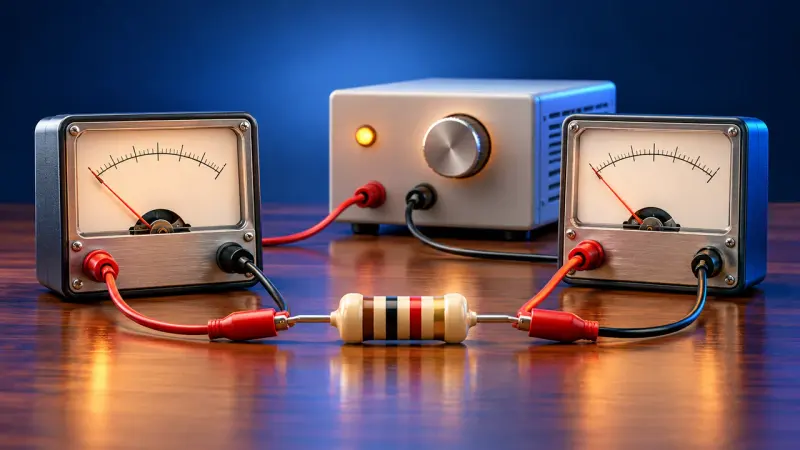
Turn up the voltage and the current rises, always in the same ratio. Point by point the characteristic curve appears, though not quite straight for a lamp.
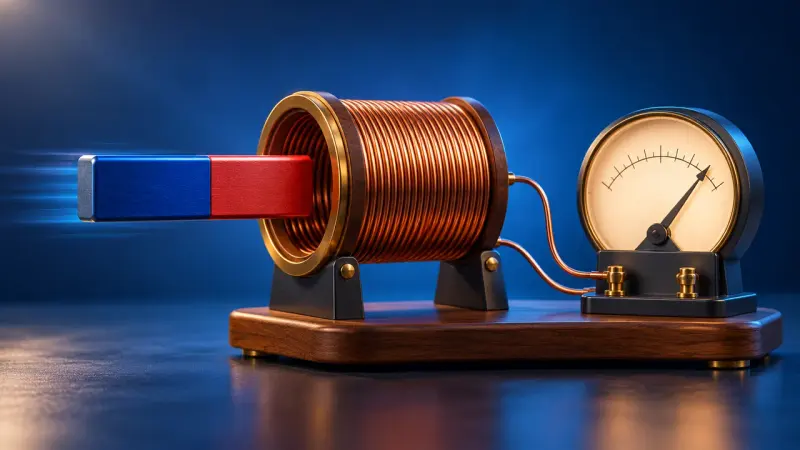
Magnet in, the needle swings. Magnet out, it swings the other way. Every generator works on the same principle.
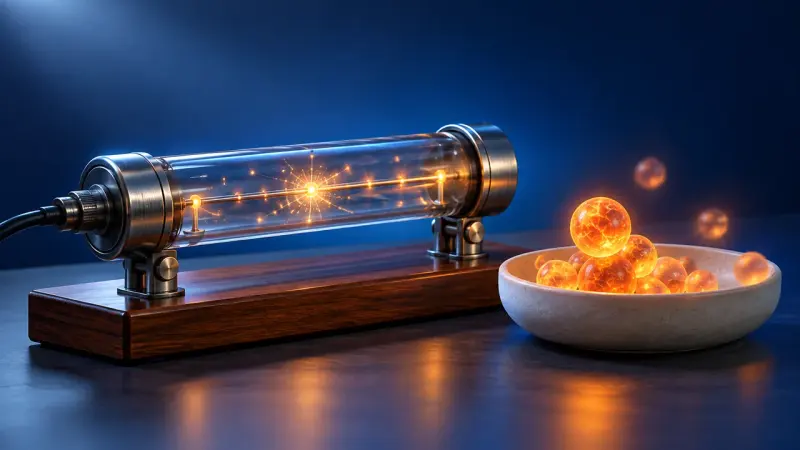
Many nuclei decay at random and a Geiger counter clicks. Even so, after each half-life almost exactly half are left.
Also relevant: Particle model and temperature (Grade 7/8)
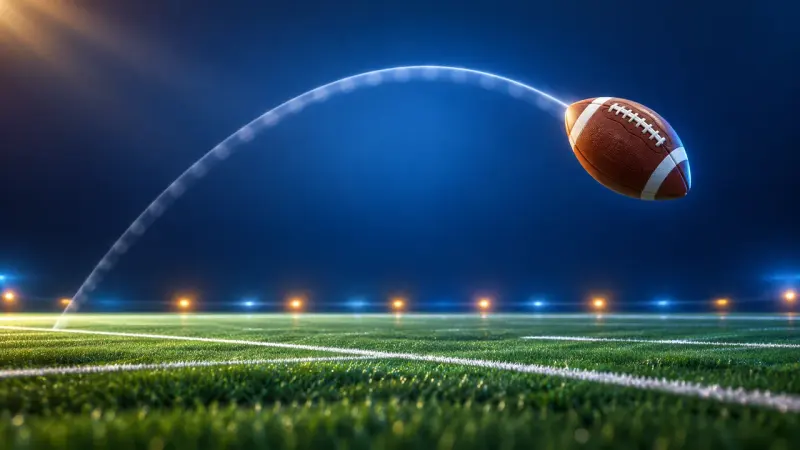
Which launch angle goes furthest? On Earth it is 45°, and on the Moon the same ball flies six times as far.

A ball swings round on a string, a car drives through a bend. Which force keeps them on a circular path?

A ball falls on Earth, the Moon or Mars and gets faster every second. In a vacuum even a feather keeps up.
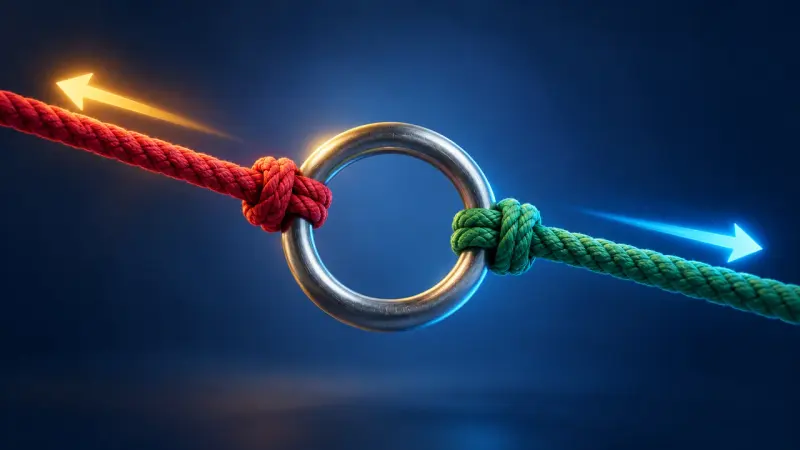
Two forces pull on one point. Use the parallelogram of forces to find the total force or to split a force into two.
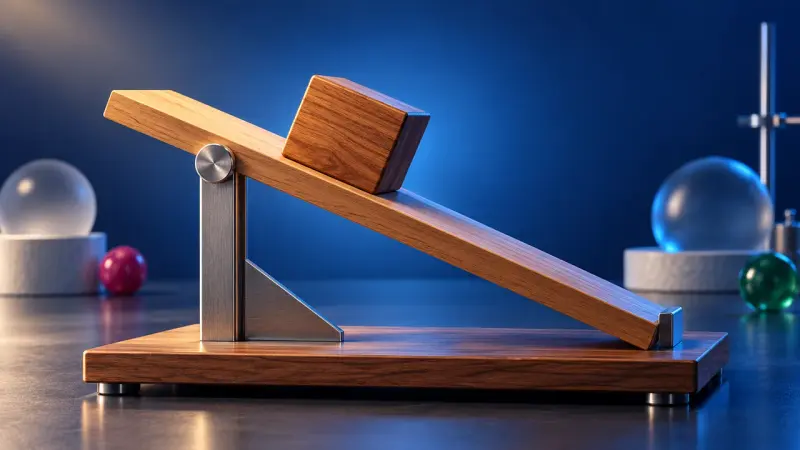
A block sits on a slope. At what angle does it start to slide? The weight is split into two parts to find out.

Too fast and the planet flies off, never to return. A little slower and it traces an ellipse around the Sun, exactly as Kepler's laws say.
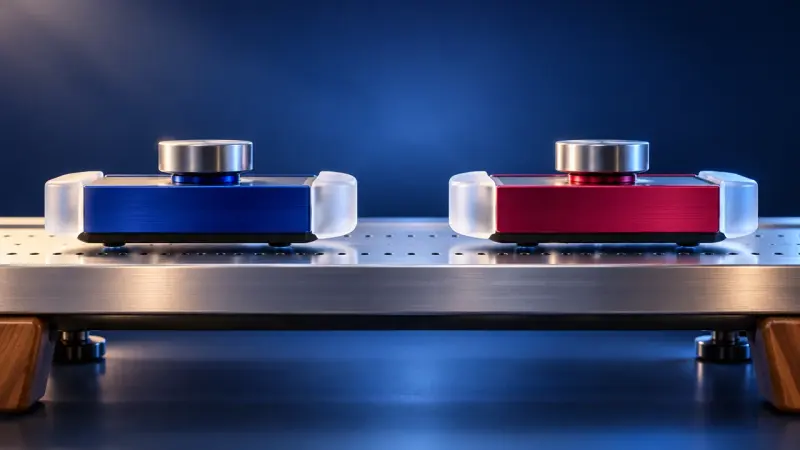
Two gliders collide on an air track. Before and after are compared to see what stays the same.
Also relevant: Uniform and accelerated motion (distance–time and velocity–time graphs) (Grade 7/8), Conservation of energy (roller coaster) (Grade 9/10)

Two charges and the field rearranges itself. A test charge measures where the force is strongest.
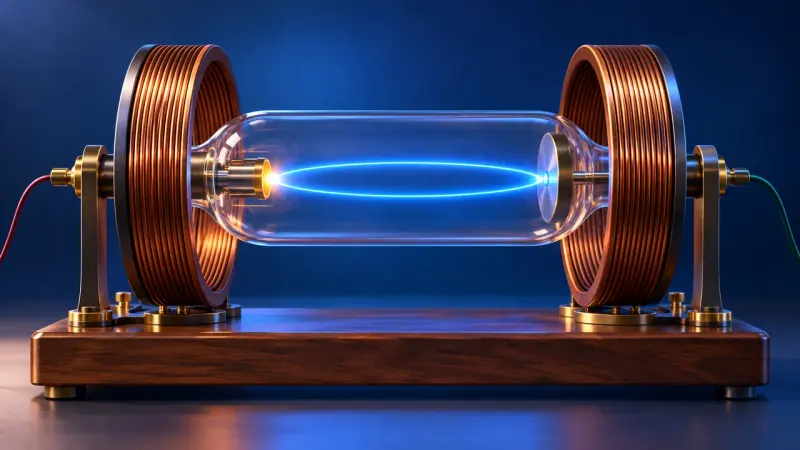
Electrons fly along a glowing circular path in a magnetic field. From the radius you determine a property of the electron.

A capacitor charges through a resistor and discharges again. The graphs show how voltage and current change over time.

A mass bounces up and down on a spring. Graphs show position, speed and energy during the oscillation.
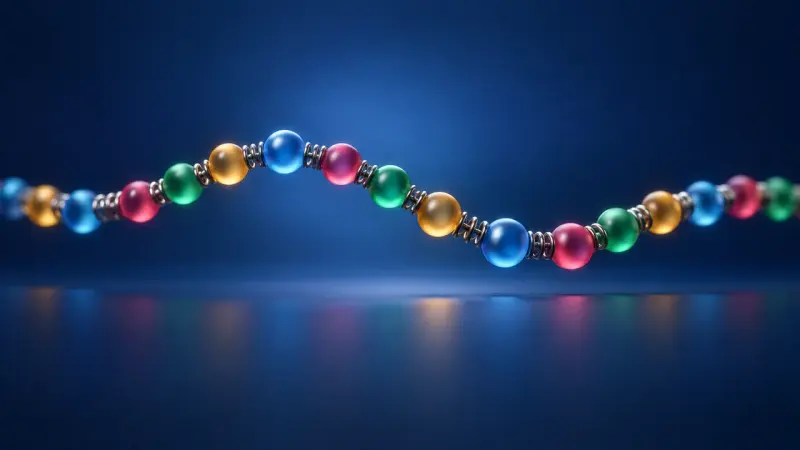
A wave travels through a chain of particles. Each particle only oscillates in place, across or along the direction of travel.
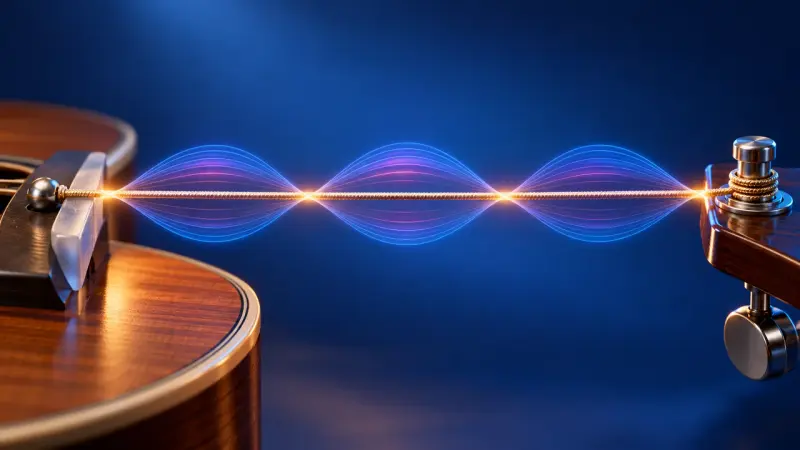
A wave is reflected at the end and a fixed pattern of nodes and antinodes appears, like on a guitar string.
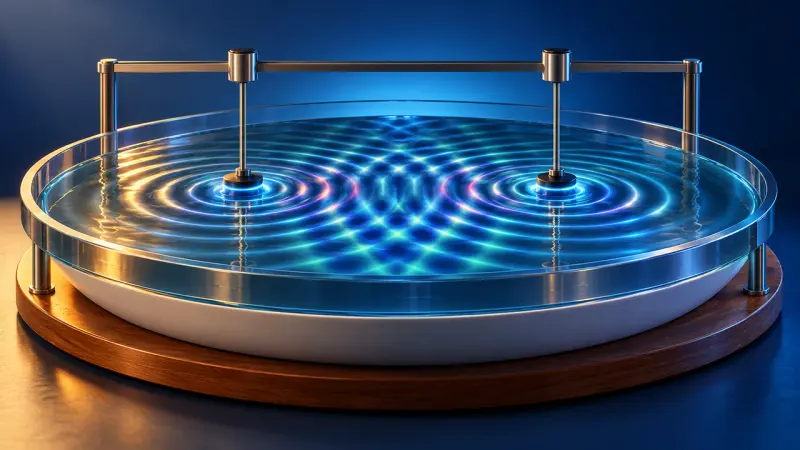
Two circular waves overlap: in some places they reinforce each other, in others they cancel out.
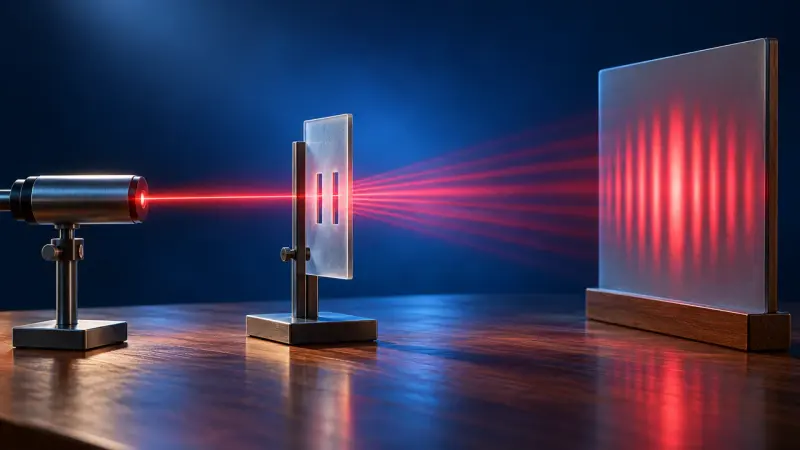
Laser light passes through a double slit or a grating. A pattern of bright and dark stripes appears on the screen.
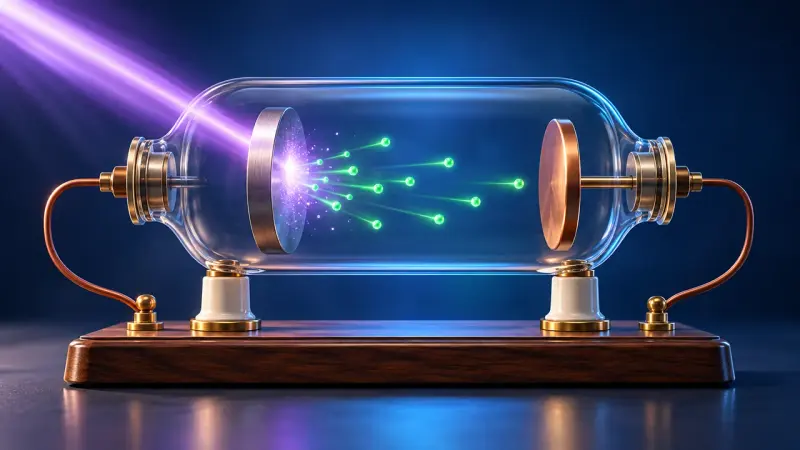
Red light can be as bright as you like, it frees not a single electron. Short-wave light does it at once. A puzzle for waves, not for photons.

Every element glows in its own colours. When an electron drops one level, exactly one line appears in the spectrum.
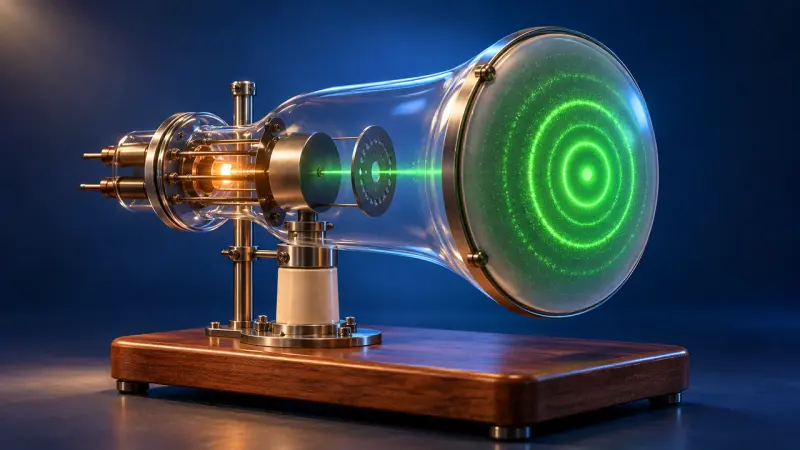
Electrons hit a thin layer of graphite and form rings on the screen, just like waves do.
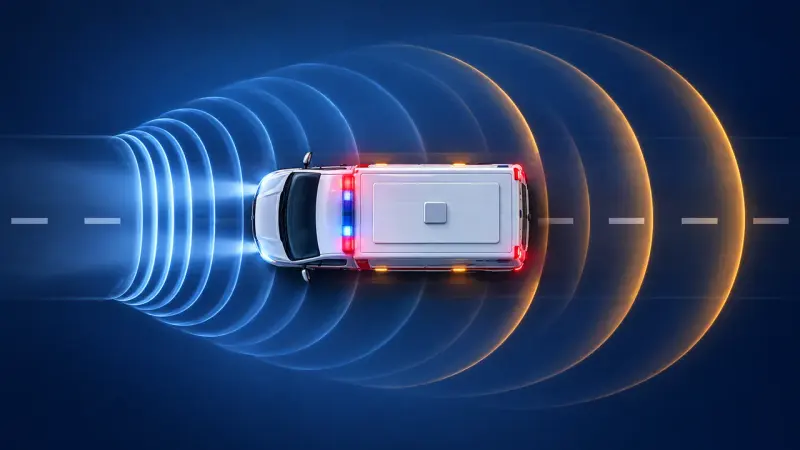
An ambulance drives past and the siren sounds lower. The wave fronts show why. You can also listen to it.
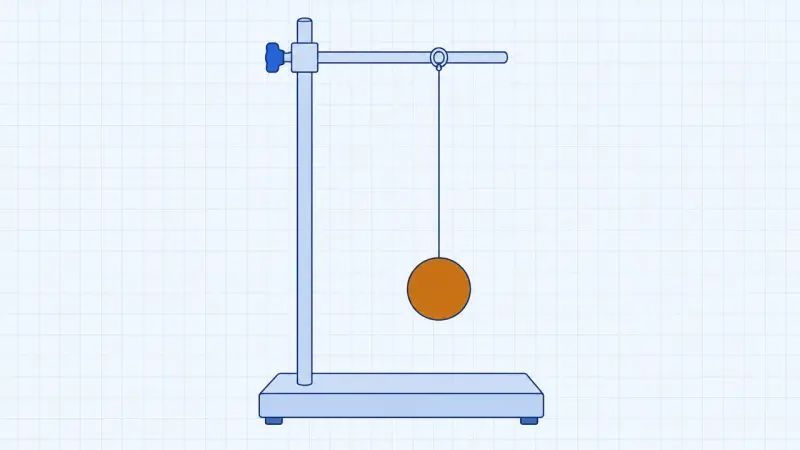
Pull a pendulum aside, let it go and measure how long one swing takes. What does it depend on? Also with large angles and damping.
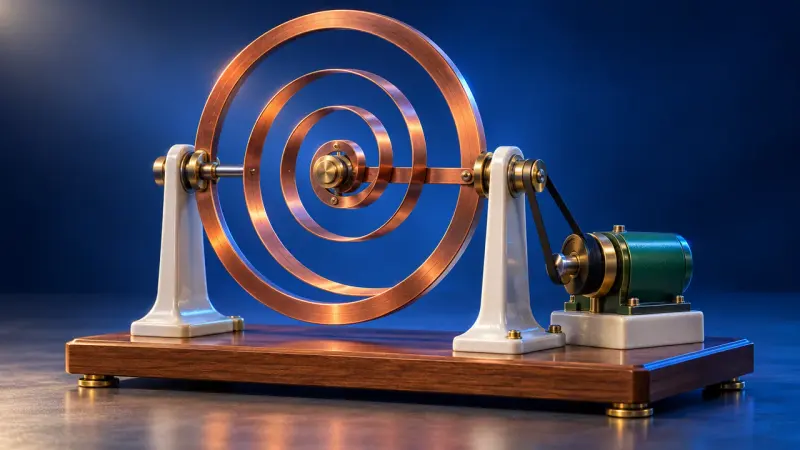
A motor drives an oscillating wheel. If the motor hits exactly the right rhythm, the wheel swings especially strongly: resonance.
Also relevant: Electromagnetic induction (Grade 9/10)
Ordered by the Bavaria curriculum · Gymnasium. Change the federal state via the gear icon at the top. All grades at a glance
One lamp casts a sharp shadow, two lamps a penumbra. Solar and lunar eclipses form in just the same way.
Build a circuit with a battery, a switch and a lamp, as a set-up and as a circuit diagram. When the circuit is closed, the lamp lights up.
Turn up the voltage and the current rises, always in the same ratio. Point by point the characteristic curve appears, though not quite straight for a lamp.
Connect lamps in series or in parallel and measure current and voltage at different points.
Laser at the mirror, measure the angles: angle of incidence equals angle of reflection, every time. And why does the candle appear just as far behind the mirror?
A light ray bends when it passes into glass or water. At a shallow angle it cannot get out at all: total internal reflection, as in an optical fibre.
Move a candle in front of a lens and construct the image with three special rays. It becomes sharp on the screen.
A car drives at a steady speed or speeds up. The graphs for distance, speed and acceleration are drawn live.
Two forces pull on one point. Use the parallelogram of forces to find the total force or to split a force into two.
A block sits on a slope. At what angle does it start to slide? The weight is split into two parts to find out.
Hang weights on a spring and measure how far it stretches. Double the force means double the stretch.
How can a child lift an adult on a seesaw? With the longer arm. Wheelbarrows and bottle openers use the same trick.
A car rides a roller coaster: energy bars show how potential and kinetic energy turn into each other.
Push the piston halfway in and the pressure doubles. Heat the gas and it pushes the piston out. Pressure, volume and temperature are tightly linked.
Ice melts, water boils, and the temperature stops rising meanwhile. The particles show where the energy goes in between.
Magnet in, the needle swings. Magnet out, it swings the other way. Every generator works on the same principle.
Electrons fly along a glowing circular path in a magnetic field. From the radius you determine a property of the electron.
Two gliders collide on an air track. Before and after are compared to see what stays the same.
A ball falls on Earth, the Moon or Mars and gets faster every second. In a vacuum even a feather keeps up.
Which launch angle goes furthest? On Earth it is 45°, and on the Moon the same ball flies six times as far.
Many nuclei decay at random and a Geiger counter clicks. Even so, after each half-life almost exactly half are left.
Also relevant: Uniform and accelerated motion (distance–time and velocity–time graphs) (Grade 8)
A ball swings round on a string, a car drives through a bend. Which force keeps them on a circular path?
Too fast and the planet flies off, never to return. A little slower and it traces an ellipse around the Sun, exactly as Kepler's laws say.
Pull a pendulum aside, let it go and measure how long one swing takes. What does it depend on? Also with large angles and damping.
A mass bounces up and down on a spring. Graphs show position, speed and energy during the oscillation.
A wave travels through a chain of particles. Each particle only oscillates in place, across or along the direction of travel.
Two circular waves overlap: in some places they reinforce each other, in others they cancel out.
A wave is reflected at the end and a fixed pattern of nodes and antinodes appears, like on a guitar string.
Laser light passes through a double slit or a grating. A pattern of bright and dark stripes appears on the screen.
A motor drives an oscillating wheel. If the motor hits exactly the right rhythm, the wheel swings especially strongly: resonance.
Also relevant: Horizontal and oblique projectile motion (Grade 10)
Two charges and the field rearranges itself. A test charge measures where the force is strongest.
A capacitor charges through a resistor and discharges again. The graphs show how voltage and current change over time.
Also relevant: Lorentz force and fine-beam tube (Grade 10), Double slit and grating (Grade 11), Electromagnetic induction (Grade 10), Interference of two circular waves (Grade 11), Driven oscillation and resonance (Grade 11), Spring pendulum (Grade 11), Standing waves (Grade 11)
Electrons hit a thin layer of graphite and form rings on the screen, just like waves do.
Red light can be as bright as you like, it frees not a single electron. Short-wave light does it at once. A puzzle for waves, not for photons.
Every element glows in its own colours. When an electron drops one level, exactly one line appears in the spectrum.
Also relevant: Double slit and grating (Grade 11), Planetary orbits and Kepler’s laws (Grade 11), Radioactive decay and half-life (Grade 10)
These simulations are not assigned to a grade in the Bavaria curriculum.
An ambulance drives past and the siren sounds lower. The wave fronts show why. You can also listen to it.
Ordered by the Berlin curriculum · Gymnasium. Change the federal state via the gear icon at the top. All grades at a glance
Ice melts, water boils, and the temperature stops rising meanwhile. The particles show where the energy goes in between.
Push the piston halfway in and the pressure doubles. Heat the gas and it pushes the piston out. Pressure, volume and temperature are tightly linked.
Hang weights on a spring and measure how far it stretches. Double the force means double the stretch.
Two forces pull on one point. Use the parallelogram of forces to find the total force or to split a force into two.
A car rides a roller coaster: energy bars show how potential and kinetic energy turn into each other.
How can a child lift an adult on a seesaw? With the longer arm. Wheelbarrows and bottle openers use the same trick.
A block sits on a slope. At what angle does it start to slide? The weight is split into two parts to find out.
Build a circuit with a battery, a switch and a lamp, as a set-up and as a circuit diagram. When the circuit is closed, the lamp lights up.
Turn up the voltage and the current rises, always in the same ratio. Point by point the characteristic curve appears, though not quite straight for a lamp.
Connect lamps in series or in parallel and measure current and voltage at different points.
A car drives at a steady speed or speeds up. The graphs for distance, speed and acceleration are drawn live.
A ball falls on Earth, the Moon or Mars and gets faster every second. In a vacuum even a feather keeps up.
A ball swings round on a string, a car drives through a bend. Which force keeps them on a circular path?
Magnet in, the needle swings. Magnet out, it swings the other way. Every generator works on the same principle.
Many nuclei decay at random and a Geiger counter clicks. Even so, after each half-life almost exactly half are left.
Pull a pendulum aside, let it go and measure how long one swing takes. What does it depend on? Also with large angles and damping.
A mass bounces up and down on a spring. Graphs show position, speed and energy during the oscillation.
A motor drives an oscillating wheel. If the motor hits exactly the right rhythm, the wheel swings especially strongly: resonance.
A wave travels through a chain of particles. Each particle only oscillates in place, across or along the direction of travel.
Two circular waves overlap: in some places they reinforce each other, in others they cancel out.
Laser at the mirror, measure the angles: angle of incidence equals angle of reflection, every time. And why does the candle appear just as far behind the mirror?
A light ray bends when it passes into glass or water. At a shallow angle it cannot get out at all: total internal reflection, as in an optical fibre.
Move a candle in front of a lens and construct the image with three special rays. It becomes sharp on the screen.
Also relevant: Simple circuit (Grade 7/8), Ohm’s law (Grade 7/8), Series and parallel circuits (Grade 7/8), Adding and resolving forces (Grade 7/8), Inclined plane (Grade 7/8), Conservation of energy (roller coaster) (Grade 7/8)
Too fast and the planet flies off, never to return. A little slower and it traces an ellipse around the Sun, exactly as Kepler's laws say.
Two charges and the field rearranges itself. A test charge measures where the force is strongest.
A capacitor charges through a resistor and discharges again. The graphs show how voltage and current change over time.
Electrons fly along a glowing circular path in a magnetic field. From the radius you determine a property of the electron.
Also relevant: Electromagnetic induction (Grade 9/10), Simple pendulum (Grade 9/10), Spring pendulum (Grade 9/10), Driven oscillation and resonance (Grade 9/10)
A wave is reflected at the end and a fixed pattern of nodes and antinodes appears, like on a guitar string.
Laser light passes through a double slit or a grating. A pattern of bright and dark stripes appears on the screen.
Red light can be as bright as you like, it frees not a single electron. Short-wave light does it at once. A puzzle for waves, not for photons.
Electrons hit a thin layer of graphite and form rings on the screen, just like waves do.
Every element glows in its own colours. When an electron drops one level, exactly one line appears in the spectrum.
Also relevant: Transverse and longitudinal waves (Grade 9/10), Interference of two circular waves (Grade 9/10)
These simulations are not assigned to a grade in the Berlin curriculum.
Two gliders collide on an air track. Before and after are compared to see what stays the same.
Which launch angle goes furthest? On Earth it is 45°, and on the Moon the same ball flies six times as far.
An ambulance drives past and the siren sounds lower. The wave fronts show why. You can also listen to it.
One lamp casts a sharp shadow, two lamps a penumbra. Solar and lunar eclipses form in just the same way.
Ordered by the Brandenburg curriculum · Gymnasium. Change the federal state via the gear icon at the top. All grades at a glance
Ice melts, water boils, and the temperature stops rising meanwhile. The particles show where the energy goes in between.
Push the piston halfway in and the pressure doubles. Heat the gas and it pushes the piston out. Pressure, volume and temperature are tightly linked.
Hang weights on a spring and measure how far it stretches. Double the force means double the stretch.
Two forces pull on one point. Use the parallelogram of forces to find the total force or to split a force into two.
A car rides a roller coaster: energy bars show how potential and kinetic energy turn into each other.
How can a child lift an adult on a seesaw? With the longer arm. Wheelbarrows and bottle openers use the same trick.
A block sits on a slope. At what angle does it start to slide? The weight is split into two parts to find out.
Build a circuit with a battery, a switch and a lamp, as a set-up and as a circuit diagram. When the circuit is closed, the lamp lights up.
Turn up the voltage and the current rises, always in the same ratio. Point by point the characteristic curve appears, though not quite straight for a lamp.
Connect lamps in series or in parallel and measure current and voltage at different points.
A car drives at a steady speed or speeds up. The graphs for distance, speed and acceleration are drawn live.
A ball falls on Earth, the Moon or Mars and gets faster every second. In a vacuum even a feather keeps up.
A ball swings round on a string, a car drives through a bend. Which force keeps them on a circular path?
Magnet in, the needle swings. Magnet out, it swings the other way. Every generator works on the same principle.
Many nuclei decay at random and a Geiger counter clicks. Even so, after each half-life almost exactly half are left.
Pull a pendulum aside, let it go and measure how long one swing takes. What does it depend on? Also with large angles and damping.
A mass bounces up and down on a spring. Graphs show position, speed and energy during the oscillation.
A motor drives an oscillating wheel. If the motor hits exactly the right rhythm, the wheel swings especially strongly: resonance.
A wave travels through a chain of particles. Each particle only oscillates in place, across or along the direction of travel.
Two circular waves overlap: in some places they reinforce each other, in others they cancel out.
Laser at the mirror, measure the angles: angle of incidence equals angle of reflection, every time. And why does the candle appear just as far behind the mirror?
A light ray bends when it passes into glass or water. At a shallow angle it cannot get out at all: total internal reflection, as in an optical fibre.
Move a candle in front of a lens and construct the image with three special rays. It becomes sharp on the screen.
Also relevant: Simple circuit (Grade 7/8), Ohm’s law (Grade 7/8), Series and parallel circuits (Grade 7/8), Adding and resolving forces (Grade 7/8), Inclined plane (Grade 7/8), Conservation of energy (roller coaster) (Grade 7/8)
Too fast and the planet flies off, never to return. A little slower and it traces an ellipse around the Sun, exactly as Kepler's laws say.
Two charges and the field rearranges itself. A test charge measures where the force is strongest.
A capacitor charges through a resistor and discharges again. The graphs show how voltage and current change over time.
Electrons fly along a glowing circular path in a magnetic field. From the radius you determine a property of the electron.
Also relevant: Electromagnetic induction (Grade 9/10), Simple pendulum (Grade 9/10), Spring pendulum (Grade 9/10), Driven oscillation and resonance (Grade 9/10)
A wave is reflected at the end and a fixed pattern of nodes and antinodes appears, like on a guitar string.
Laser light passes through a double slit or a grating. A pattern of bright and dark stripes appears on the screen.
Red light can be as bright as you like, it frees not a single electron. Short-wave light does it at once. A puzzle for waves, not for photons.
Electrons hit a thin layer of graphite and form rings on the screen, just like waves do.
Every element glows in its own colours. When an electron drops one level, exactly one line appears in the spectrum.
Also relevant: Transverse and longitudinal waves (Grade 9/10), Interference of two circular waves (Grade 9/10)
These simulations are not assigned to a grade in the Brandenburg curriculum.
Two gliders collide on an air track. Before and after are compared to see what stays the same.
Which launch angle goes furthest? On Earth it is 45°, and on the Moon the same ball flies six times as far.
An ambulance drives past and the siren sounds lower. The wave fronts show why. You can also listen to it.
One lamp casts a sharp shadow, two lamps a penumbra. Solar and lunar eclipses form in just the same way.
Ordered by the Bremen curriculum · Gymnasium. Change the federal state via the gear icon at the top. All grades at a glance
One lamp casts a sharp shadow, two lamps a penumbra. Solar and lunar eclipses form in just the same way.
Laser at the mirror, measure the angles: angle of incidence equals angle of reflection, every time. And why does the candle appear just as far behind the mirror?
A light ray bends when it passes into glass or water. At a shallow angle it cannot get out at all: total internal reflection, as in an optical fibre.
Move a candle in front of a lens and construct the image with three special rays. It becomes sharp on the screen.
Ice melts, water boils, and the temperature stops rising meanwhile. The particles show where the energy goes in between.
A car drives at a steady speed or speeds up. The graphs for distance, speed and acceleration are drawn live.
Hang weights on a spring and measure how far it stretches. Double the force means double the stretch.
A car rides a roller coaster: energy bars show how potential and kinetic energy turn into each other.
Two forces pull on one point. Use the parallelogram of forces to find the total force or to split a force into two.
Build a circuit with a battery, a switch and a lamp, as a set-up and as a circuit diagram. When the circuit is closed, the lamp lights up.
Connect lamps in series or in parallel and measure current and voltage at different points.
Turn up the voltage and the current rises, always in the same ratio. Point by point the characteristic curve appears, though not quite straight for a lamp.
Magnet in, the needle swings. Magnet out, it swings the other way. Every generator works on the same principle.
Many nuclei decay at random and a Geiger counter clicks. Even so, after each half-life almost exactly half are left.
A ball falls on Earth, the Moon or Mars and gets faster every second. In a vacuum even a feather keeps up.
A block sits on a slope. At what angle does it start to slide? The weight is split into two parts to find out.
A ball swings round on a string, a car drives through a bend. Which force keeps them on a circular path?
Two gliders collide on an air track. Before and after are compared to see what stays the same.
Which launch angle goes furthest? On Earth it is 45°, and on the Moon the same ball flies six times as far.
Push the piston halfway in and the pressure doubles. Heat the gas and it pushes the piston out. Pressure, volume and temperature are tightly linked.
Also relevant: Uniform and accelerated motion (distance–time and velocity–time graphs) (Grade 7–9), Adding and resolving forces (Grade 7–9), Conservation of energy (roller coaster) (Grade 7–9)
Too fast and the planet flies off, never to return. A little slower and it traces an ellipse around the Sun, exactly as Kepler's laws say.
Two charges and the field rearranges itself. A test charge measures where the force is strongest.
A capacitor charges through a resistor and discharges again. The graphs show how voltage and current change over time.
Electrons fly along a glowing circular path in a magnetic field. From the radius you determine a property of the electron.
Pull a pendulum aside, let it go and measure how long one swing takes. What does it depend on? Also with large angles and damping.
A mass bounces up and down on a spring. Graphs show position, speed and energy during the oscillation.
A motor drives an oscillating wheel. If the motor hits exactly the right rhythm, the wheel swings especially strongly: resonance.
A wave travels through a chain of particles. Each particle only oscillates in place, across or along the direction of travel.
An ambulance drives past and the siren sounds lower. The wave fronts show why. You can also listen to it.
Two circular waves overlap: in some places they reinforce each other, in others they cancel out.
A wave is reflected at the end and a fixed pattern of nodes and antinodes appears, like on a guitar string.
Laser light passes through a double slit or a grating. A pattern of bright and dark stripes appears on the screen.
Red light can be as bright as you like, it frees not a single electron. Short-wave light does it at once. A puzzle for waves, not for photons.
Electrons hit a thin layer of graphite and form rings on the screen, just like waves do.
Every element glows in its own colours. When an electron drops one level, exactly one line appears in the spectrum.
Also relevant: Electromagnetic induction (Grade 7–9)
These simulations are not assigned to a grade in the Bremen curriculum.
How can a child lift an adult on a seesaw? With the longer arm. Wheelbarrows and bottle openers use the same trick.
Ordered by the Hamburg curriculum · Gymnasium. Change the federal state via the gear icon at the top. All grades at a glance
Build a circuit with a battery, a switch and a lamp, as a set-up and as a circuit diagram. When the circuit is closed, the lamp lights up.
Connect lamps in series or in parallel and measure current and voltage at different points.
A car drives at a steady speed or speeds up. The graphs for distance, speed and acceleration are drawn live.
Hang weights on a spring and measure how far it stretches. Double the force means double the stretch.
How can a child lift an adult on a seesaw? With the longer arm. Wheelbarrows and bottle openers use the same trick.
A car rides a roller coaster: energy bars show how potential and kinetic energy turn into each other.
Two forces pull on one point. Use the parallelogram of forces to find the total force or to split a force into two.
A block sits on a slope. At what angle does it start to slide? The weight is split into two parts to find out.
Turn up the voltage and the current rises, always in the same ratio. Point by point the characteristic curve appears, though not quite straight for a lamp.
Many nuclei decay at random and a Geiger counter clicks. Even so, after each half-life almost exactly half are left.
Ice melts, water boils, and the temperature stops rising meanwhile. The particles show where the energy goes in between.
Also relevant: Simple circuit (Grade 7), Series and parallel circuits (Grade 7), Uniform and accelerated motion (distance–time and velocity–time graphs) (Grade 7), Hooke’s law (Grade 7), Law of the lever (Grade 7), Conservation of energy (roller coaster) (Grade 7)
Magnet in, the needle swings. Magnet out, it swings the other way. Every generator works on the same principle.
A ball falls on Earth, the Moon or Mars and gets faster every second. In a vacuum even a feather keeps up.
Also relevant: Simple circuit (Grade 7), Series and parallel circuits (Grade 7), Ohm’s law (Grade 8), Radioactive decay and half-life (Grade 8), Particle model and temperature (Grade 8), Uniform and accelerated motion (distance–time and velocity–time graphs) (Grade 7), Conservation of energy (roller coaster) (Grade 7)
A ball swings round on a string, a car drives through a bend. Which force keeps them on a circular path?
Which launch angle goes furthest? On Earth it is 45°, and on the Moon the same ball flies six times as far.
Two gliders collide on an air track. Before and after are compared to see what stays the same.
Too fast and the planet flies off, never to return. A little slower and it traces an ellipse around the Sun, exactly as Kepler's laws say.
Pull a pendulum aside, let it go and measure how long one swing takes. What does it depend on? Also with large angles and damping.
A mass bounces up and down on a spring. Graphs show position, speed and energy during the oscillation.
Two charges and the field rearranges itself. A test charge measures where the force is strongest.
A capacitor charges through a resistor and discharges again. The graphs show how voltage and current change over time.
Electrons fly along a glowing circular path in a magnetic field. From the radius you determine a property of the electron.
A motor drives an oscillating wheel. If the motor hits exactly the right rhythm, the wheel swings especially strongly: resonance.
A wave travels through a chain of particles. Each particle only oscillates in place, across or along the direction of travel.
Two circular waves overlap: in some places they reinforce each other, in others they cancel out.
Laser light passes through a double slit or a grating. A pattern of bright and dark stripes appears on the screen.
A wave is reflected at the end and a fixed pattern of nodes and antinodes appears, like on a guitar string.
Red light can be as bright as you like, it frees not a single electron. Short-wave light does it at once. A puzzle for waves, not for photons.
Electrons hit a thin layer of graphite and form rings on the screen, just like waves do.
Every element glows in its own colours. When an electron drops one level, exactly one line appears in the spectrum.
Also relevant: Electromagnetic induction (Grade 9), Simple pendulum (Grade 10), Spring pendulum (Grade 10), Planetary orbits and Kepler’s laws (Grade 10)
These simulations are not assigned to a grade in the Hamburg curriculum.
An ambulance drives past and the siren sounds lower. The wave fronts show why. You can also listen to it.
One lamp casts a sharp shadow, two lamps a penumbra. Solar and lunar eclipses form in just the same way.
Laser at the mirror, measure the angles: angle of incidence equals angle of reflection, every time. And why does the candle appear just as far behind the mirror?
A light ray bends when it passes into glass or water. At a shallow angle it cannot get out at all: total internal reflection, as in an optical fibre.
Move a candle in front of a lens and construct the image with three special rays. It becomes sharp on the screen.
Push the piston halfway in and the pressure doubles. Heat the gas and it pushes the piston out. Pressure, volume and temperature are tightly linked.
Ordered by the Hesse curriculum · Gymnasium. Change the federal state via the gear icon at the top. All grades at a glance
One lamp casts a sharp shadow, two lamps a penumbra. Solar and lunar eclipses form in just the same way.
Laser at the mirror, measure the angles: angle of incidence equals angle of reflection, every time. And why does the candle appear just as far behind the mirror?
A light ray bends when it passes into glass or water. At a shallow angle it cannot get out at all: total internal reflection, as in an optical fibre.
Build a circuit with a battery, a switch and a lamp, as a set-up and as a circuit diagram. When the circuit is closed, the lamp lights up.
Ice melts, water boils, and the temperature stops rising meanwhile. The particles show where the energy goes in between.
A car drives at a steady speed or speeds up. The graphs for distance, speed and acceleration are drawn live.
Move a candle in front of a lens and construct the image with three special rays. It becomes sharp on the screen.
A car rides a roller coaster: energy bars show how potential and kinetic energy turn into each other.
Turn up the voltage and the current rises, always in the same ratio. Point by point the characteristic curve appears, though not quite straight for a lamp.
Connect lamps in series or in parallel and measure current and voltage at different points.
Push the piston halfway in and the pressure doubles. Heat the gas and it pushes the piston out. Pressure, volume and temperature are tightly linked.
Two forces pull on one point. Use the parallelogram of forces to find the total force or to split a force into two.
Hang weights on a spring and measure how far it stretches. Double the force means double the stretch.
A block sits on a slope. At what angle does it start to slide? The weight is split into two parts to find out.
How can a child lift an adult on a seesaw? With the longer arm. Wheelbarrows and bottle openers use the same trick.
Magnet in, the needle swings. Magnet out, it swings the other way. Every generator works on the same principle.
Many nuclei decay at random and a Geiger counter clicks. Even so, after each half-life almost exactly half are left.
Also relevant: Refraction and total internal reflection (Grade 6–8)
A ball falls on Earth, the Moon or Mars and gets faster every second. In a vacuum even a feather keeps up.
Two gliders collide on an air track. Before and after are compared to see what stays the same.
Which launch angle goes furthest? On Earth it is 45°, and on the Moon the same ball flies six times as far.
A ball swings round on a string, a car drives through a bend. Which force keeps them on a circular path?
Too fast and the planet flies off, never to return. A little slower and it traces an ellipse around the Sun, exactly as Kepler's laws say.
Also relevant: Uniform and accelerated motion (distance–time and velocity–time graphs) (Grade 6–8), Conservation of energy (roller coaster) (Grade 9/10), Law of the lever (Grade 9/10)
Two charges and the field rearranges itself. A test charge measures where the force is strongest.
A capacitor charges through a resistor and discharges again. The graphs show how voltage and current change over time.
Electrons fly along a glowing circular path in a magnetic field. From the radius you determine a property of the electron.
A mass bounces up and down on a spring. Graphs show position, speed and energy during the oscillation.
Pull a pendulum aside, let it go and measure how long one swing takes. What does it depend on? Also with large angles and damping.
A motor drives an oscillating wheel. If the motor hits exactly the right rhythm, the wheel swings especially strongly: resonance.
A wave travels through a chain of particles. Each particle only oscillates in place, across or along the direction of travel.
Two circular waves overlap: in some places they reinforce each other, in others they cancel out.
A wave is reflected at the end and a fixed pattern of nodes and antinodes appears, like on a guitar string.
Also relevant: Electromagnetic induction (Grade 9/10)
Laser light passes through a double slit or a grating. A pattern of bright and dark stripes appears on the screen.
Red light can be as bright as you like, it frees not a single electron. Short-wave light does it at once. A puzzle for waves, not for photons.
Electrons hit a thin layer of graphite and form rings on the screen, just like waves do.
Every element glows in its own colours. When an electron drops one level, exactly one line appears in the spectrum.
Also relevant: Radioactive decay and half-life (Grade 9/10), Planetary orbits and Kepler’s laws (Grade 11)
These simulations are not assigned to a grade in the Hesse curriculum.
An ambulance drives past and the siren sounds lower. The wave fronts show why. You can also listen to it.
Ordered by the Lower Saxony curriculum · Gymnasium. Change the federal state via the gear icon at the top. All grades at a glance
Build a circuit with a battery, a switch and a lamp, as a set-up and as a circuit diagram. When the circuit is closed, the lamp lights up.
One lamp casts a sharp shadow, two lamps a penumbra. Solar and lunar eclipses form in just the same way.
Laser at the mirror, measure the angles: angle of incidence equals angle of reflection, every time. And why does the candle appear just as far behind the mirror?
A light ray bends when it passes into glass or water. At a shallow angle it cannot get out at all: total internal reflection, as in an optical fibre.
Move a candle in front of a lens and construct the image with three special rays. It becomes sharp on the screen.
Turn up the voltage and the current rises, always in the same ratio. Point by point the characteristic curve appears, though not quite straight for a lamp.
Connect lamps in series or in parallel and measure current and voltage at different points.
A car drives at a steady speed or speeds up. The graphs for distance, speed and acceleration are drawn live.
Hang weights on a spring and measure how far it stretches. Double the force means double the stretch.
Two forces pull on one point. Use the parallelogram of forces to find the total force or to split a force into two.
Also relevant: Simple circuit (Grade 5/6)
A car rides a roller coaster: energy bars show how potential and kinetic energy turn into each other.
Ice melts, water boils, and the temperature stops rising meanwhile. The particles show where the energy goes in between.
Many nuclei decay at random and a Geiger counter clicks. Even so, after each half-life almost exactly half are left.
Push the piston halfway in and the pressure doubles. Heat the gas and it pushes the piston out. Pressure, volume and temperature are tightly linked.
A ball falls on Earth, the Moon or Mars and gets faster every second. In a vacuum even a feather keeps up.
Which launch angle goes furthest? On Earth it is 45°, and on the Moon the same ball flies six times as far.
A ball swings round on a string, a car drives through a bend. Which force keeps them on a circular path?
Also relevant: Uniform and accelerated motion (distance–time and velocity–time graphs) (Grade 7/8), Conservation of energy (roller coaster) (Grade 9/10), Radioactive decay and half-life (Grade 9/10)
Two charges and the field rearranges itself. A test charge measures where the force is strongest.
A capacitor charges through a resistor and discharges again. The graphs show how voltage and current change over time.
Electrons fly along a glowing circular path in a magnetic field. From the radius you determine a property of the electron.
Magnet in, the needle swings. Magnet out, it swings the other way. Every generator works on the same principle.
A mass bounces up and down on a spring. Graphs show position, speed and energy during the oscillation.
Pull a pendulum aside, let it go and measure how long one swing takes. What does it depend on? Also with large angles and damping.
A motor drives an oscillating wheel. If the motor hits exactly the right rhythm, the wheel swings especially strongly: resonance.
A wave travels through a chain of particles. Each particle only oscillates in place, across or along the direction of travel.
Two circular waves overlap: in some places they reinforce each other, in others they cancel out.
A wave is reflected at the end and a fixed pattern of nodes and antinodes appears, like on a guitar string.
Laser light passes through a double slit or a grating. A pattern of bright and dark stripes appears on the screen.
Electrons hit a thin layer of graphite and form rings on the screen, just like waves do.
Red light can be as bright as you like, it frees not a single electron. Short-wave light does it at once. A puzzle for waves, not for photons.
Every element glows in its own colours. When an electron drops one level, exactly one line appears in the spectrum.
Also relevant: Radioactive decay and half-life (Grade 9/10)
These simulations are not assigned to a grade in the Lower Saxony curriculum.
How can a child lift an adult on a seesaw? With the longer arm. Wheelbarrows and bottle openers use the same trick.
A block sits on a slope. At what angle does it start to slide? The weight is split into two parts to find out.
Two gliders collide on an air track. Before and after are compared to see what stays the same.
Too fast and the planet flies off, never to return. A little slower and it traces an ellipse around the Sun, exactly as Kepler's laws say.
An ambulance drives past and the siren sounds lower. The wave fronts show why. You can also listen to it.
Ordered by the North Rhine-Westphalia curriculum · Gymnasium. Change the federal state via the gear icon at the top. All grades at a glance
Ice melts, water boils, and the temperature stops rising meanwhile. The particles show where the energy goes in between.
Build a circuit with a battery, a switch and a lamp, as a set-up and as a circuit diagram. When the circuit is closed, the lamp lights up.
One lamp casts a sharp shadow, two lamps a penumbra. Solar and lunar eclipses form in just the same way.
Laser at the mirror, measure the angles: angle of incidence equals angle of reflection, every time. And why does the candle appear just as far behind the mirror?
A light ray bends when it passes into glass or water. At a shallow angle it cannot get out at all: total internal reflection, as in an optical fibre.
Move a candle in front of a lens and construct the image with three special rays. It becomes sharp on the screen.
A car drives at a steady speed or speeds up. The graphs for distance, speed and acceleration are drawn live.
A ball falls on Earth, the Moon or Mars and gets faster every second. In a vacuum even a feather keeps up.
Hang weights on a spring and measure how far it stretches. Double the force means double the stretch.
Two forces pull on one point. Use the parallelogram of forces to find the total force or to split a force into two.
A block sits on a slope. At what angle does it start to slide? The weight is split into two parts to find out.
How can a child lift an adult on a seesaw? With the longer arm. Wheelbarrows and bottle openers use the same trick.
A car rides a roller coaster: energy bars show how potential and kinetic energy turn into each other.
Push the piston halfway in and the pressure doubles. Heat the gas and it pushes the piston out. Pressure, volume and temperature are tightly linked.
Turn up the voltage and the current rises, always in the same ratio. Point by point the characteristic curve appears, though not quite straight for a lamp.
Connect lamps in series or in parallel and measure current and voltage at different points.
Many nuclei decay at random and a Geiger counter clicks. Even so, after each half-life almost exactly half are left.
Electrons fly along a glowing circular path in a magnetic field. From the radius you determine a property of the electron.
Magnet in, the needle swings. Magnet out, it swings the other way. Every generator works on the same principle.
Also relevant: Light and shadow (Grade 5/6), Simple circuit (Grade 5/6)
Which launch angle goes furthest? On Earth it is 45°, and on the Moon the same ball flies six times as far.
Two gliders collide on an air track. Before and after are compared to see what stays the same.
A ball swings round on a string, a car drives through a bend. Which force keeps them on a circular path?
Too fast and the planet flies off, never to return. A little slower and it traces an ellipse around the Sun, exactly as Kepler's laws say.
Also relevant: Uniform and accelerated motion (distance–time and velocity–time graphs) (Grade 7–10), Free fall (Grade 7–10), Adding and resolving forces (Grade 7–10), Inclined plane (Grade 7–10), Conservation of energy (roller coaster) (Grade 7–10)
A mass bounces up and down on a spring. Graphs show position, speed and energy during the oscillation.
A wave travels through a chain of particles. Each particle only oscillates in place, across or along the direction of travel.
Two circular waves overlap: in some places they reinforce each other, in others they cancel out.
A wave is reflected at the end and a fixed pattern of nodes and antinodes appears, like on a guitar string.
Laser light passes through a double slit or a grating. A pattern of bright and dark stripes appears on the screen.
Two charges and the field rearranges itself. A test charge measures where the force is strongest.
Red light can be as bright as you like, it frees not a single electron. Short-wave light does it at once. A puzzle for waves, not for photons.
Electrons hit a thin layer of graphite and form rings on the screen, just like waves do.
A capacitor charges through a resistor and discharges again. The graphs show how voltage and current change over time.
Every element glows in its own colours. When an electron drops one level, exactly one line appears in the spectrum.
Pull a pendulum aside, let it go and measure how long one swing takes. What does it depend on? Also with large angles and damping.
A motor drives an oscillating wheel. If the motor hits exactly the right rhythm, the wheel swings especially strongly: resonance.
Also relevant: Lorentz force and fine-beam tube (Grade 7–10), Electromagnetic induction (Grade 7–10), Radioactive decay and half-life (Grade 7–10)
These simulations are not assigned to a grade in the North Rhine-Westphalia curriculum.
An ambulance drives past and the siren sounds lower. The wave fronts show why. You can also listen to it.
Ordered by the Rhineland-Palatinate curriculum · Gymnasium. Change the federal state via the gear icon at the top. All grades at a glance
A wave travels through a chain of particles. Each particle only oscillates in place, across or along the direction of travel.
A motor drives an oscillating wheel. If the motor hits exactly the right rhythm, the wheel swings especially strongly: resonance.
One lamp casts a sharp shadow, two lamps a penumbra. Solar and lunar eclipses form in just the same way.
Laser at the mirror, measure the angles: angle of incidence equals angle of reflection, every time. And why does the candle appear just as far behind the mirror?
A light ray bends when it passes into glass or water. At a shallow angle it cannot get out at all: total internal reflection, as in an optical fibre.
Move a candle in front of a lens and construct the image with three special rays. It becomes sharp on the screen.
Ice melts, water boils, and the temperature stops rising meanwhile. The particles show where the energy goes in between.
Push the piston halfway in and the pressure doubles. Heat the gas and it pushes the piston out. Pressure, volume and temperature are tightly linked.
A car drives at a steady speed or speeds up. The graphs for distance, speed and acceleration are drawn live.
Hang weights on a spring and measure how far it stretches. Double the force means double the stretch.
Two forces pull on one point. Use the parallelogram of forces to find the total force or to split a force into two.
Two gliders collide on an air track. Before and after are compared to see what stays the same.
Many nuclei decay at random and a Geiger counter clicks. Even so, after each half-life almost exactly half are left.
Build a circuit with a battery, a switch and a lamp, as a set-up and as a circuit diagram. When the circuit is closed, the lamp lights up.
Connect lamps in series or in parallel and measure current and voltage at different points.
Magnet in, the needle swings. Magnet out, it swings the other way. Every generator works on the same principle.
Turn up the voltage and the current rises, always in the same ratio. Point by point the characteristic curve appears, though not quite straight for a lamp.
A car rides a roller coaster: energy bars show how potential and kinetic energy turn into each other.
How can a child lift an adult on a seesaw? With the longer arm. Wheelbarrows and bottle openers use the same trick.
A block sits on a slope. At what angle does it start to slide? The weight is split into two parts to find out.
A ball falls on Earth, the Moon or Mars and gets faster every second. In a vacuum even a feather keeps up.
A ball swings round on a string, a car drives through a bend. Which force keeps them on a circular path?
Which launch angle goes furthest? On Earth it is 45°, and on the Moon the same ball flies six times as far.
Too fast and the planet flies off, never to return. A little slower and it traces an ellipse around the Sun, exactly as Kepler's laws say.
Also relevant: Uniform and accelerated motion (distance–time and velocity–time graphs) (Grade 7–10), Adding and resolving forces (Grade 7–10), Conservation of energy (roller coaster) (Grade 7–10), Elastic and inelastic collisions (Grade 7–10), Inclined plane (Grade 7–10), Law of the lever (Grade 7–10)
Two charges and the field rearranges itself. A test charge measures where the force is strongest.
A capacitor charges through a resistor and discharges again. The graphs show how voltage and current change over time.
Electrons fly along a glowing circular path in a magnetic field. From the radius you determine a property of the electron.
Pull a pendulum aside, let it go and measure how long one swing takes. What does it depend on? Also with large angles and damping.
A mass bounces up and down on a spring. Graphs show position, speed and energy during the oscillation.
A wave is reflected at the end and a fixed pattern of nodes and antinodes appears, like on a guitar string.
Two circular waves overlap: in some places they reinforce each other, in others they cancel out.
Laser light passes through a double slit or a grating. A pattern of bright and dark stripes appears on the screen.
Red light can be as bright as you like, it frees not a single electron. Short-wave light does it at once. A puzzle for waves, not for photons.
Electrons hit a thin layer of graphite and form rings on the screen, just like waves do.
Every element glows in its own colours. When an electron drops one level, exactly one line appears in the spectrum.
An ambulance drives past and the siren sounds lower. The wave fronts show why. You can also listen to it.
Also relevant: Electromagnetic induction (Grade 7–10), Transverse and longitudinal waves (Grade 7–10), Driven oscillation and resonance (Grade 7–10), Radioactive decay and half-life (Grade 7–10), Gas laws (Grade 7–10)
Ordered by the Saarland curriculum · Gymnasium. Change the federal state via the gear icon at the top. All grades at a glance
Build a circuit with a battery, a switch and a lamp, as a set-up and as a circuit diagram. When the circuit is closed, the lamp lights up.
Connect lamps in series or in parallel and measure current and voltage at different points.
Turn up the voltage and the current rises, always in the same ratio. Point by point the characteristic curve appears, though not quite straight for a lamp.
One lamp casts a sharp shadow, two lamps a penumbra. Solar and lunar eclipses form in just the same way.
Laser at the mirror, measure the angles: angle of incidence equals angle of reflection, every time. And why does the candle appear just as far behind the mirror?
A car drives at a steady speed or speeds up. The graphs for distance, speed and acceleration are drawn live.
Hang weights on a spring and measure how far it stretches. Double the force means double the stretch.
Two forces pull on one point. Use the parallelogram of forces to find the total force or to split a force into two.
How can a child lift an adult on a seesaw? With the longer arm. Wheelbarrows and bottle openers use the same trick.
A car rides a roller coaster: energy bars show how potential and kinetic energy turn into each other.
Ice melts, water boils, and the temperature stops rising meanwhile. The particles show where the energy goes in between.
Push the piston halfway in and the pressure doubles. Heat the gas and it pushes the piston out. Pressure, volume and temperature are tightly linked.
A light ray bends when it passes into glass or water. At a shallow angle it cannot get out at all: total internal reflection, as in an optical fibre.
Move a candle in front of a lens and construct the image with three special rays. It becomes sharp on the screen.
Also relevant: Simple circuit (Grade 7), Series and parallel circuits (Grade 7), Ohm’s law (Grade 7)
Electrons fly along a glowing circular path in a magnetic field. From the radius you determine a property of the electron.
Magnet in, the needle swings. Magnet out, it swings the other way. Every generator works on the same principle.
Many nuclei decay at random and a Geiger counter clicks. Even so, after each half-life almost exactly half are left.
Too fast and the planet flies off, never to return. A little slower and it traces an ellipse around the Sun, exactly as Kepler's laws say.
Also relevant: Conservation of energy (roller coaster) (Grade 8), Gas laws (Grade 8)
A ball falls on Earth, the Moon or Mars and gets faster every second. In a vacuum even a feather keeps up.
A block sits on a slope. At what angle does it start to slide? The weight is split into two parts to find out.
Two gliders collide on an air track. Before and after are compared to see what stays the same.
A ball swings round on a string, a car drives through a bend. Which force keeps them on a circular path?
Also relevant: Uniform and accelerated motion (distance–time and velocity–time graphs) (Grade 7), Adding and resolving forces (Grade 8), Conservation of energy (roller coaster) (Grade 8), Radioactive decay and half-life (Grade 10)
Two charges and the field rearranges itself. A test charge measures where the force is strongest.
A capacitor charges through a resistor and discharges again. The graphs show how voltage and current change over time.
Pull a pendulum aside, let it go and measure how long one swing takes. What does it depend on? Also with large angles and damping.
A mass bounces up and down on a spring. Graphs show position, speed and energy during the oscillation.
A motor drives an oscillating wheel. If the motor hits exactly the right rhythm, the wheel swings especially strongly: resonance.
A wave travels through a chain of particles. Each particle only oscillates in place, across or along the direction of travel.
Two circular waves overlap: in some places they reinforce each other, in others they cancel out.
A wave is reflected at the end and a fixed pattern of nodes and antinodes appears, like on a guitar string.
Also relevant: Planetary orbits and Kepler’s laws (Grade 10), Lorentz force and fine-beam tube (Grade 10), Electromagnetic induction (Grade 10)
Laser light passes through a double slit or a grating. A pattern of bright and dark stripes appears on the screen.
Red light can be as bright as you like, it frees not a single electron. Short-wave light does it at once. A puzzle for waves, not for photons.
Electrons hit a thin layer of graphite and form rings on the screen, just like waves do.
Every element glows in its own colours. When an electron drops one level, exactly one line appears in the spectrum.
Also relevant: Driven oscillation and resonance (Grade 12), Interference of two circular waves (Grade 12)
These simulations are not assigned to a grade in the Saarland curriculum.
Which launch angle goes furthest? On Earth it is 45°, and on the Moon the same ball flies six times as far.
An ambulance drives past and the siren sounds lower. The wave fronts show why. You can also listen to it.
Ordered by the Saxony curriculum · Gymnasium. Change the federal state via the gear icon at the top. All grades at a glance
One lamp casts a sharp shadow, two lamps a penumbra. Solar and lunar eclipses form in just the same way.
Laser at the mirror, measure the angles: angle of incidence equals angle of reflection, every time. And why does the candle appear just as far behind the mirror?
A light ray bends when it passes into glass or water. At a shallow angle it cannot get out at all: total internal reflection, as in an optical fibre.
Move a candle in front of a lens and construct the image with three special rays. It becomes sharp on the screen.
Ice melts, water boils, and the temperature stops rising meanwhile. The particles show where the energy goes in between.
Build a circuit with a battery, a switch and a lamp, as a set-up and as a circuit diagram. When the circuit is closed, the lamp lights up.
Hang weights on a spring and measure how far it stretches. Double the force means double the stretch.
How can a child lift an adult on a seesaw? With the longer arm. Wheelbarrows and bottle openers use the same trick.
Connect lamps in series or in parallel and measure current and voltage at different points.
A car rides a roller coaster: energy bars show how potential and kinetic energy turn into each other.
Also relevant: Simple circuit (Grade 6)
Turn up the voltage and the current rises, always in the same ratio. Point by point the characteristic curve appears, though not quite straight for a lamp.
Also relevant: Particle model and temperature (Grade 6), Series and parallel circuits (Grade 7)
Magnet in, the needle swings. Magnet out, it swings the other way. Every generator works on the same principle.
Many nuclei decay at random and a Geiger counter clicks. Even so, after each half-life almost exactly half are left.
A car drives at a steady speed or speeds up. The graphs for distance, speed and acceleration are drawn live.
A ball falls on Earth, the Moon or Mars and gets faster every second. In a vacuum even a feather keeps up.
Two forces pull on one point. Use the parallelogram of forces to find the total force or to split a force into two.
A block sits on a slope. At what angle does it start to slide? The weight is split into two parts to find out.
Pull a pendulum aside, let it go and measure how long one swing takes. What does it depend on? Also with large angles and damping.
A mass bounces up and down on a spring. Graphs show position, speed and energy during the oscillation.
A motor drives an oscillating wheel. If the motor hits exactly the right rhythm, the wheel swings especially strongly: resonance.
A wave travels through a chain of particles. Each particle only oscillates in place, across or along the direction of travel.
Two circular waves overlap: in some places they reinforce each other, in others they cancel out.
Too fast and the planet flies off, never to return. A little slower and it traces an ellipse around the Sun, exactly as Kepler's laws say.
Laser light passes through a double slit or a grating. A pattern of bright and dark stripes appears on the screen.
Also relevant: Refraction and total internal reflection (Grade 6), Lenses and image formation (Grade 6)
A ball swings round on a string, a car drives through a bend. Which force keeps them on a circular path?
Two charges and the field rearranges itself. A test charge measures where the force is strongest.
A capacitor charges through a resistor and discharges again. The graphs show how voltage and current change over time.
Electrons fly along a glowing circular path in a magnetic field. From the radius you determine a property of the electron.
Two gliders collide on an air track. Before and after are compared to see what stays the same.
Which launch angle goes furthest? On Earth it is 45°, and on the Moon the same ball flies six times as far.
Also relevant: Conservation of energy (roller coaster) (Grade 7), Inclined plane (Grade 10), Adding and resolving forces (Grade 10), Electromagnetic induction (Grade 9), Uniform and accelerated motion (distance–time and velocity–time graphs) (Grade 9), Free fall (Grade 9)
A wave is reflected at the end and a fixed pattern of nodes and antinodes appears, like on a guitar string.
Red light can be as bright as you like, it frees not a single electron. Short-wave light does it at once. A puzzle for waves, not for photons.
Electrons hit a thin layer of graphite and form rings on the screen, just like waves do.
Every element glows in its own colours. When an electron drops one level, exactly one line appears in the spectrum.
An ambulance drives past and the siren sounds lower. The wave fronts show why. You can also listen to it.
Push the piston halfway in and the pressure doubles. Heat the gas and it pushes the piston out. Pressure, volume and temperature are tightly linked.
Also relevant: Spring pendulum (Grade 10), Transverse and longitudinal waves (Grade 10), Interference of two circular waves (Grade 10), Double slit and grating (Grade 10), Radioactive decay and half-life (Grade 9), Simple pendulum (Grade 10), Driven oscillation and resonance (Grade 10)
Ordered by the Saxony-Anhalt curriculum · Gymnasium. Change the federal state via the gear icon at the top. All grades at a glance
One lamp casts a sharp shadow, two lamps a penumbra. Solar and lunar eclipses form in just the same way.
Laser at the mirror, measure the angles: angle of incidence equals angle of reflection, every time. And why does the candle appear just as far behind the mirror?
A light ray bends when it passes into glass or water. At a shallow angle it cannot get out at all: total internal reflection, as in an optical fibre.
Move a candle in front of a lens and construct the image with three special rays. It becomes sharp on the screen.
Ice melts, water boils, and the temperature stops rising meanwhile. The particles show where the energy goes in between.
Hang weights on a spring and measure how far it stretches. Double the force means double the stretch.
How can a child lift an adult on a seesaw? With the longer arm. Wheelbarrows and bottle openers use the same trick.
A car rides a roller coaster: energy bars show how potential and kinetic energy turn into each other.
Two forces pull on one point. Use the parallelogram of forces to find the total force or to split a force into two.
Build a circuit with a battery, a switch and a lamp, as a set-up and as a circuit diagram. When the circuit is closed, the lamp lights up.
Push the piston halfway in and the pressure doubles. Heat the gas and it pushes the piston out. Pressure, volume and temperature are tightly linked.
Turn up the voltage and the current rises, always in the same ratio. Point by point the characteristic curve appears, though not quite straight for a lamp.
Connect lamps in series or in parallel and measure current and voltage at different points.
Also relevant: Particle model and temperature (Grade 6)
Magnet in, the needle swings. Magnet out, it swings the other way. Every generator works on the same principle.
A car drives at a steady speed or speeds up. The graphs for distance, speed and acceleration are drawn live.
A ball falls on Earth, the Moon or Mars and gets faster every second. In a vacuum even a feather keeps up.
A block sits on a slope. At what angle does it start to slide? The weight is split into two parts to find out.
A ball swings round on a string, a car drives through a bend. Which force keeps them on a circular path?
Also relevant: Adding and resolving forces (Grade 7/8), Conservation of energy (roller coaster) (Grade 7/8)
Many nuclei decay at random and a Geiger counter clicks. Even so, after each half-life almost exactly half are left.
Too fast and the planet flies off, never to return. A little slower and it traces an ellipse around the Sun, exactly as Kepler's laws say.
Also relevant: Refraction and total internal reflection (Grade 6), Lenses and image formation (Grade 6)
Which launch angle goes furthest? On Earth it is 45°, and on the Moon the same ball flies six times as far.
Two gliders collide on an air track. Before and after are compared to see what stays the same.
A mass bounces up and down on a spring. Graphs show position, speed and energy during the oscillation.
Pull a pendulum aside, let it go and measure how long one swing takes. What does it depend on? Also with large angles and damping.
A motor drives an oscillating wheel. If the motor hits exactly the right rhythm, the wheel swings especially strongly: resonance.
A wave travels through a chain of particles. Each particle only oscillates in place, across or along the direction of travel.
Two circular waves overlap: in some places they reinforce each other, in others they cancel out.
A wave is reflected at the end and a fixed pattern of nodes and antinodes appears, like on a guitar string.
Laser light passes through a double slit or a grating. A pattern of bright and dark stripes appears on the screen.
Two charges and the field rearranges itself. A test charge measures where the force is strongest.
A capacitor charges through a resistor and discharges again. The graphs show how voltage and current change over time.
Electrons fly along a glowing circular path in a magnetic field. From the radius you determine a property of the electron.
Red light can be as bright as you like, it frees not a single electron. Short-wave light does it at once. A puzzle for waves, not for photons.
Electrons hit a thin layer of graphite and form rings on the screen, just like waves do.
Every element glows in its own colours. When an electron drops one level, exactly one line appears in the spectrum.
Also relevant: Uniform and accelerated motion (distance–time and velocity–time graphs) (Grade 9), Free fall (Grade 9), Circular motion and centripetal force (Grade 9), Conservation of energy (roller coaster) (Grade 7/8), Electromagnetic induction (Grade 9), Adding and resolving forces (Grade 7/8), Inclined plane (Grade 9)
These simulations are not assigned to a grade in the Saxony-Anhalt curriculum.
An ambulance drives past and the siren sounds lower. The wave fronts show why. You can also listen to it.
Ordered by the Schleswig-Holstein curriculum · Gymnasium. Change the federal state via the gear icon at the top. All grades at a glance
A car rides a roller coaster: energy bars show how potential and kinetic energy turn into each other.
Build a circuit with a battery, a switch and a lamp, as a set-up and as a circuit diagram. When the circuit is closed, the lamp lights up.
Connect lamps in series or in parallel and measure current and voltage at different points.
Turn up the voltage and the current rises, always in the same ratio. Point by point the characteristic curve appears, though not quite straight for a lamp.
Magnet in, the needle swings. Magnet out, it swings the other way. Every generator works on the same principle.
One lamp casts a sharp shadow, two lamps a penumbra. Solar and lunar eclipses form in just the same way.
Laser at the mirror, measure the angles: angle of incidence equals angle of reflection, every time. And why does the candle appear just as far behind the mirror?
Ice melts, water boils, and the temperature stops rising meanwhile. The particles show where the energy goes in between.
A light ray bends when it passes into glass or water. At a shallow angle it cannot get out at all: total internal reflection, as in an optical fibre.
Move a candle in front of a lens and construct the image with three special rays. It becomes sharp on the screen.
A car drives at a steady speed or speeds up. The graphs for distance, speed and acceleration are drawn live.
Hang weights on a spring and measure how far it stretches. Double the force means double the stretch.
Two forces pull on one point. Use the parallelogram of forces to find the total force or to split a force into two.
Two gliders collide on an air track. Before and after are compared to see what stays the same.
Many nuclei decay at random and a Geiger counter clicks. Even so, after each half-life almost exactly half are left.
A ball falls on Earth, the Moon or Mars and gets faster every second. In a vacuum even a feather keeps up.
Which launch angle goes furthest? On Earth it is 45°, and on the Moon the same ball flies six times as far.
A block sits on a slope. At what angle does it start to slide? The weight is split into two parts to find out.
A ball swings round on a string, a car drives through a bend. Which force keeps them on a circular path?
Two charges and the field rearranges itself. A test charge measures where the force is strongest.
A capacitor charges through a resistor and discharges again. The graphs show how voltage and current change over time.
Electrons fly along a glowing circular path in a magnetic field. From the radius you determine a property of the electron.
Too fast and the planet flies off, never to return. A little slower and it traces an ellipse around the Sun, exactly as Kepler's laws say.
Pull a pendulum aside, let it go and measure how long one swing takes. What does it depend on? Also with large angles and damping.
A mass bounces up and down on a spring. Graphs show position, speed and energy during the oscillation.
A motor drives an oscillating wheel. If the motor hits exactly the right rhythm, the wheel swings especially strongly: resonance.
A wave travels through a chain of particles. Each particle only oscillates in place, across or along the direction of travel.
An ambulance drives past and the siren sounds lower. The wave fronts show why. You can also listen to it.
Two circular waves overlap: in some places they reinforce each other, in others they cancel out.
Laser light passes through a double slit or a grating. A pattern of bright and dark stripes appears on the screen.
A wave is reflected at the end and a fixed pattern of nodes and antinodes appears, like on a guitar string.
Also relevant: Uniform and accelerated motion (distance–time and velocity–time graphs) (Grade 7–10), Adding and resolving forces (Grade 7–10), Conservation of energy (roller coaster) (Grade 7–10), Elastic and inelastic collisions (Grade 7–10), Electromagnetic induction (Grade 7–10)
Every element glows in its own colours. When an electron drops one level, exactly one line appears in the spectrum.
Red light can be as bright as you like, it frees not a single electron. Short-wave light does it at once. A puzzle for waves, not for photons.
Electrons hit a thin layer of graphite and form rings on the screen, just like waves do.
Push the piston halfway in and the pressure doubles. Heat the gas and it pushes the piston out. Pressure, volume and temperature are tightly linked.
Also relevant: Field lines of point charges (Grade 11), Charging and discharging a capacitor (Grade 11), Lorentz force and fine-beam tube (Grade 11), Planetary orbits and Kepler’s laws (Grade 11), Electromagnetic induction (Grade 7–10), Simple pendulum (Grade 11), Spring pendulum (Grade 11), Driven oscillation and resonance (Grade 11), Transverse and longitudinal waves (Grade 11), Doppler effect (Grade 11), Interference of two circular waves (Grade 11), Double slit and grating (Grade 11), Standing waves (Grade 11), Radioactive decay and half-life (Grade 7–10)
These simulations are not assigned to a grade in the Schleswig-Holstein curriculum.
How can a child lift an adult on a seesaw? With the longer arm. Wheelbarrows and bottle openers use the same trick.
A car drives at a steady speed or speeds up. The graphs for distance, speed and acceleration are drawn live.
A ball falls on Earth, the Moon or Mars and gets faster every second. In a vacuum even a feather keeps up.
Hang weights on a spring and measure how far it stretches. Double the force means double the stretch.
How can a child lift an adult on a seesaw? With the longer arm. Wheelbarrows and bottle openers use the same trick.
Two forces pull on one point. Use the parallelogram of forces to find the total force or to split a force into two.
A block sits on a slope. At what angle does it start to slide? The weight is split into two parts to find out.
A car rides a roller coaster: energy bars show how potential and kinetic energy turn into each other.
Two gliders collide on an air track. Before and after are compared to see what stays the same.
A ball swings round on a string, a car drives through a bend. Which force keeps them on a circular path?
Too fast and the planet flies off, never to return. A little slower and it traces an ellipse around the Sun, exactly as Kepler's laws say.
Which launch angle goes furthest? On Earth it is 45°, and on the Moon the same ball flies six times as far.
Pull a pendulum aside, let it go and measure how long one swing takes. What does it depend on? Also with large angles and damping.
A mass bounces up and down on a spring. Graphs show position, speed and energy during the oscillation.
A motor drives an oscillating wheel. If the motor hits exactly the right rhythm, the wheel swings especially strongly: resonance.
A wave travels through a chain of particles. Each particle only oscillates in place, across or along the direction of travel.
An ambulance drives past and the siren sounds lower. The wave fronts show why. You can also listen to it.
Two circular waves overlap: in some places they reinforce each other, in others they cancel out.
A wave is reflected at the end and a fixed pattern of nodes and antinodes appears, like on a guitar string.
Build a circuit with a battery, a switch and a lamp, as a set-up and as a circuit diagram. When the circuit is closed, the lamp lights up.
Connect lamps in series or in parallel and measure current and voltage at different points.
Turn up the voltage and the current rises, always in the same ratio. Point by point the characteristic curve appears, though not quite straight for a lamp.
Magnet in, the needle swings. Magnet out, it swings the other way. Every generator works on the same principle.
Electrons fly along a glowing circular path in a magnetic field. From the radius you determine a property of the electron.
Two charges and the field rearranges itself. A test charge measures where the force is strongest.
A capacitor charges through a resistor and discharges again. The graphs show how voltage and current change over time.
One lamp casts a sharp shadow, two lamps a penumbra. Solar and lunar eclipses form in just the same way.
Laser at the mirror, measure the angles: angle of incidence equals angle of reflection, every time. And why does the candle appear just as far behind the mirror?
A light ray bends when it passes into glass or water. At a shallow angle it cannot get out at all: total internal reflection, as in an optical fibre.
Move a candle in front of a lens and construct the image with three special rays. It becomes sharp on the screen.
Laser light passes through a double slit or a grating. A pattern of bright and dark stripes appears on the screen.
Ice melts, water boils, and the temperature stops rising meanwhile. The particles show where the energy goes in between.
Push the piston halfway in and the pressure doubles. Heat the gas and it pushes the piston out. Pressure, volume and temperature are tightly linked.
Many nuclei decay at random and a Geiger counter clicks. Even so, after each half-life almost exactly half are left.
Red light can be as bright as you like, it frees not a single electron. Short-wave light does it at once. A puzzle for waves, not for photons.
Every element glows in its own colours. When an electron drops one level, exactly one line appears in the spectrum.
Electrons hit a thin layer of graphite and form rings on the screen, just like waves do.
Describing motion, resolving forces, conserving energy and momentum – from levers to planetary orbits.
Pendulums, resonance, wave propagation and interference – with slow motion and real-time graphs.
Build circuits, measure voltages, visualise fields and understand induction.
Trace light rays, move mirrors and lenses and create interference patterns.
From the particle model to the gas laws: temperature, pressure and volume interacting.
Radioactive decay, spectral lines and the photoelectric effect – experience randomness and quantisation.
There are no topics for this grade in this subject yet.