

Refraction and total internal reflection
A light ray bends when it passes into glass or water. At a shallow angle it cannot get out at all: total internal reflection, as in an optical fibre.
Stage 2: additional focal points up to the end of grade 9/10; stage 1 content (grades 6–8) is assumed. The units are the same for grades 9 and 10. Both grades are therefore shown as one stage. The numbers (content area.focus) are our own.
Placing physics alongside chemistry and biology, knowing historical and current ways of gaining knowledge, and judging measurement accuracy.
Comparing the methods of the three natural sciences.
No separate simulation is planned for this.
Showing with examples how physical knowledge arises; estimating measurement errors.
No separate simulation is planned for this.
Comparing the propagation of light and sound, explaining optical phenomena and producing optical images (e.g. with lenses); determining the speed of sound.
Comparing how light and sound propagate, including the speed of sound.
No separate simulation is planned for this.
Explaining phenomena such as mirror images, refraction and total internal reflection.
A light ray bends when it passes into glass or water. At a shallow angle it cannot get out at all: total internal reflection, as in an optical fibre.
Forming images with lenses and optical instruments and constructing them graphically.
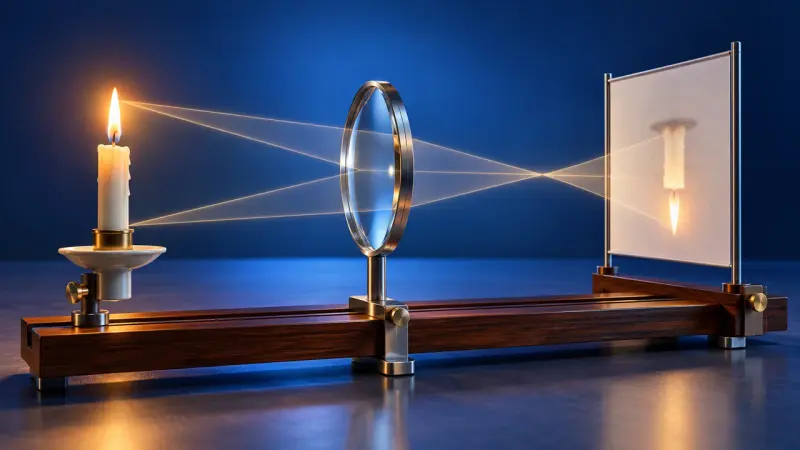
Move a candle in front of a lens and construct the image with three special rays. It becomes sharp on the screen.
Energy is quantified: forms of energy and conversion chains, conservation of energy and efficiency.
Calculating energies and stating them in joules.
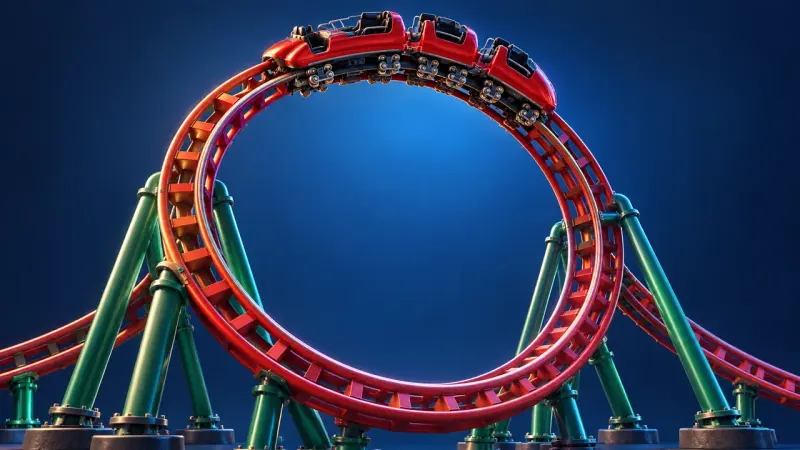
A car rides a roller coaster: energy bars show how potential and kinetic energy turn into each other.
Setting up conversion chains and determining efficiencies.
A car rides a roller coaster: energy bars show how potential and kinetic energy turn into each other.
Using conservation of energy to predict processes.
A car rides a roller coaster: energy bars show how potential and kinetic energy turn into each other.
Current, voltage and resistance quantitatively; more complex circuits as systems; explaining electrostatic phenomena by charges.
Investigating the relationship between voltage, current and resistance.
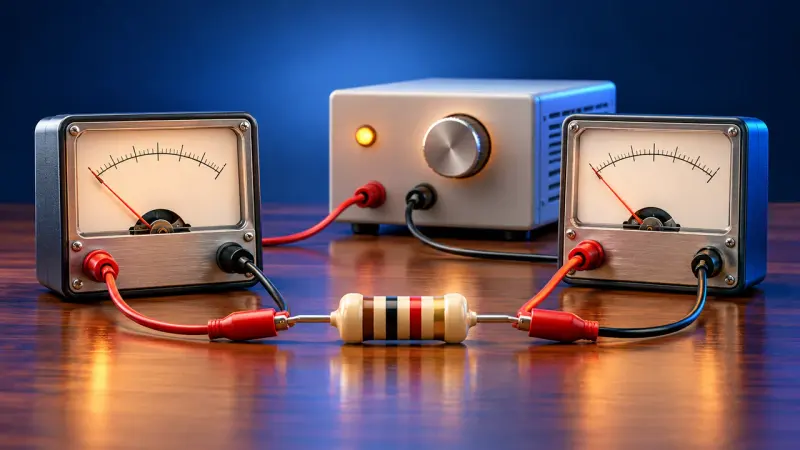
Turn up the voltage and the current rises, always in the same ratio. Point by point the characteristic curve appears, though not quite straight for a lamp.
Viewing series and parallel circuits as a whole; current as charge per time, voltage as energy per charge.

Connect lamps in series or in parallel and measure current and voltage at different points.
Explaining charging, attraction and repulsion with charges.
No separate simulation is planned for this.
Heat transfer, pressure as a state variable and differences in pressure and temperature as drivers of weather and climate; human influence on climate.
Investigating conduction, convection and radiation.
No separate simulation is planned for this.
Representing pressure as a function of other quantities.
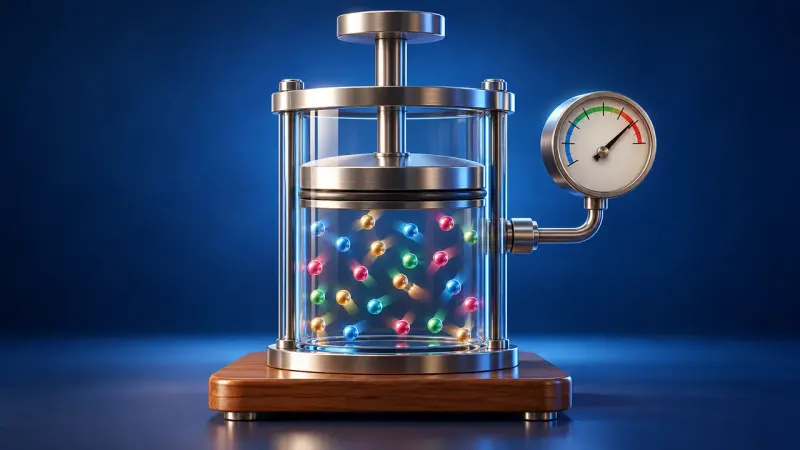
Push the piston halfway in and the pressure doubles. Heat the gas and it pushes the piston out. Pressure, volume and temperature are tightly linked.
Explaining weather phenomena as the equalising of differences.
No separate simulation is planned for this.
Forces as interaction, inertia, effects of forces (change of motion, deformation) and power of humans and machines.
Forces always occur in pairs between two bodies.
No separate simulation is planned for this.
Inertia as resistance to changes in motion; importance for road safety.
No separate simulation is planned for this.
Forces change motion and deform bodies; representing and measuring forces.
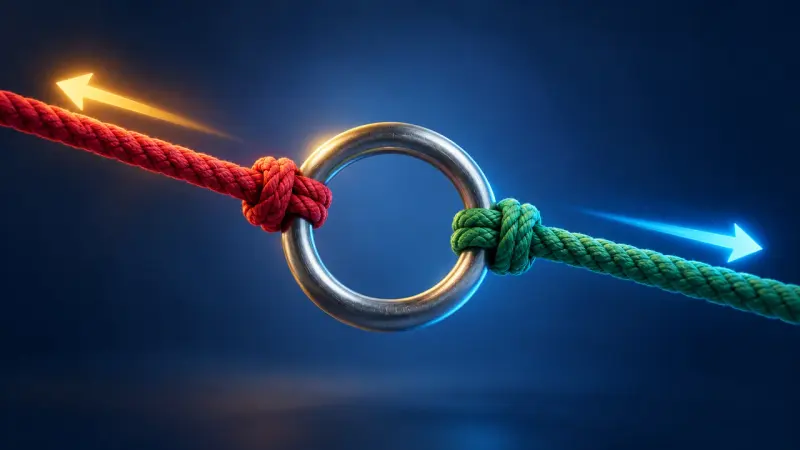
Two forces pull on one point. Use the parallelogram of forces to find the total force or to split a force into two.
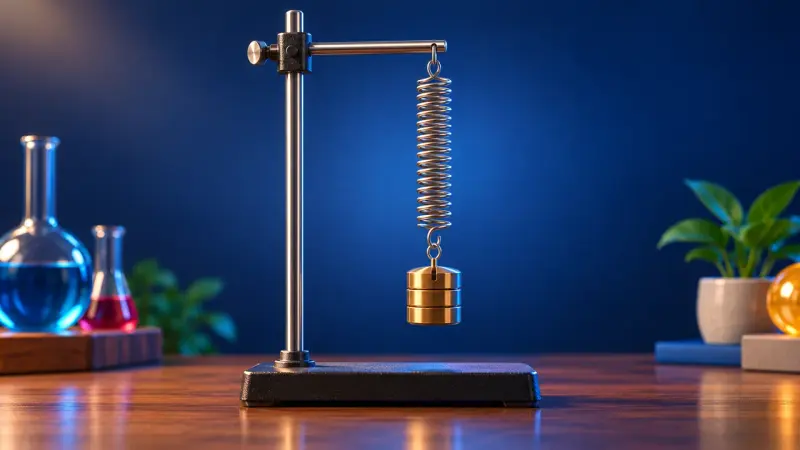
Hang weights on a spring and measure how far it stretches. Double the force means double the stretch.
Determining one's own physical power and comparing it with machines.
No separate simulation is planned for this.
Force converters such as levers and pulleys, buoyancy in liquids and gases, and the magnetic effect of current and electromagnetic energy converters.
Investigating laws for levers, pulleys and inclined planes; equilibrium.
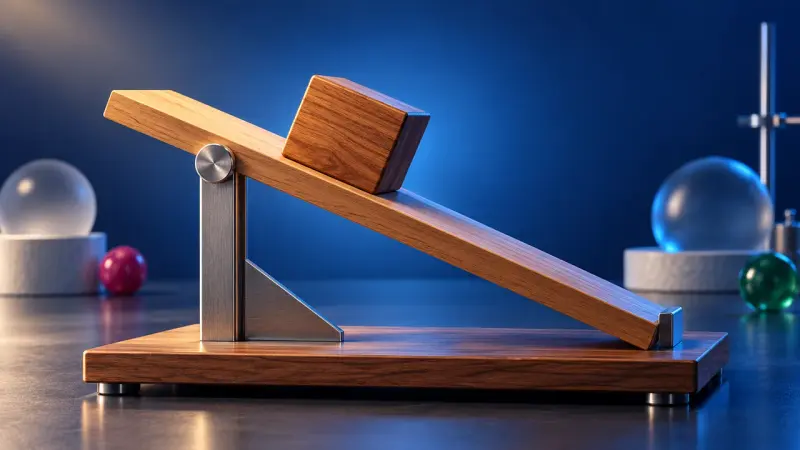
A block sits on a slope. At what angle does it start to slide? The weight is split into two parts to find out.

How can a child lift an adult on a seesaw? With the longer arm. Wheelbarrows and bottle openers use the same trick.
Investigating and explaining floating, hovering and sinking.
No separate simulation is planned for this.
Understanding electromagnets and electromagnetic energy converters such as motors.
No separate simulation is planned for this.
Generating electrical energy in power plants, storage and transport (voltage transformation), and supply grids.
Explaining generators and other converters.
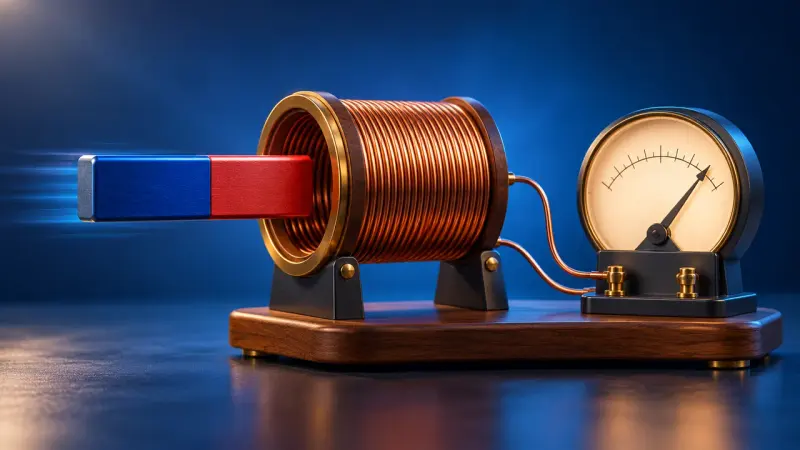
Magnet in, the needle swings. Magnet out, it swings the other way. Every generator works on the same principle.
Comparing types of power plant.
No separate simulation is planned for this.
Investigating storage and high-voltage transmission with transformers.
No separate simulation is planned for this.
Evaluating centralised and decentralised supply.
No separate simulation is planned for this.
Radioactive decay and ionising radiation: effects, dangers, protection, and opportunities and risks of technologies.
Describing decay with atomic models and evaluating decay data.
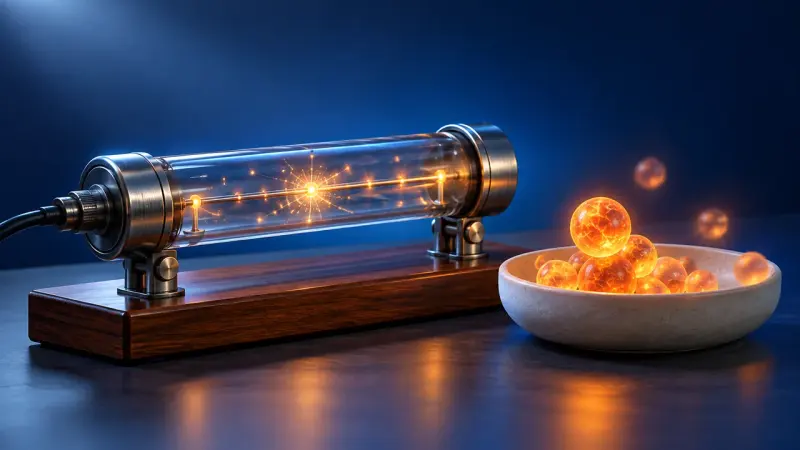
Many nuclei decay at random and a Geiger counter clicks. Even so, after each half-life almost exactly half are left.
Alpha, beta and gamma radiation, hazards and protective measures.
No separate simulation is planned for this.
Weighing opportunities and risks of technological developments.
No separate simulation is planned for this.
The summaries describe the curriculum in our own words. The original text is authoritative. Original text (German): Kerncurriculum, Gymnasium, Physics, grade 9/10