With a federal state selected, simulations are ordered by its grades. Your choice is only stored in this browser.
PhysicsBaden-Württemberg curriculum · Gymnasium
Physics – grade 12/13
Course phase (grades 12/13); the same content is also listed under grade 13. This entry contains both basic courses (3.4 focus on quantum physics, 3.5 focus on astrophysics) and the advanced course (3.6, “advanced course only”); the variant is given in each heading.
Unit 3.4.1Ways of thinking and working in physics (basic course, focus on quantum physics)
Testability of physical statements by experiment, models of light and matter and the importance of natural constants such as Planck’s constant.
No separate simulation is planned for this.
Unit 3.4.2Electromagnetic fields (basic course, focus on quantum physics)
Electric and magnetic fields, forces on charges and conductors, capacitor and coil, and electromagnetic induction.
3.4.2.1Electric and magnetic fields
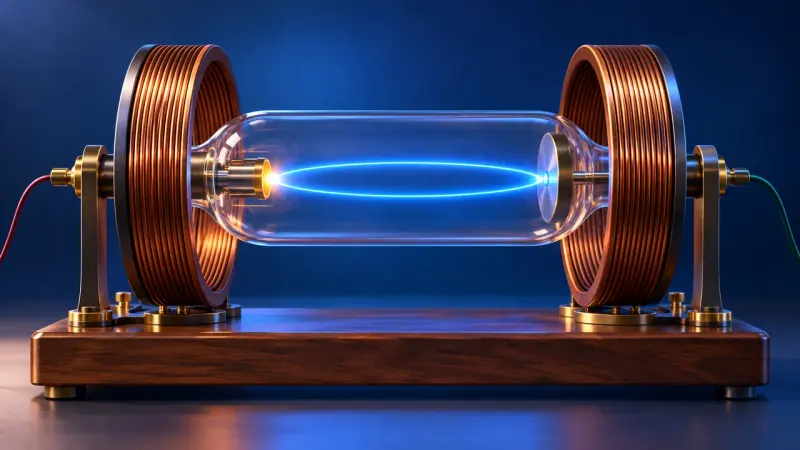
Field line patterns and superposition, electric field strength and magnetic flux density, Lorentz force and paths of charged particles (qualitative); the parallel-plate capacitor with charging and discharging curves and the long coil.
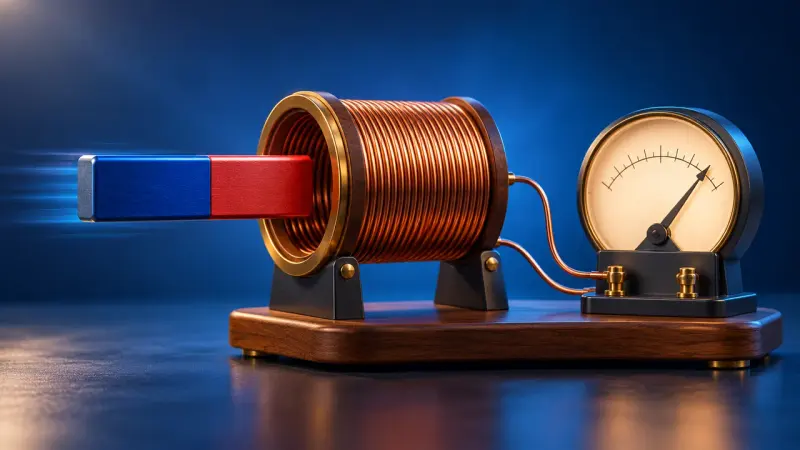
Explaining induction in a moving conductor using the Lorentz force, investigating Faraday’s law with magnetic flux and Lenz’s rule, and describing applications such as generator and transformer.
Unit 3.4.3Oscillations (basic course, focus on quantum physics)
Recording oscillations and describing them by amplitude, period and frequency; harmonic oscillation with the sine function, the spring pendulum and the electromagnetic LC circuit with their energy conversions.
Unit 3.4.4Waves (basic course, focus on quantum physics)
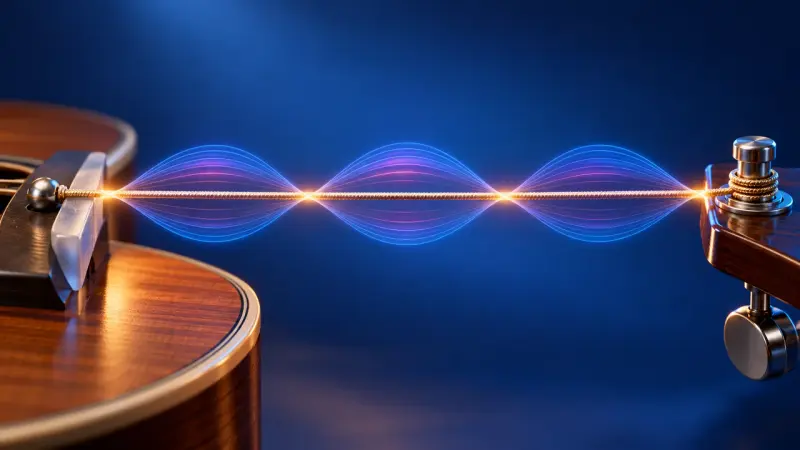
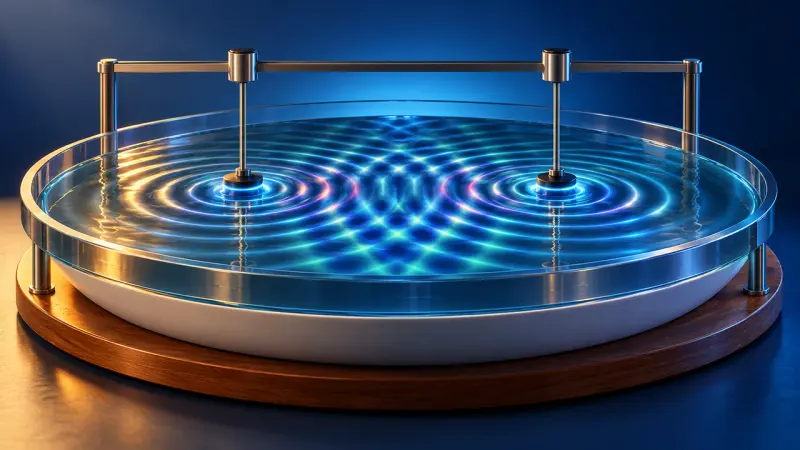
Wave quantities, longitudinal and transverse waves, diffraction, reflection, refraction and interference, standing waves and Huygens’ principle, and the electromagnetic spectrum in everyday life.
Unit 3.4.5Wave optics (basic course, focus on quantum physics)
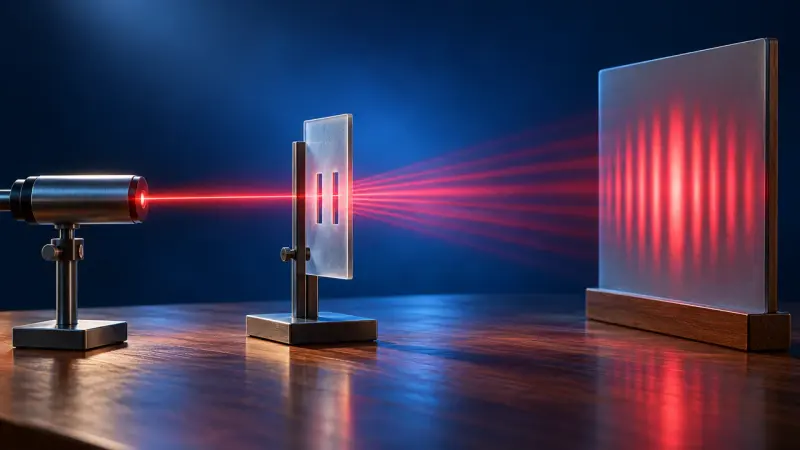
Light as an electromagnetic wave, limits of the ray model, describing and calculating interference patterns at double slit and grating, and splitting light into its spectrum.
Unit 3.4.6Quantum physics and matter (basic course, focus on quantum physics)
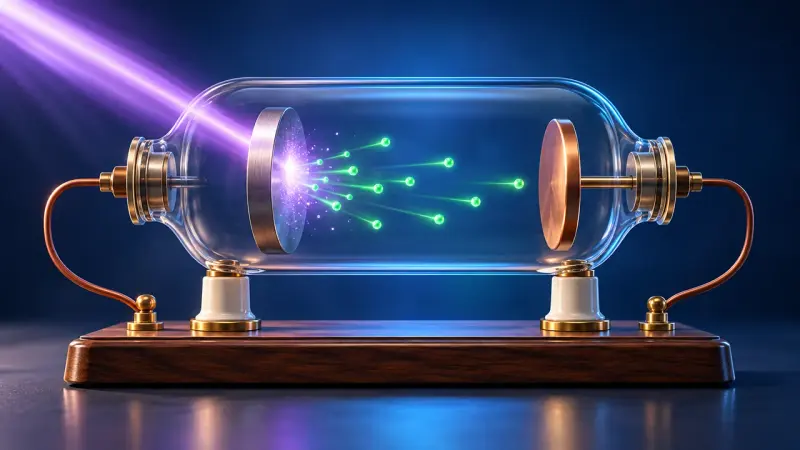
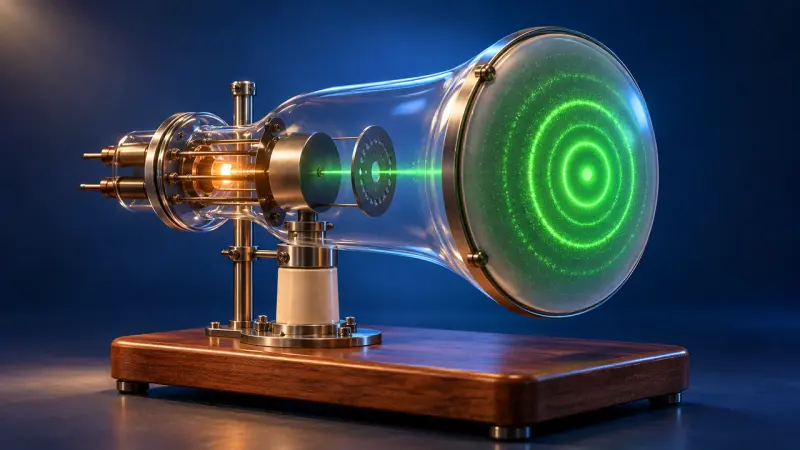
Quantum objects at the double slit described with probabilities, photoelectric effect, energy and momentum of photons and matter waves, measurement and entanglement; line spectra and energy levels of the hydrogen atom.
Unit 3.5.1Ways of thinking and working in physics (basic course, focus on astrophysics)
Testability of physical statements, models of light, matter and the cosmos and the role of natural constants; plus astronomy as an observational science and astronomical units such as light year and parsec.
No separate simulation is planned for this.
Unit 3.5.2Electromagnetic fields (basic course, focus on astrophysics)
Electric and magnetic fields, forces on charges and conductors, capacitor and coil, and electromagnetic induction.
3.5.2.1Electric and magnetic fields
Field line patterns and superposition, electric field strength and magnetic flux density, Lorentz force and paths of charged particles (qualitative); the parallel-plate capacitor with charging and discharging curves and the long coil.
Explaining induction in a moving conductor using the Lorentz force, investigating Faraday’s law with magnetic flux and Lenz’s rule, and describing applications such as generator and transformer.
Unit 3.5.3Oscillations (basic course, focus on astrophysics)
Recording oscillations and describing them by amplitude, period and frequency; harmonic oscillation with the sine function, the spring pendulum and the electromagnetic LC circuit with their energy conversions.
Unit 3.5.4Waves (basic course, focus on astrophysics)
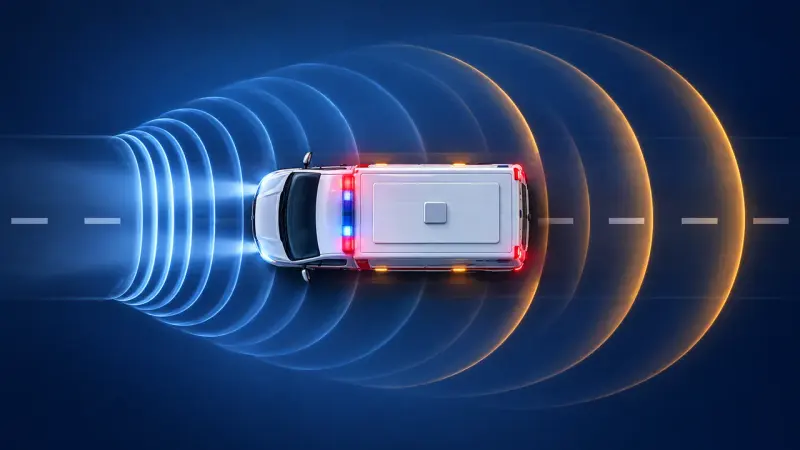
Wave quantities, longitudinal and transverse waves, diffraction, interference and standing waves, Huygens’ principle; plus the Doppler effect, the electromagnetic spectrum and a comparison with gravitational waves.
Unit 3.5.5Wave optics (basic course, focus on astrophysics)
Light as an electromagnetic wave, limits of the ray model, calculating interference patterns at double slit and grating, and investigating spectra of different light sources.
Unit 3.5.6Atomic and nuclear physics (basic course, focus on astrophysics)
Photoelectric effect and photons, de Broglie wavelength, types of spectra and line spectra as energy transitions, spectral analysis of cosmic matter and nuclear fusion in stars.
Unit 3.5.7Astrophysics (basic course, focus on astrophysics)
Evolution of the universe from the Big Bang, galaxies, redshift and the Hubble relation; birth, life and death of stars, and methods for detecting and studying exoplanets.
No separate simulation is planned for this.
Unit 3.6.1Ways of thinking and working in physics (advanced course only)
Testability of physical statements, models of light and matter and the importance of natural constants.
No separate simulation is planned for this.
Unit 3.6.2Electromagnetic fields (advanced course only)
Electric and magnetic fields quantitatively, motion of charged particles in fields and induction including self-induction.
3.6.2.1Electric field
Coulomb’s law, field lines and superposition, electrostatic induction, field strength, capacitance and energy of the parallel-plate capacitor, charging and discharging curves, potential, and quantitative motion of charged particles in the field.
Magnetic fields of wire and coil, force on a conductor and Lorentz force, Hall effect, quantitative circular paths of charged particles, and crossed fields in the Wien filter and mass spectrometer.
Describing harmonic and damped oscillations mathematically, periods of spring and simple pendulum and LC circuit, comparing mechanical and electromagnetic oscillations, and resonance.
Describing waves with their quantities and the wave equation, standing waves, superposition of two-dimensional waves using path difference, Huygens’ principle and the electromagnetic spectrum.
Investigating and calculating interference at single slit, double slit and grating, interferometers such as the Michelson interferometer, and the limits of the ray model.
Unit 3.6.6Quantum physics and matter (advanced course only)
Photoelectric effect, photons and matter waves, quantum objects at the double slit with probability density, uncertainty and entanglement; line spectra, X-ray spectrum, the particle in a box and atomic models with the Pauli principle.