
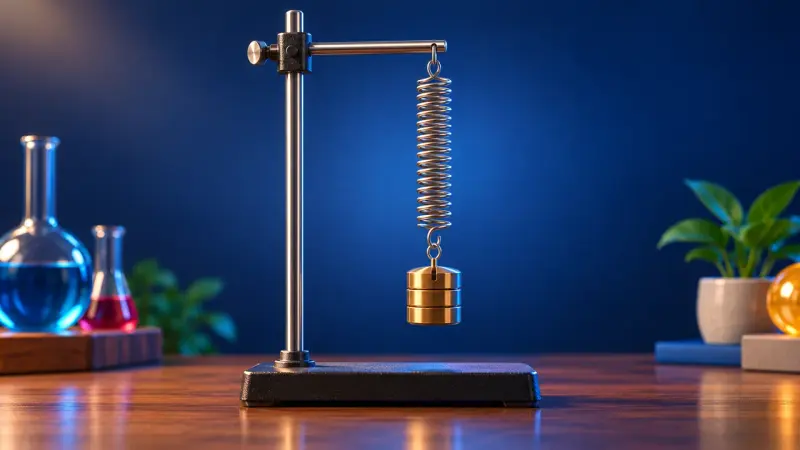
Hooke’s law
Hang weights on a spring and measure how far it stretches. Double the force means double the stretch.
Grades 7/8: the curriculum describes both grades together, so the units are the same for grades 7 and 8, and both are shown as one stage. Units are the curriculum’s focal points; it does not number them, the numbers are our own.
Weight and mass, adding and resolving forces as arrows, Hooke’s law, the law of the lever and the golden rule of mechanics, mechanical work, conservation of energy and efficiency.
Hang weights on a spring and measure how far it stretches. Double the force means double the stretch.

How can a child lift an adult on a seesaw? With the longer arm. Wheelbarrows and bottle openers use the same trick.
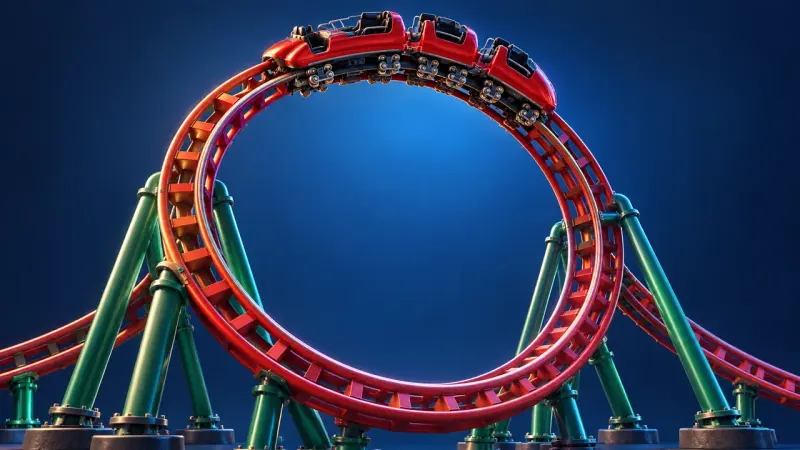
A car rides a roller coaster: energy bars show how potential and kinetic energy turn into each other.
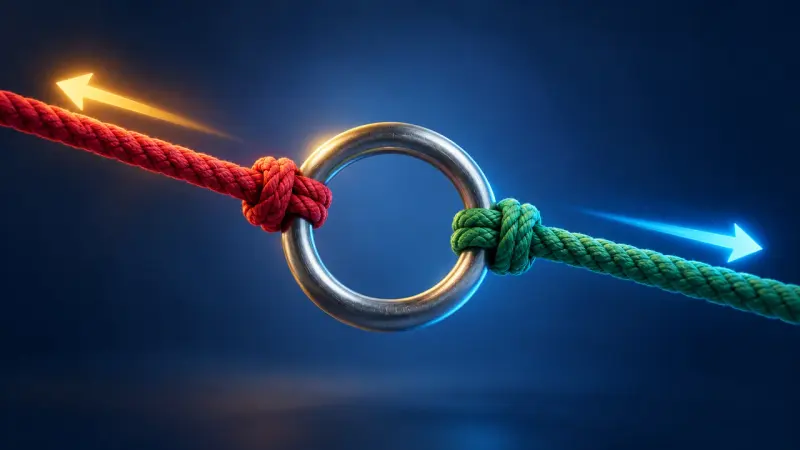
Two forces pull on one point. Use the parallelogram of forces to find the total force or to split a force into two.
Charge and electric field, building simple circuits, measuring current and voltage, heating, lighting and magnetic effects of current.
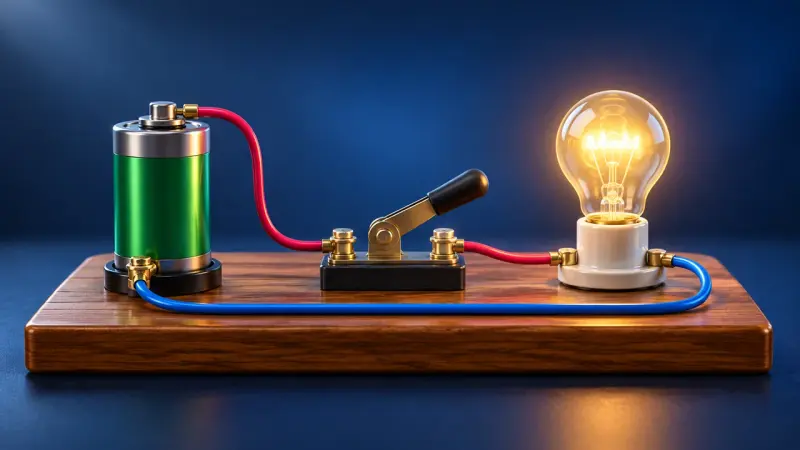
Build a circuit with a battery, a switch and a lamp, as a set-up and as a circuit diagram. When the circuit is closed, the lamp lights up.
Changes of state in the particle model, specific heat capacity, heat exchange and mixing calculations, solar collectors and greenhouses.

Ice melts, water boils, and the temperature stops rising meanwhile. The particles show where the energy goes in between.
Pressure in solids, liquids and gases, Archimedes’ principle, floating, hovering and sinking, dynamic lift.
No separate simulation is planned for this.
Pressure, volume and temperature of a gas with one quantity held constant, work done by a gas, the first law of thermodynamics; combustion engines, refrigerators or heat pumps.
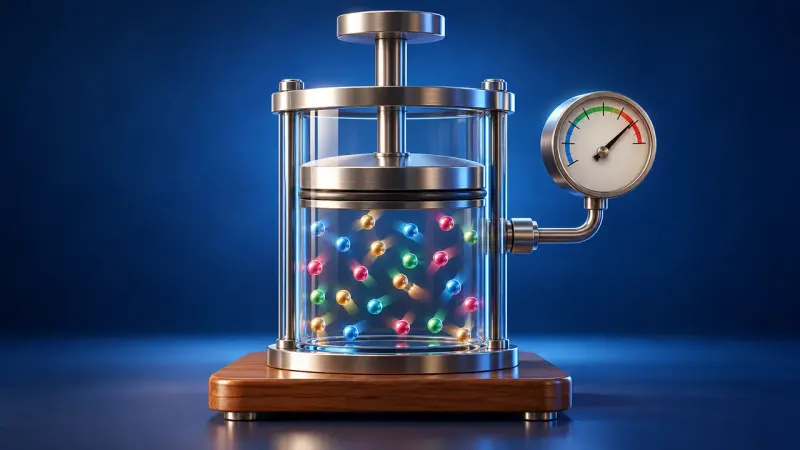
Push the piston halfway in and the pressure doubles. Heat the gas and it pushes the piston out. Pressure, volume and temperature are tightly linked.
Ohm’s law and resistance, series and parallel circuits, electrical work and power, electromagnets and the DC motor.
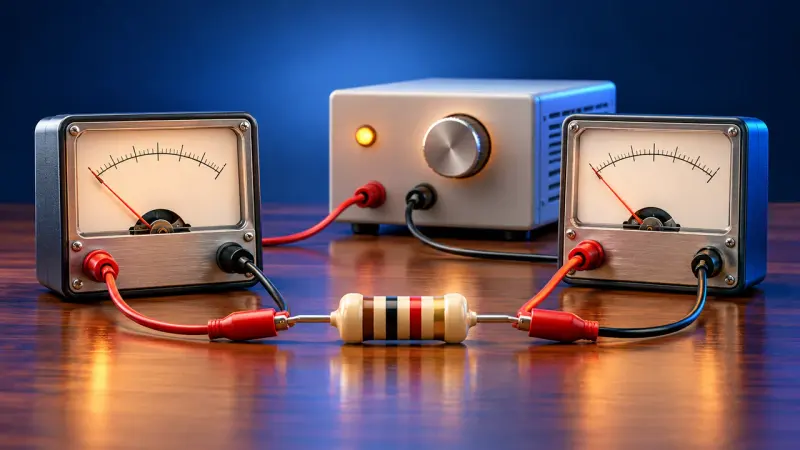
Turn up the voltage and the current rises, always in the same ratio. Point by point the characteristic curve appears, though not quite straight for a lamp.

Connect lamps in series or in parallel and measure current and voltage at different points.
The summaries describe the curriculum in our own words. The original text is authoritative. Original text (German): Fachlehrplan, Gymnasium, Physics, grade 7/8