

Adding and resolving forces
Two forces pull on one point. Use the parallelogram of forces to find the total force or to split a force into two.
The curriculum assigns these units to exactly this grade (Saxony, Gymnasium up to grade 12; physics from grade 6). The unit numbers are the curriculum’s; optional areas (“Wahlbereiche”) are labelled W1–W3 here.
F = m · a, the laws of inertia and interaction, superposition of forces, the inclined plane, and braking distance and road safety.
Two forces pull on one point. Use the parallelogram of forces to find the total force or to split a force into two.
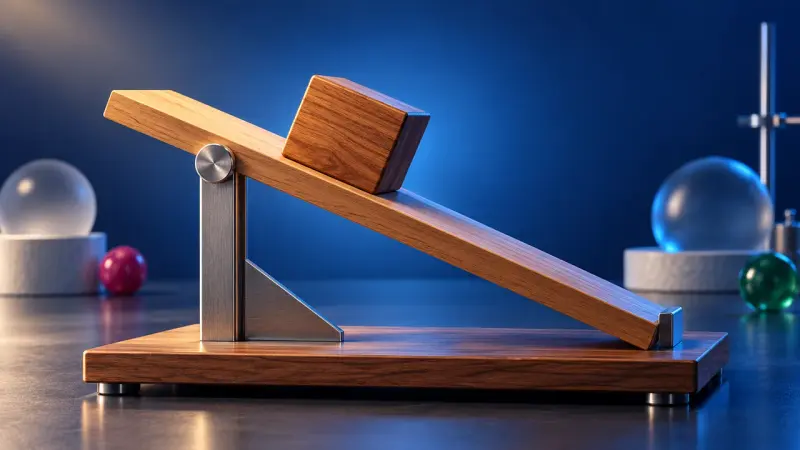
A block sits on a slope. At what angle does it start to slide? The weight is split into two parts to find out.
Oscillations with amplitude, period and damping, simple and spring pendulums, resonance, waves with c = λ · f, acoustics and interference of two circular waves.
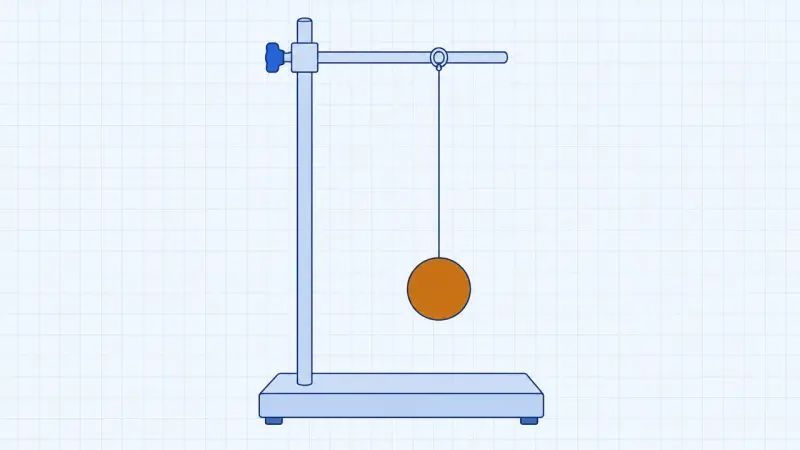
Pull a pendulum aside, let it go and measure how long one swing takes. What does it depend on? Also with large angles and damping.

A mass bounces up and down on a spring. Graphs show position, speed and energy during the oscillation.
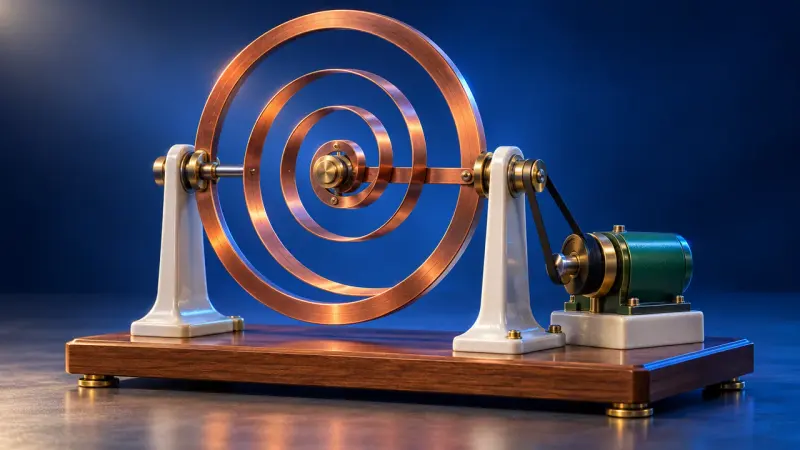
A motor drives an oscillating wheel. If the motor hits exactly the right rhythm, the wheel swings especially strongly: resonance.
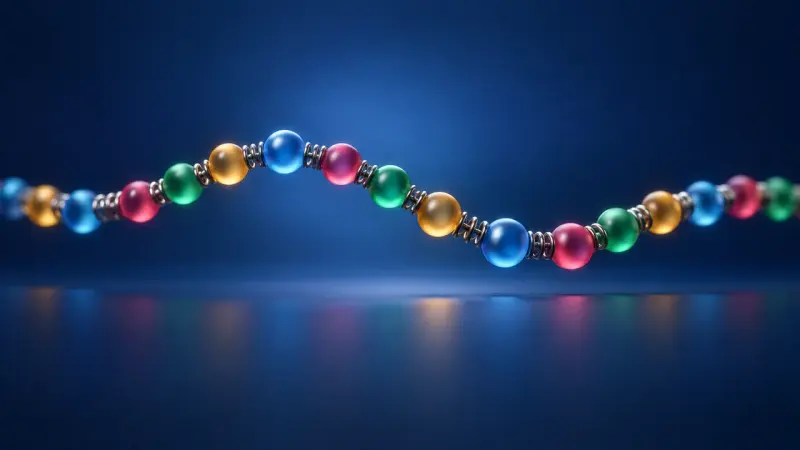
A wave travels through a chain of particles. Each particle only oscillates in place, across or along the direction of travel.
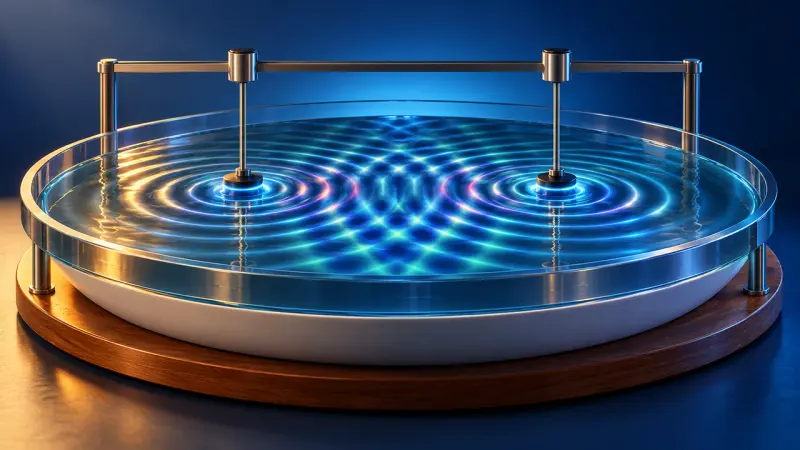
Two circular waves overlap: in some places they reinforce each other, in others they cancel out.
The Sun and planets, finding one’s way in the sky, from the geocentric to the heliocentric world view with Kepler’s laws and the law of gravitation, and methods of astronomy.

Too fast and the planet flies off, never to return. A little slower and it traces an ellipse around the Sun, exactly as Kepler's laws say.
The law of refraction and total internal reflection, dispersion, interference at double slits and gratings to measure wavelength, and the electromagnetic spectrum.

A light ray bends when it passes into glass or water. At a shallow angle it cannot get out at all: total internal reflection, as in an optical fibre.
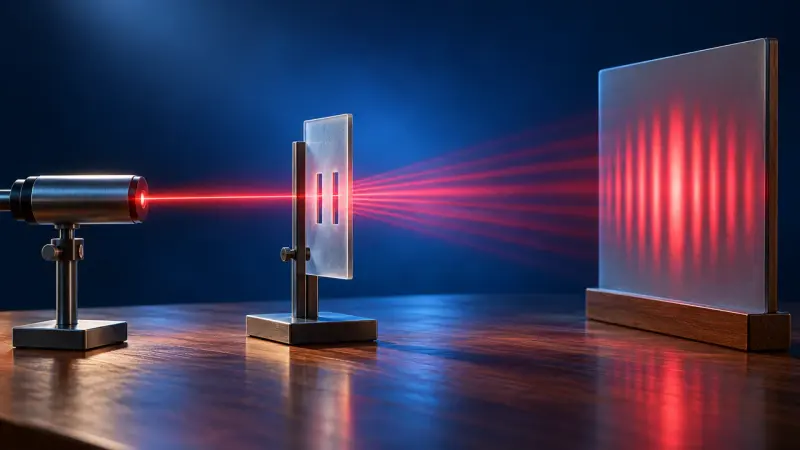
Laser light passes through a double slit or a grating. A pattern of bright and dark stripes appears on the screen.
Developing new knowledge experimentally, for example the lens equation, and designing experiments.
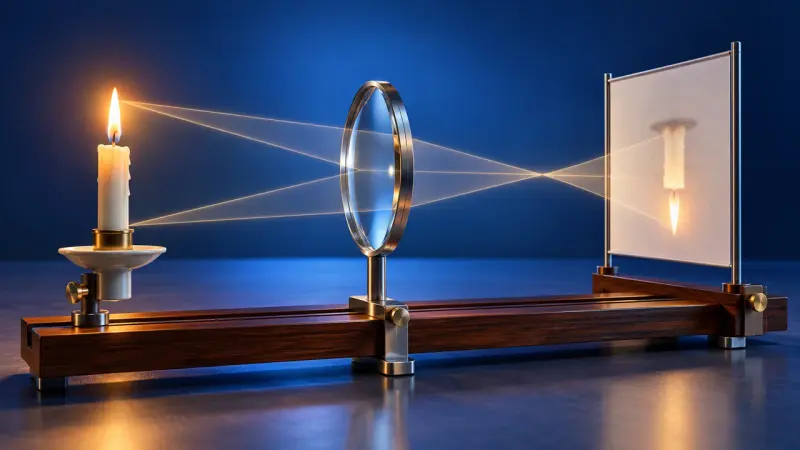
Move a candle in front of a lens and construct the image with three special rays. It becomes sharp on the screen.
Refracting and reflecting telescopes, magnification and resolving power.
Move a candle in front of a lens and construct the image with three special rays. It becomes sharp on the screen.
Transmitting information with radio waves, modulation and demodulation.
No separate simulation is planned for this.
How the television picture is built and how screens work.
No separate simulation is planned for this.
The summaries describe the curriculum in our own words. The original text is authoritative. Original text (German): Lehrplan, Gymnasium, Physics, grade 10