Home Physics Rhineland-Palatinate curriculum · Gymnasium Grade 7–10 Physics Rhineland-Palatinate curriculum · Gymnasium
Physics – grade 7–10 Grades 7 to 10 (lower secondary): the framework curriculum spreads its twelve topic fields over three years of physics in a fixed order but names no grades. The units are therefore the same for grades 7, 8, 9 and 10 and are shown as one stage (assumption, draft, please check against the curriculum). The topic fields are numbered in the curriculum.
Unit 1 Acoustic phenomenaSound and interaction: vibrating bodies as sound sources, amplitude and frequency, the sender–carrier–receiver model, the speed of sound and noise protection; echo and resonance as extensions.
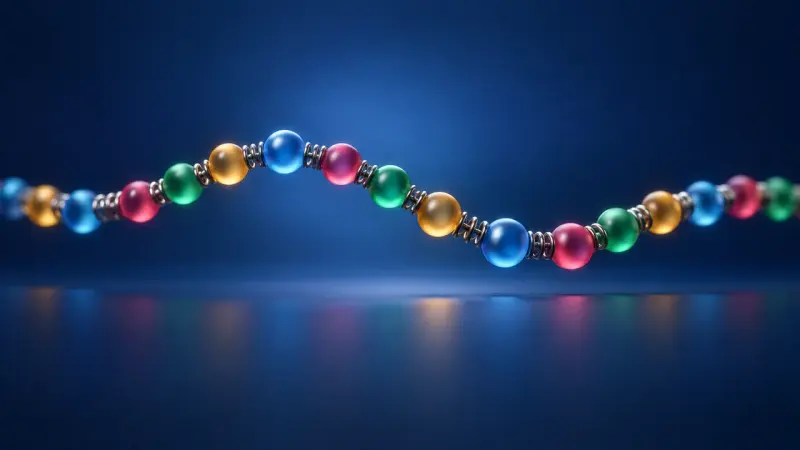
A wave travels through a chain of particles. Each particle only oscillates in place, across or along the direction of travel.
Grade 10–12 Baden-Württemberg: grade 12/13 Bavaria: grade 11 Berlin: grades 9/10, 12 Brandenburg: grades 9/10, 12 Bremen: grade 11/12 Hamburg: grade 11/12 Hesse: grade 12 Lower Saxony: grade 12/13 North Rhine-Westphalia: grade 12/13 Rhineland-Palatinate: grades 7–10, 12/13 Saarland: grade 12 Saxony: grades 10, 12 Saxony-Anhalt: grade 11/12 Schleswig-Holstein: grades 11, 12/13
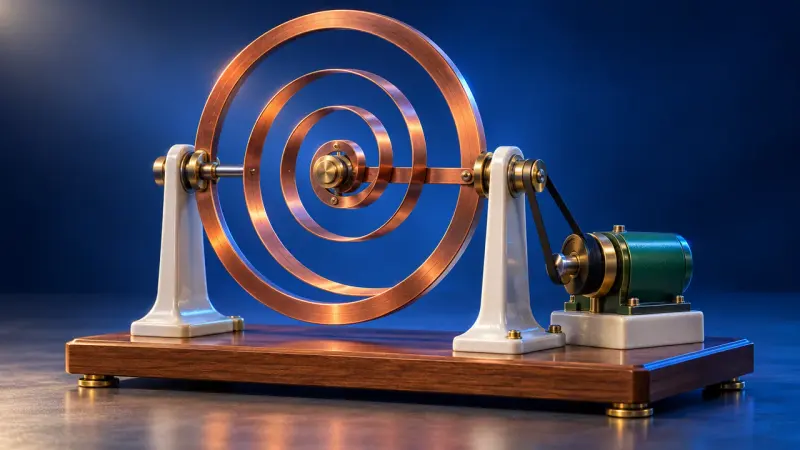
A motor drives an oscillating wheel. If the motor hits exactly the right rhythm, the wheel swings especially strongly: resonance.
Grade 10–13 · University Baden-Württemberg: grade 12/13 Bavaria: grades 11, 12 Berlin: grades 9/10, 11 Brandenburg: grades 9/10, 11 Bremen: grade 11/12 Hamburg: grade 11/12 Hesse: grade 12 Lower Saxony: grade 12/13 North Rhine-Westphalia: grade 12/13 Rhineland-Palatinate: grades 7–10, 12/13 Saarland: grades 12, 13 Saxony: grades 10, 12 Saxony-Anhalt: grade 11/12 Schleswig-Holstein: grades 11, 12/13
Unit 2 Optical phenomena at boundariesLight and interaction: reflection, refraction and absorption, shadows in the ray model, ray paths also through lenses; total internal reflection as an extension.
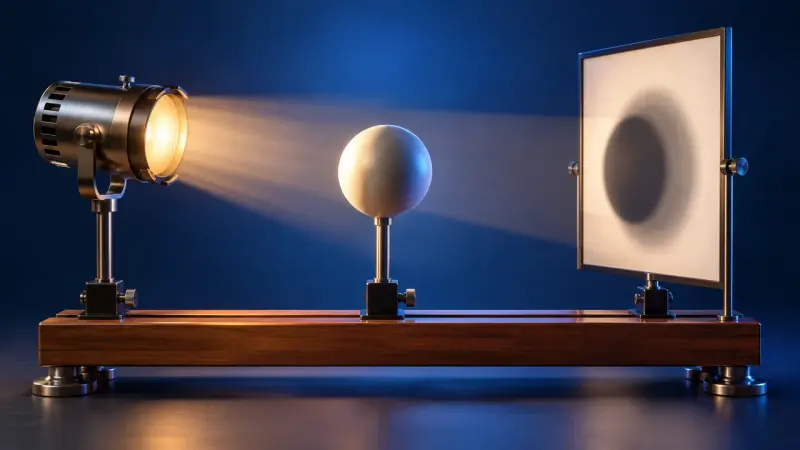
One lamp casts a sharp shadow, two lamps a penumbra. Solar and lunar eclipses form in just the same way.
Grade 6–7 Baden-Württemberg: grade 7/8 Bavaria: grade 7 Bremen: grade 7–9 Hesse: grade 6–8 Lower Saxony: grade 5/6 North Rhine-Westphalia: grades 5/6, 7–10 Rhineland-Palatinate: grade 7–10 Saarland: grade 7 Saxony: grade 6 Saxony-Anhalt: grade 6 Schleswig-Holstein: grade 7–10
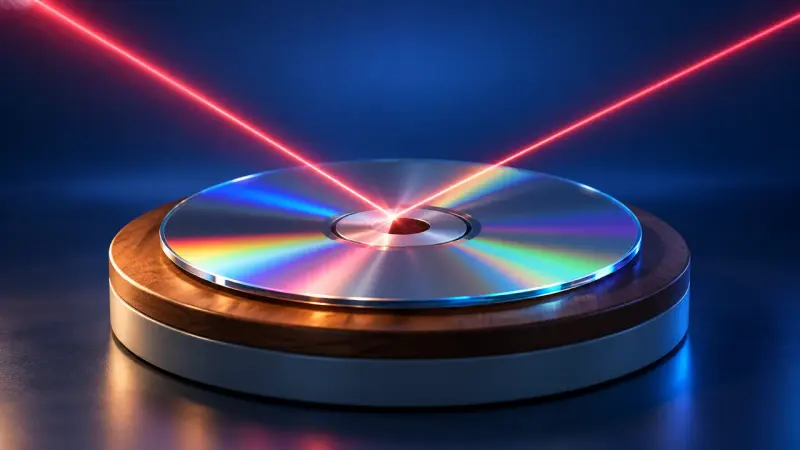
Laser at the mirror, measure the angles: angle of incidence equals angle of reflection, every time. And why does the candle appear just as far behind the mirror?
Grade 6–10 Baden-Württemberg: grade 7/8 Bavaria: grade 8 Berlin: grade 9/10 Brandenburg: grade 9/10 Bremen: grade 7–9 Hesse: grade 6–8 Lower Saxony: grade 5/6 North Rhine-Westphalia: grade 7–10 Rhineland-Palatinate: grade 7–10 Saarland: grade 7 Saxony: grade 6 Saxony-Anhalt: grade 6 Schleswig-Holstein: grade 7–10
A light ray bends when it passes into glass or water. At a shallow angle it cannot get out at all: total internal reflection, as in an optical fibre.
Grade 6–10 Baden-Württemberg: grade 7/8 Bavaria: grade 8 Berlin: grade 9/10 Brandenburg: grade 9/10 Bremen: grade 7–9 Hesse: grades 6–8, 9/10 Lower Saxony: grade 5/6 North Rhine-Westphalia: grade 7–10 Rhineland-Palatinate: grade 7–10 Saarland: grade 9 Saxony: grades 6, 10 Saxony-Anhalt: grades 6, 10 Schleswig-Holstein: grade 7–10
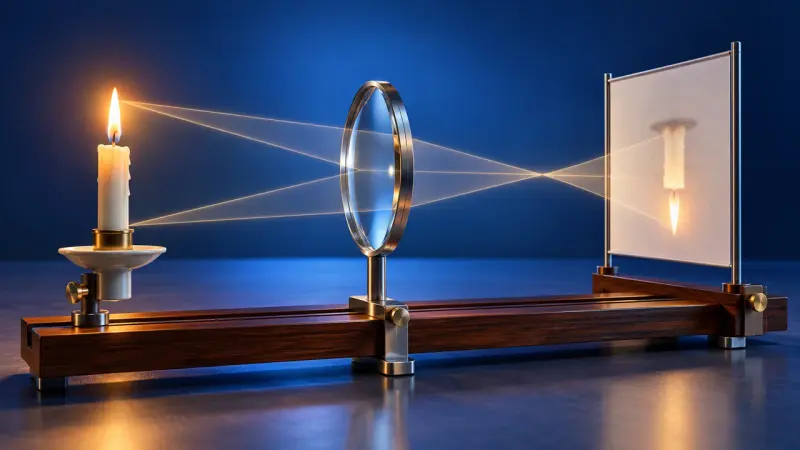
Move a candle in front of a lens and construct the image with three special rays. It becomes sharp on the screen.
Grade 6–10 Baden-Württemberg: grade 7/8 Bavaria: grade 8 Berlin: grade 9/10 Brandenburg: grade 9/10 Bremen: grade 7–9 Hesse: grade 9/10 Lower Saxony: grade 5/6 North Rhine-Westphalia: grade 7–10 Rhineland-Palatinate: grade 7–10 Saarland: grade 9 Saxony: grades 6, 10 Saxony-Anhalt: grades 6, 10 Schleswig-Holstein: grade 7–10
Unit 3 Thermal expansion in experiment and modelTemperature and matter: changes in volume and length on heating in experiments, explanation with the particle model and its limits; gases and absolute zero as an extension.
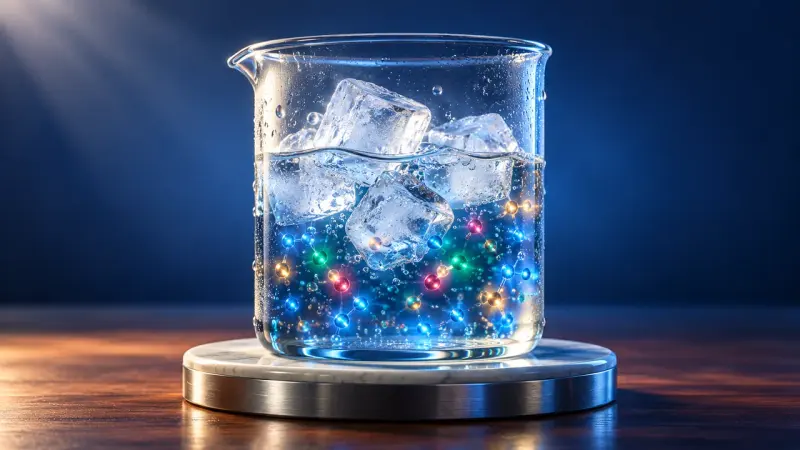
Ice melts, water boils, and the temperature stops rising meanwhile. The particles show where the energy goes in between.
Grade 6–9 Baden-Württemberg: grades 7/8, 9/10 Bavaria: grade 9 Berlin: grade 7/8 Brandenburg: grade 7/8 Bremen: grade 7–9 Hamburg: grades 8, 9 Hesse: grade 6–8 Lower Saxony: grade 9/10 North Rhine-Westphalia: grade 5/6 Rhineland-Palatinate: grade 7–10 Saarland: grade 8 Saxony: grades 6, 8 Saxony-Anhalt: grades 6, 7/8 Schleswig-Holstein: grade 7–10
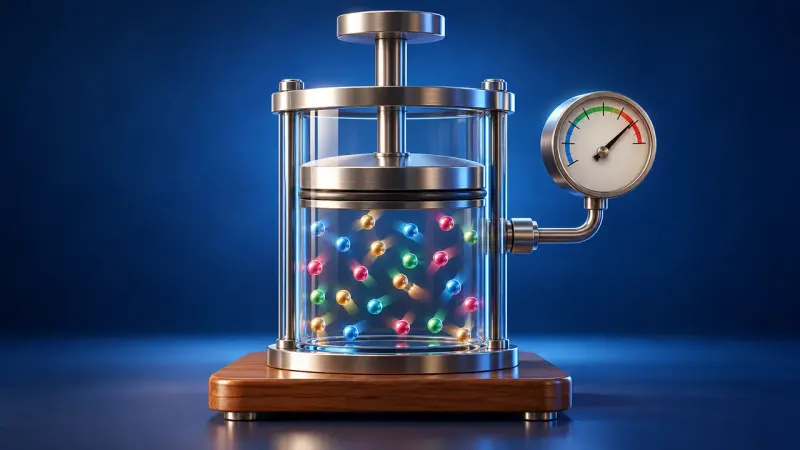
Push the piston halfway in and the pressure doubles. Heat the gas and it pushes the piston out. Pressure, volume and temperature are tightly linked.
Grade 8–13 · University Baden-Württemberg: grade 9/10 Bavaria: grade 9 Berlin: grade 7/8 Brandenburg: grade 7/8 Bremen: grade 10 Hesse: grade 9/10 Lower Saxony: grade 9/10 North Rhine-Westphalia: grade 7–10 Rhineland-Palatinate: grades 7–10, 12/13 Saarland: grades 8, 10 Saxony: grade 12 Saxony-Anhalt: grade 7/8 Schleswig-Holstein: grade 12/13
Unit 4 Dynamic phenomenaChanges of motion and interaction: velocity with magnitude and direction, inertia, force as a measure of interaction, pairs of force arrows and equilibrium; momentum as an extension.
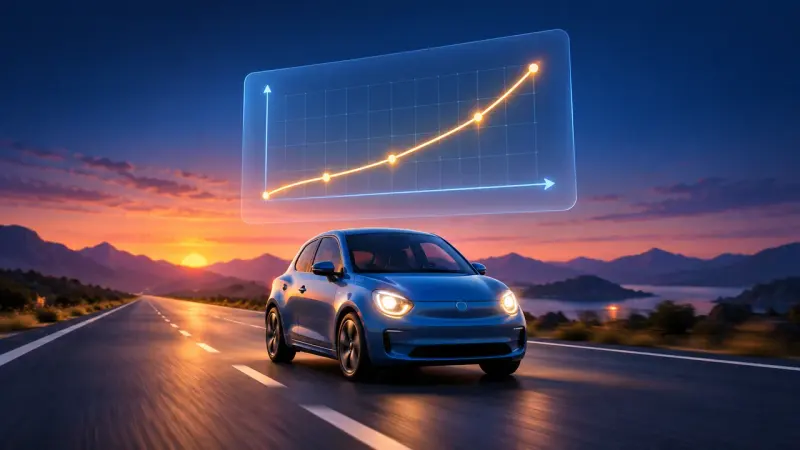
A car drives at a steady speed or speeds up. The graphs for distance, speed and acceleration are drawn live.
Grade 7–11 Baden-Württemberg: grades 7/8, 11 Bavaria: grades 8, 10 Berlin: grade 9/10 Brandenburg: grade 9/10 Bremen: grades 7–9, 10 Hamburg: grades 7, 8, 9 Hesse: grades 6–8, 11 Lower Saxony: grades 7/8, 11 North Rhine-Westphalia: grades 7–10, 11 Rhineland-Palatinate: grades 7–10, 11 Saarland: grades 7, 11 Saxony: grades 9, 11 Saxony-Anhalt: grades 9, 11/12 Schleswig-Holstein: grades 7–10, 11
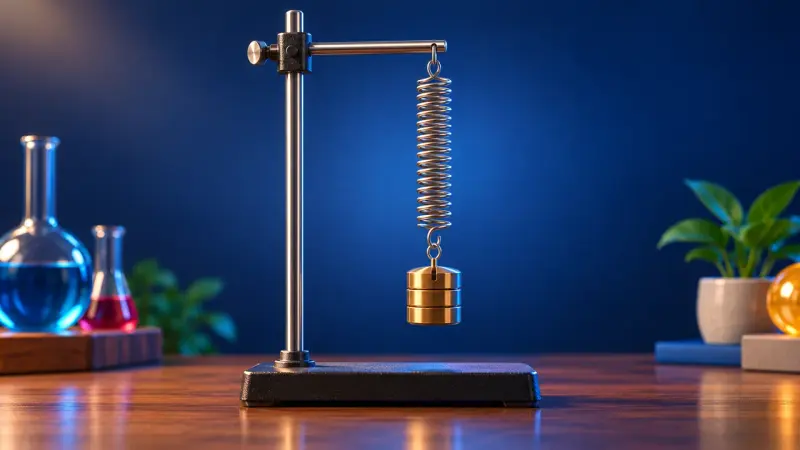
Hang weights on a spring and measure how far it stretches. Double the force means double the stretch.
Grade 7–10 Baden-Württemberg: grade 7/8 Bavaria: grade 8 Berlin: grade 7/8 Brandenburg: grade 7/8 Bremen: grade 7–9 Hamburg: grades 7, 8 Hesse: grade 9/10 Lower Saxony: grade 7/8 North Rhine-Westphalia: grade 7–10 Rhineland-Palatinate: grade 7–10 Saarland: grade 8 Saxony: grade 7 Saxony-Anhalt: grade 7/8 Schleswig-Holstein: grade 7–10
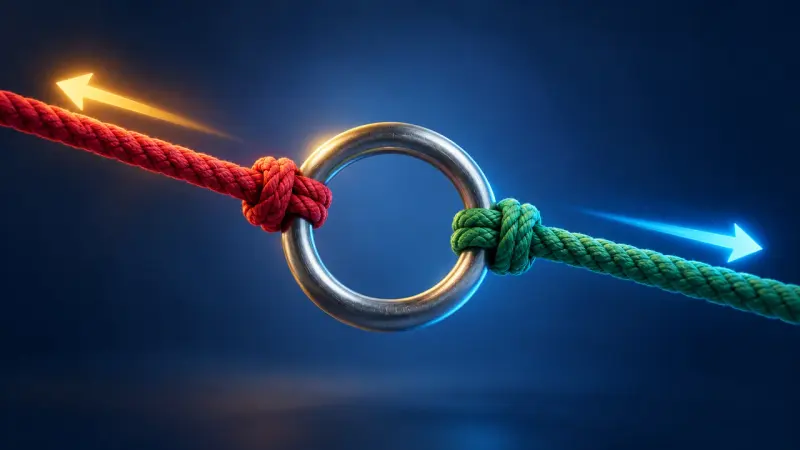
Two forces pull on one point. Use the parallelogram of forces to find the total force or to split a force into two.
Grade 8–11 Baden-Württemberg: grade 11 Bavaria: grade 8 Berlin: grades 7/8, 9/10 Brandenburg: grades 7/8, 9/10 Bremen: grades 7–9, 10 Hamburg: grade 8 Hesse: grade 9/10 Lower Saxony: grade 7/8 North Rhine-Westphalia: grades 7–10, 11 Rhineland-Palatinate: grades 7–10, 11 Saarland: grades 8, 11 Saxony: grades 10, 11 Saxony-Anhalt: grades 7/8, 9, 11/12 Schleswig-Holstein: grades 7–10, 11
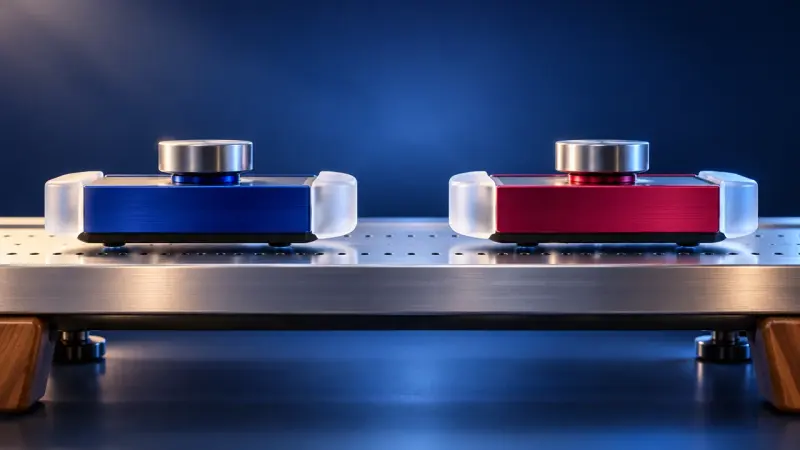
Two gliders collide on an air track. Before and after are compared to see what stays the same.
Grade 10–11 Baden-Württemberg: grade 11 Bavaria: grade 10 Bremen: grade 10 Hamburg: grade 10 Hesse: grade 11 North Rhine-Westphalia: grade 11 Rhineland-Palatinate: grades 7–10, 11 Saarland: grade 11 Saxony: grade 11 Saxony-Anhalt: grade 11/12 Schleswig-Holstein: grades 7–10, 11
Unit 5 Atomic structure and ionising radiationRadioactivity and matter: the nucleus–shell model, electric charge, radioactive decay and half-life, nuclear fission, benefits, risks and radiation protection.
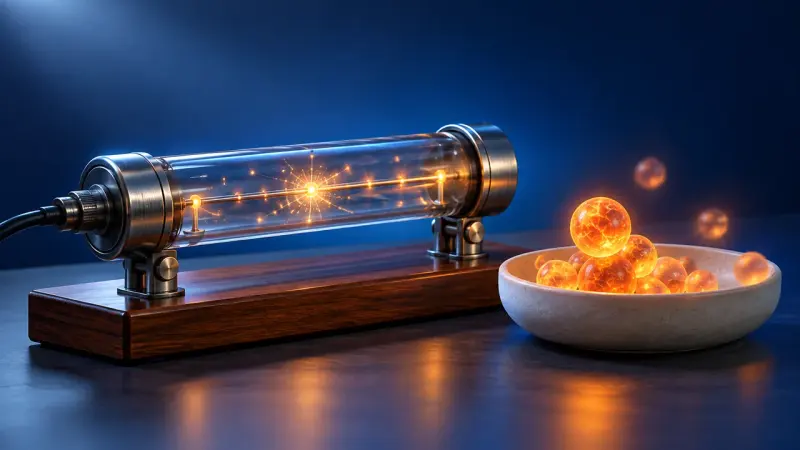
Many nuclei decay at random and a Geiger counter clicks. Even so, after each half-life almost exactly half are left.
Grade 8–13 Baden-Württemberg: grade 9/10 Bavaria: grades 10, 13 Berlin: grade 9/10 Brandenburg: grade 9/10 Bremen: grade 7–9 Hamburg: grades 8, 9 Hesse: grades 9/10, 13 Lower Saxony: grades 9/10, 11, 12/13 North Rhine-Westphalia: grades 7–10, 12/13 Rhineland-Palatinate: grades 7–10, 12/13 Saarland: grades 10, 11 Saxony: grades 9, 12 Saxony-Anhalt: grade 10 Schleswig-Holstein: grades 7–10, 12/13
Unit 6 Voltage and inductionElectricity and energy: the closed circuit, voltage as the drive, power and energy (ΔE = P · Δt), the loop rule and the generator with induction.
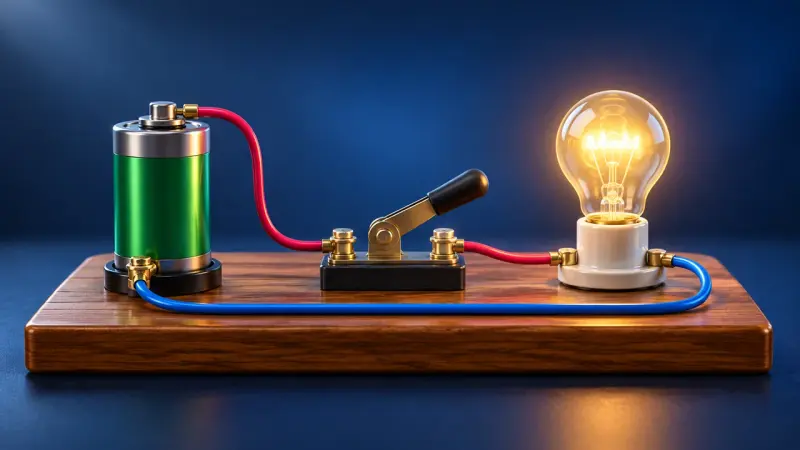
Build a circuit with a battery, a switch and a lamp, as a set-up and as a circuit diagram. When the circuit is closed, the lamp lights up.
Grade 6–9 Baden-Württemberg: grade 9/10 Bavaria: grade 7 Berlin: grades 7/8, 9/10 Brandenburg: grades 7/8, 9/10 Bremen: grade 7–9 Hamburg: grades 7, 8, 9 Hesse: grade 6–8 Lower Saxony: grades 5/6, 7/8 North Rhine-Westphalia: grades 5/6, 7–10 Rhineland-Palatinate: grade 7–10 Saarland: grades 7, 9 Saxony: grades 6, 7 Saxony-Anhalt: grade 7/8 Schleswig-Holstein: grade 7–10
Connect lamps in series or in parallel and measure current and voltage at different points.
Grade 7–9 Baden-Württemberg: grade 9/10 Bavaria: grade 8 Berlin: grades 7/8, 9/10 Brandenburg: grades 7/8, 9/10 Bremen: grade 7–9 Hamburg: grades 7, 8, 9 Hesse: grade 9/10 Lower Saxony: grade 7/8 North Rhine-Westphalia: grade 7–10 Rhineland-Palatinate: grade 7–10 Saarland: grades 7, 9 Saxony: grades 7, 8 Saxony-Anhalt: grade 7/8 Schleswig-Holstein: grade 7–10
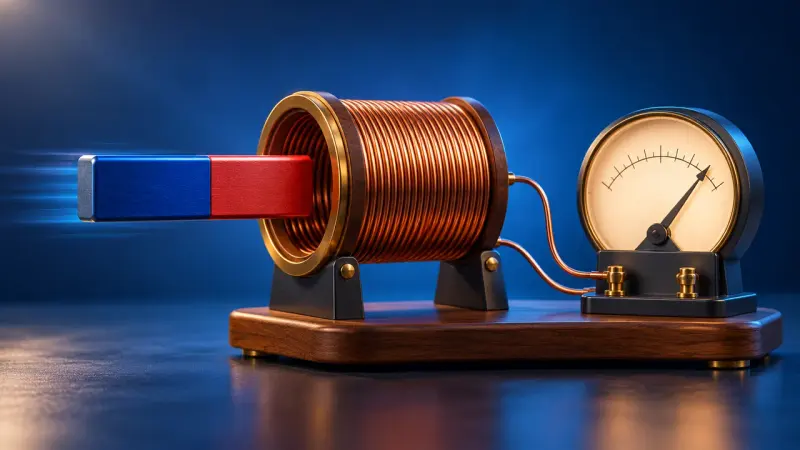
Magnet in, the needle swings. Magnet out, it swings the other way. Every generator works on the same principle.
Grade 9–13 Baden-Württemberg: grades 9/10, 12/13 Bavaria: grades 10, 12 Berlin: grades 9/10, 11 Brandenburg: grades 9/10, 11 Bremen: grades 7–9, 11/12 Hamburg: grades 9, 11/12 Hesse: grades 9/10, 12 Lower Saxony: grade 12/13 North Rhine-Westphalia: grades 7–10, 12/13 Rhineland-Palatinate: grades 7–10, 12/13 Saarland: grades 10, 12 Saxony: grades 9, 11 Saxony-Anhalt: grades 9, 11/12 Schleswig-Holstein: grades 7–10, 11, 12/13
Unit 7 Cosmos and researchPhysics as an evolving science: the scientific method, research and presentation on topics of modern physics such as stars, space travel or exoplanets.
No separate simulation is planned for this.
Unit 8 Heat transport and how to influence itThermal energy flows and systems: temperature difference as the drive, thermal resistance, cooling and insulation, heat pumps and heat engines.
No separate simulation is planned for this.
Unit 9 Laws of the electric circuitElectricity and systems: measuring and calculating voltage, current and resistance, the junction rule, I–V characteristics, power and electrical safety.
Build a circuit with a battery, a switch and a lamp, as a set-up and as a circuit diagram. When the circuit is closed, the lamp lights up.
Grade 6–9 Baden-Württemberg: grade 9/10 Bavaria: grade 7 Berlin: grades 7/8, 9/10 Brandenburg: grades 7/8, 9/10 Bremen: grade 7–9 Hamburg: grades 7, 8, 9 Hesse: grade 6–8 Lower Saxony: grades 5/6, 7/8 North Rhine-Westphalia: grades 5/6, 7–10 Rhineland-Palatinate: grade 7–10 Saarland: grades 7, 9 Saxony: grades 6, 7 Saxony-Anhalt: grade 7/8 Schleswig-Holstein: grade 7–10
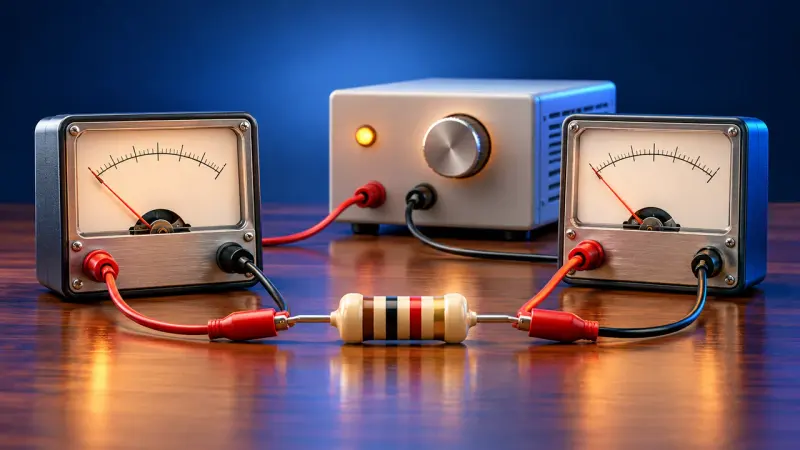
Connect lamps in series or in parallel and measure current and voltage at different points.
Grade 7–9 Baden-Württemberg: grade 9/10 Bavaria: grade 8 Berlin: grades 7/8, 9/10 Brandenburg: grades 7/8, 9/10 Bremen: grade 7–9 Hamburg: grades 7, 8, 9 Hesse: grade 9/10 Lower Saxony: grade 7/8 North Rhine-Westphalia: grade 7–10 Rhineland-Palatinate: grade 7–10 Saarland: grades 7, 9 Saxony: grades 7, 8 Saxony-Anhalt: grade 7/8 Schleswig-Holstein: grade 7–10
Turn up the voltage and the current rises, always in the same ratio. Point by point the characteristic curve appears, though not quite straight for a lamp.
Grade 7–9 Baden-Württemberg: grade 9/10 Bavaria: grade 8 Berlin: grades 7/8, 9/10 Brandenburg: grades 7/8, 9/10 Bremen: grade 7–9 Hamburg: grades 8, 9 Hesse: grade 9/10 Lower Saxony: grade 7/8 North Rhine-Westphalia: grade 7–10 Rhineland-Palatinate: grade 7–10 Saarland: grades 7, 9 Saxony: grade 8 Saxony-Anhalt: grade 7/8 Schleswig-Holstein: grade 7–10
Unit 10 Energy balances and efficiencyMachines and energy: conservation of energy, energy flow diagrams, ΔE = P · Δt = F · Δs, efficiency and simple machines such as pulleys and block and tackle.
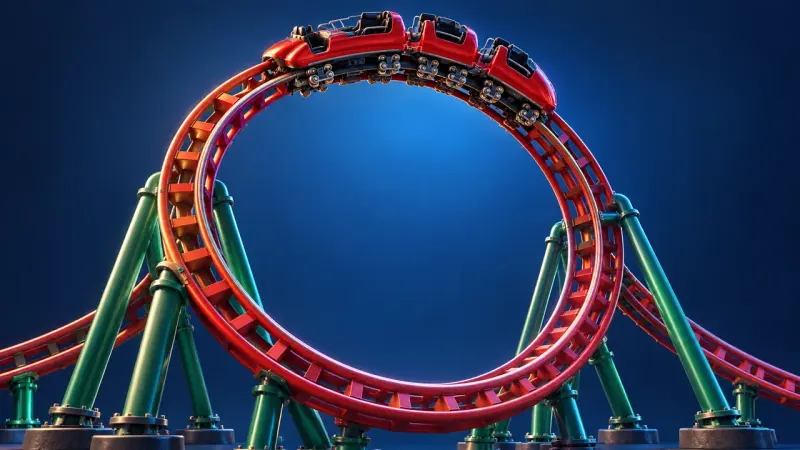
A car rides a roller coaster: energy bars show how potential and kinetic energy turn into each other.
Grade 7–11 Baden-Württemberg: grades 9/10, 11 Bavaria: grade 9 Berlin: grades 7/8, 9/10 Brandenburg: grades 7/8, 9/10 Bremen: grades 7–9, 10 Hamburg: grades 7, 8, 9 Hesse: grades 9/10, 11 Lower Saxony: grades 9/10, 11 North Rhine-Westphalia: grades 7–10, 11 Rhineland-Palatinate: grades 7–10, 11 Saarland: grades 8, 10, 11 Saxony: grades 7, 11 Saxony-Anhalt: grades 7/8, 9, 11/12 Schleswig-Holstein: grades 7–10, 11
How can a child lift an adult on a seesaw? With the longer arm. Wheelbarrows and bottle openers use the same trick.
Grade 7–11 Baden-Württemberg: grade 7/8 Bavaria: grade 8 Berlin: grade 7/8 Brandenburg: grade 7/8 Hamburg: grades 7, 8 Hesse: grades 9/10, 11 North Rhine-Westphalia: grade 7–10 Rhineland-Palatinate: grades 7–10, 11 Saarland: grade 8 Saxony: grade 7 Saxony-Anhalt: grade 7/8
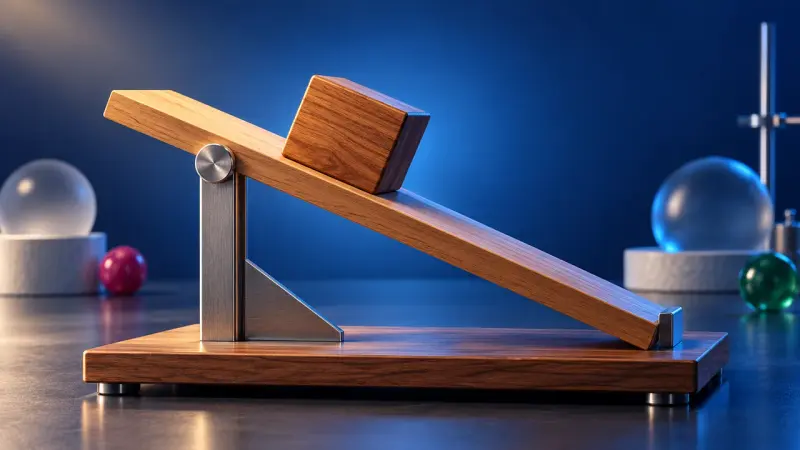
A block sits on a slope. At what angle does it start to slide? The weight is split into two parts to find out.
Grade 8–11 Baden-Württemberg: grade 11 Bavaria: grade 8 Berlin: grades 7/8, 9/10 Brandenburg: grades 7/8, 9/10 Bremen: grade 10 Hamburg: grade 8 Hesse: grade 9/10 North Rhine-Westphalia: grades 7–10, 11 Rhineland-Palatinate: grades 7–10, 11 Saarland: grade 11 Saxony: grades 10, 11 Saxony-Anhalt: grades 9, 11/12 Schleswig-Holstein: grade 11
Unit 11 Sensors in everyday lifeBasic physics of everyday technology: how sensors and transducers use known interactions to turn quantities into electrical signals, for example microphone, CCD or thermistor.
No separate simulation is planned for this.
Unit 12 Practice and researchIndependent, question-led experimenting: forming hypotheses, planning, carrying out and evaluating experiments, with content from earlier or new topic fields.
No separate simulation is planned for this.
The summaries describe the curriculum in our own words. The original text is authoritative. Original text (German): Rahmenlehrplan und Lehrplan, Gymnasium, Physics, grade 7–10