
Physics by grade
The units of Bildungsplan (Hamburg, Gymnasium) with matching simulations. The summaries are our own – the original text is authoritative.
Grade 8
- 1.1 Electrostatics and the circuit as a system (7/8)
- 2.1 Motion, force and energy (7/8)
- 1.2 Resistance, energy and power, induction (8/9)
- 3.1 Atomic nuclei, forces and radioactivity (8/9)
- 3.2 Thermal energy, radiation budget and greenhouse effect (8/9)
- 2.2 Accelerated motion and conservation of energy (8/9)
Grade 9
Grade 10
Grade 11/12
- 1.1 The field concept for describing interactions
- 1.2 Bodies in static fields
- 1.3 Changing electromagnetic fields
- 2.1 Oscillations
- 2.2 Properties and propagation of waves
- 2.3 Superposition of waves
- 3.1 Quantum objects
- 3.2 Models of the atom
- 4.1 Planetary motion (elective topic)
- 4.2 Aspects of astrophysics (elective topic)
More simulations
These simulations are not assigned to a grade in the Hamburg curriculum.
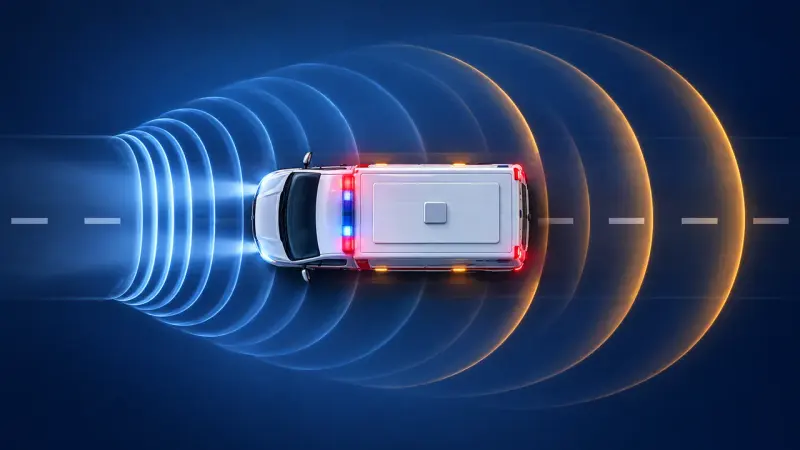
Doppler effect
An ambulance drives past and the siren sounds lower. The wave fronts show why. You can also listen to it.
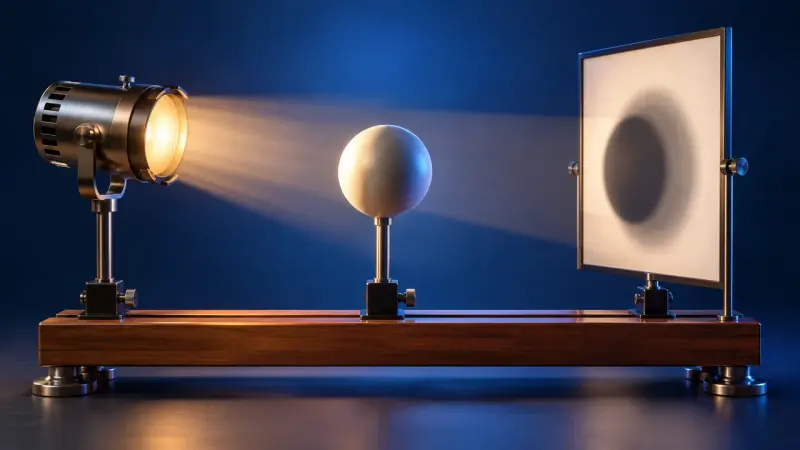
Light and shadow
One lamp casts a sharp shadow, two lamps a penumbra. Solar and lunar eclipses form in just the same way.
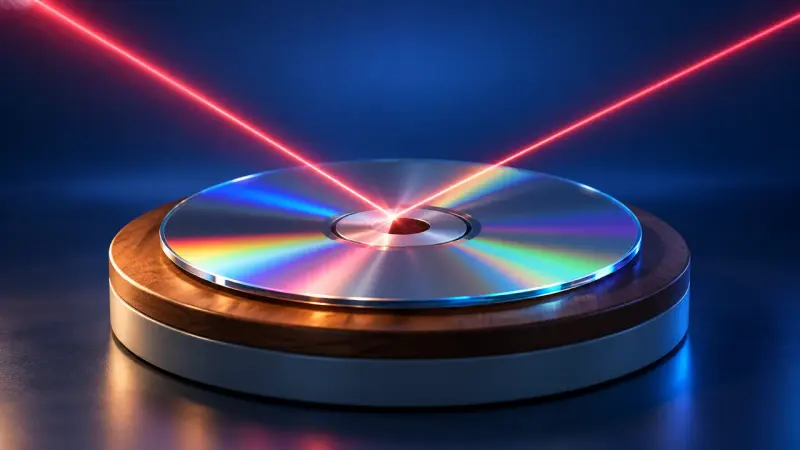
Reflection at a plane mirror
Laser at the mirror, measure the angles: angle of incidence equals angle of reflection, every time. And why does the candle appear just as far behind the mirror?

Refraction and total internal reflection
A light ray bends when it passes into glass or water. At a shallow angle it cannot get out at all: total internal reflection, as in an optical fibre.
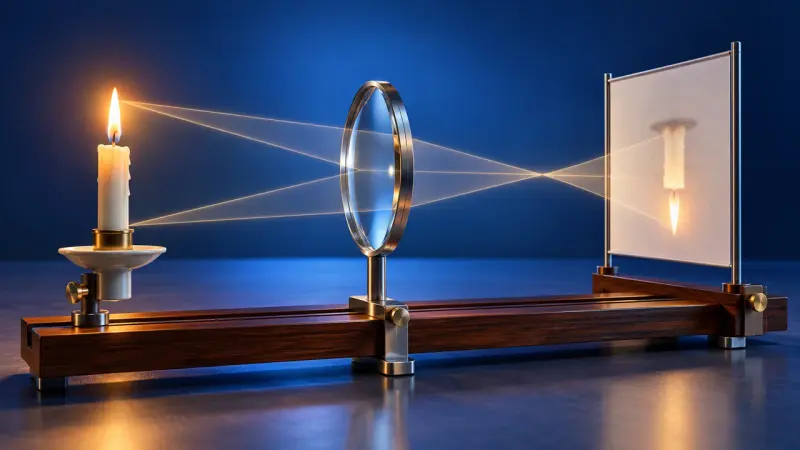
Lenses and image formation
Move a candle in front of a lens and construct the image with three special rays. It becomes sharp on the screen.
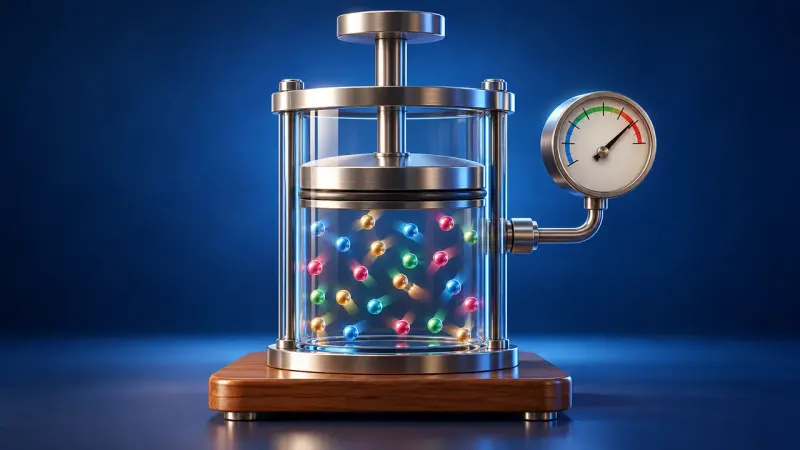
Gas laws
Push the piston halfway in and the pressure doubles. Heat the gas and it pushes the piston out. Pressure, volume and temperature are tightly linked.
The summaries describe the curriculum in our own words. The original text is authoritative.