
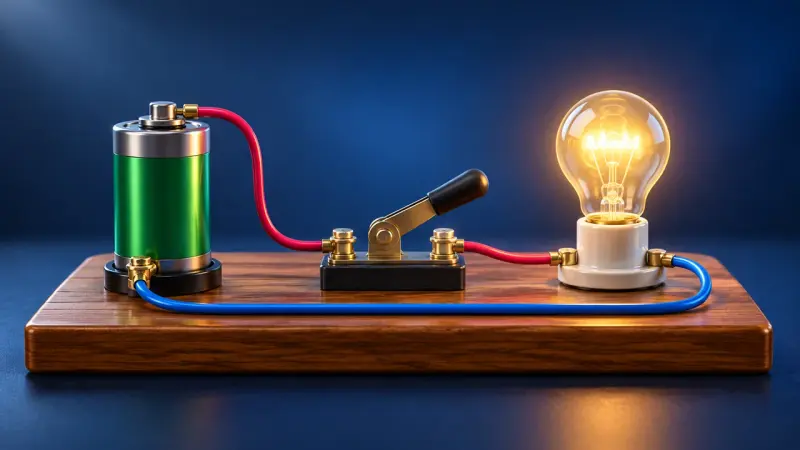
Simple circuit
Build a circuit with a battery, a switch and a lamp, as a set-up and as a circuit diagram. When the circuit is closed, the lamp lights up.
Grade 8: the topics for 7/8 and for 8/9 overlap in grade 8, so both are listed here. The order of the topics is to be followed. The numbers are those of the curriculum (topic field.topic).
Static electricity and two kinds of charge, the electron and a simple atomic model, conductors and insulators, voltage as an electrical pressure difference, current in a closed circuit.
Build a circuit with a battery, a switch and a lamp, as a set-up and as a circuit diagram. When the circuit is closed, the lamp lights up.

Connect lamps in series or in parallel and measure current and voltage at different points.
Velocity from speed and direction, uniform motion, distance-time and velocity-time graphs, change of velocity and force, deformation and measuring force, inertia and interaction, simple machines, energy balances.
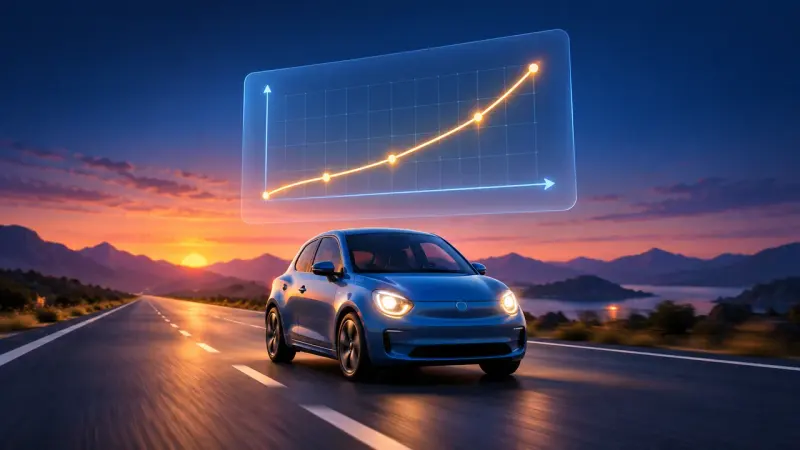
A car drives at a steady speed or speeds up. The graphs for distance, speed and acceleration are drawn live.
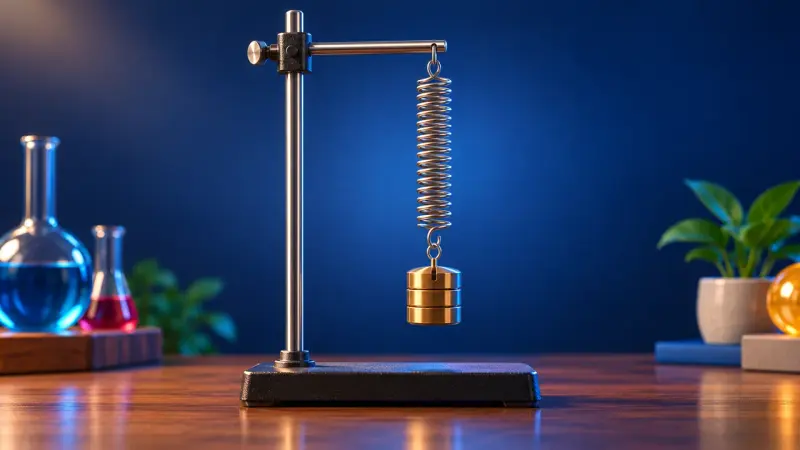
Hang weights on a spring and measure how far it stretches. Double the force means double the stretch.

How can a child lift an adult on a seesaw? With the longer arm. Wheelbarrows and bottle openers use the same trick.
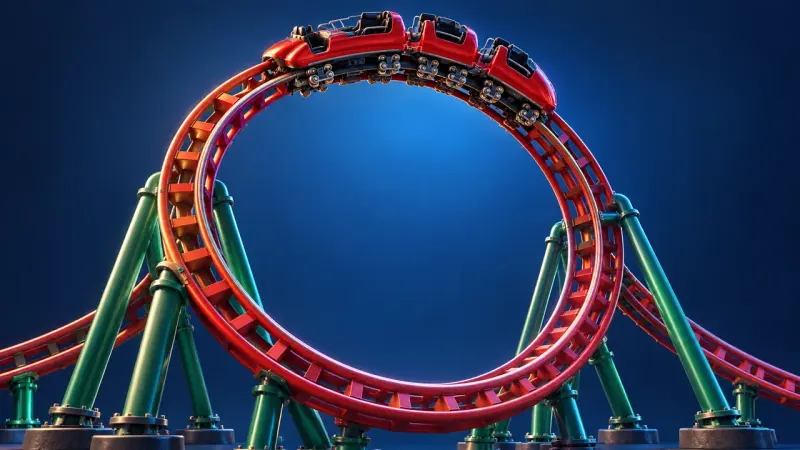
A car rides a roller coaster: energy bars show how potential and kinetic energy turn into each other.

Two forces pull on one point. Use the parallelogram of forces to find the total force or to split a force into two.
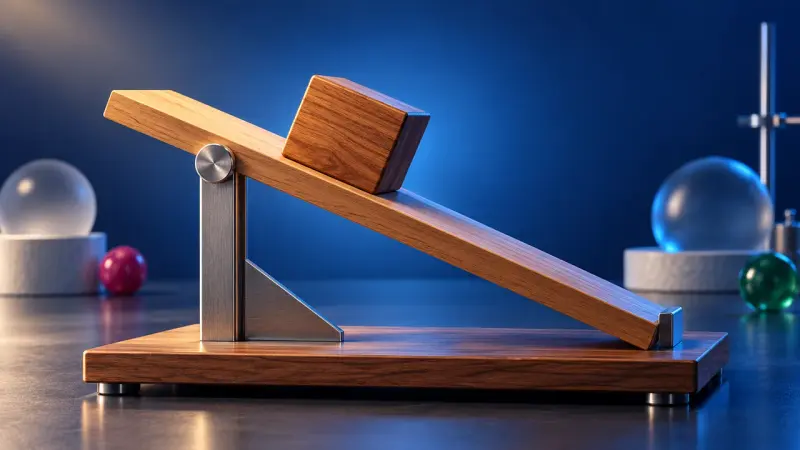
A block sits on a slope. At what angle does it start to slide? The weight is split into two parts to find out.
Electrical resistance and Ohm’s law, circuit diagrams, voltage, current and power of household appliances, electrical energy, generator and transformer.
Build a circuit with a battery, a switch and a lamp, as a set-up and as a circuit diagram. When the circuit is closed, the lamp lights up.
Connect lamps in series or in parallel and measure current and voltage at different points.
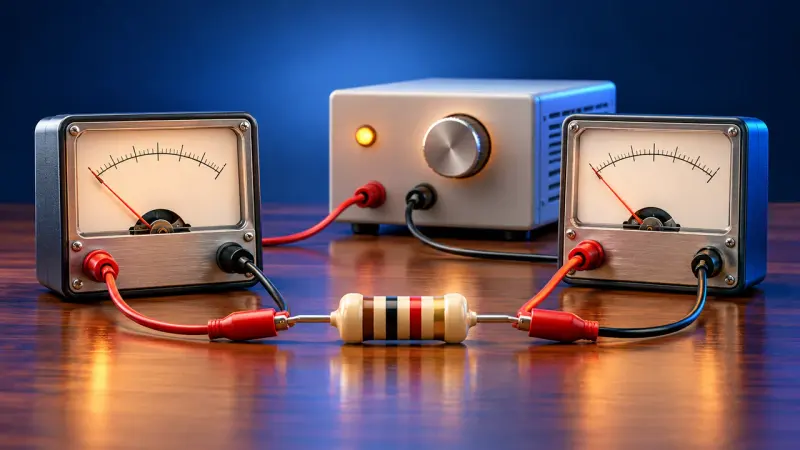
Turn up the voltage and the current rises, always in the same ratio. Point by point the characteristic curve appears, though not quite straight for a lamp.
Structure of the nucleus, isotopes and nuclear forces, types of radiation, spontaneous decay, activity and half-life, absorption, biological effects and radiation protection, benefits and dangers.
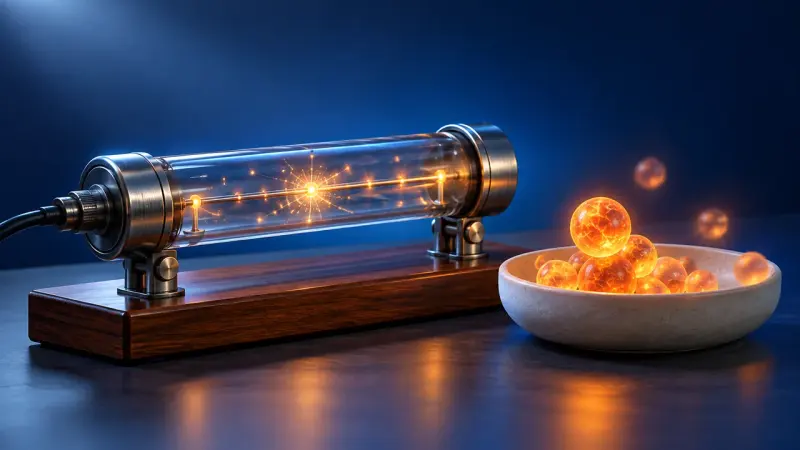
Many nuclei decay at random and a Geiger counter clicks. Even so, after each half-life almost exactly half are left.
Temperature as a measure of the kinetic energy of particles, heat transfer, the electromagnetic spectrum, the Earth’s radiation balance, the atmosphere and the greenhouse effect.
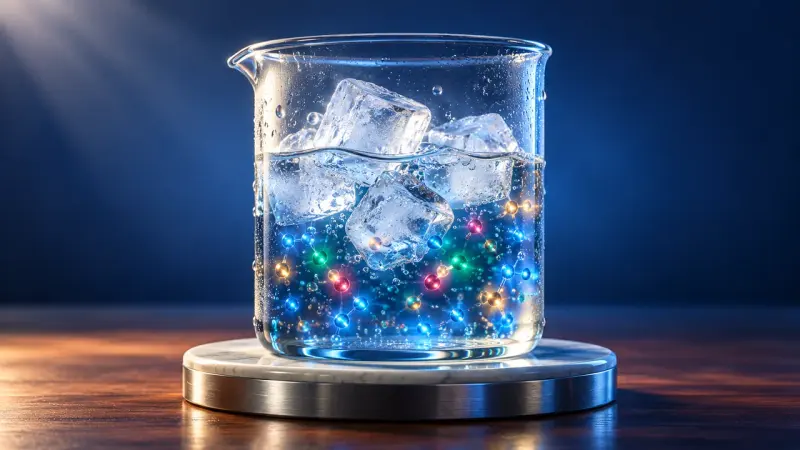
Ice melts, water boils, and the temperature stops rising meanwhile. The particles show where the energy goes in between.
Impulse and acceleration, uniformly accelerated motion and free fall, friction, motion graphs from measured data, kinetic and potential energy, conservation of energy.
A car drives at a steady speed or speeds up. The graphs for distance, speed and acceleration are drawn live.
A car rides a roller coaster: energy bars show how potential and kinetic energy turn into each other.
The summaries describe the curriculum in our own words. The original text is authoritative. Original text (German): Bildungsplan, Gymnasium, Physics, grade 8