
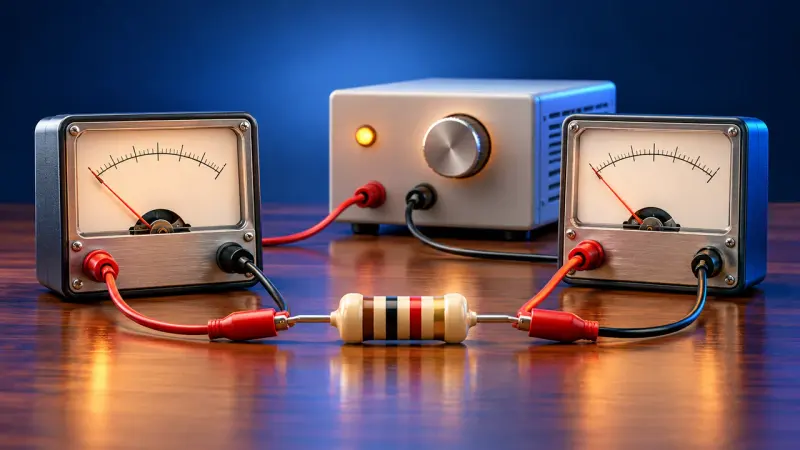
Ohm’s law
Turn up the voltage and the current rises, always in the same ratio. Point by point the characteristic curve appears, though not quite straight for a lamp.
Current, voltage and resistance using a model of the circuit; measuring characteristic curves, calculating with R = U/I and investigating series and parallel circuits with up to three resistors.
Turn up the voltage and the current rises, always in the same ratio. Point by point the characteristic curve appears, though not quite straight for a lamp.

Connect lamps in series or in parallel and measure current and voltage at different points.
Law of reflection and mirror images, refraction, image formation by converging lenses (real and virtual), the eye and vision defects, and total internal reflection with optical fibres.
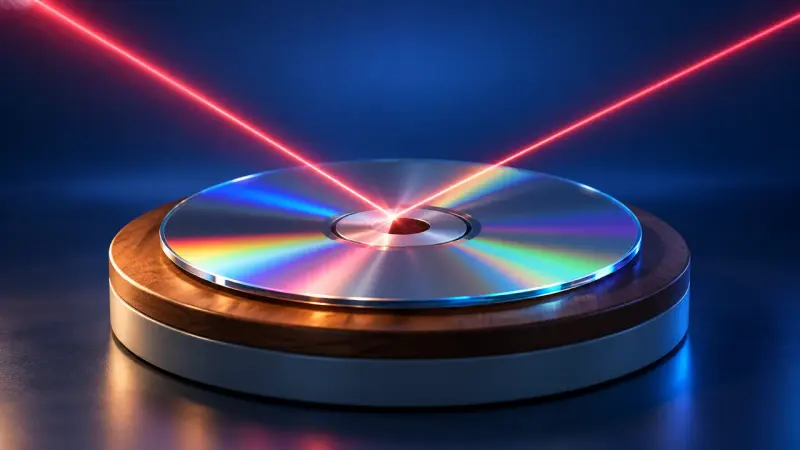
Laser at the mirror, measure the angles: angle of incidence equals angle of reflection, every time. And why does the candle appear just as far behind the mirror?

A light ray bends when it passes into glass or water. At a shallow angle it cannot get out at all: total internal reflection, as in an optical fibre.
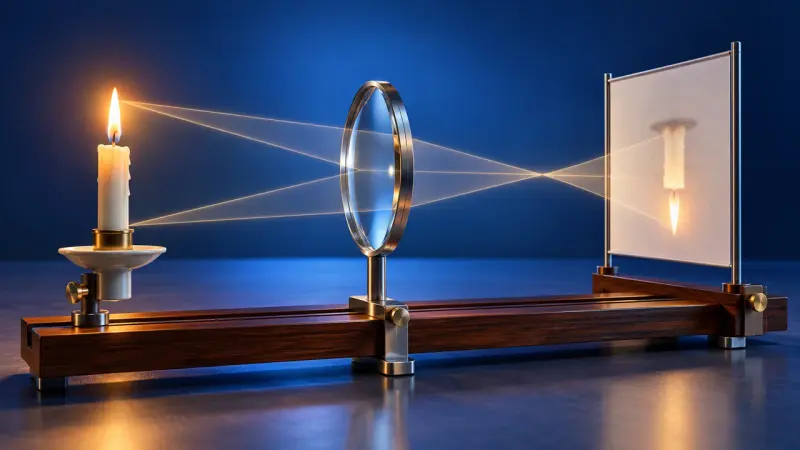
Move a candle in front of a lens and construct the image with three special rays. It becomes sharp on the screen.
Velocity as an arrow, change of velocity caused by a force, F · Δt = m · Δv as the definition of force; measuring acceleration in one dimension.
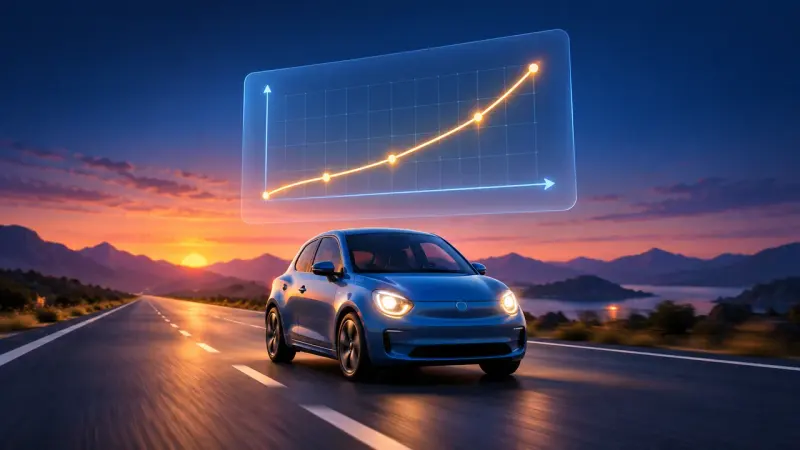
A car drives at a steady speed or speeds up. The graphs for distance, speed and acceleration are drawn live.
Mass and weight, adding forces and resolving them on an inclined plane, equilibrium of forces and the law of inertia, and the stretching of springs with the Hooke region.
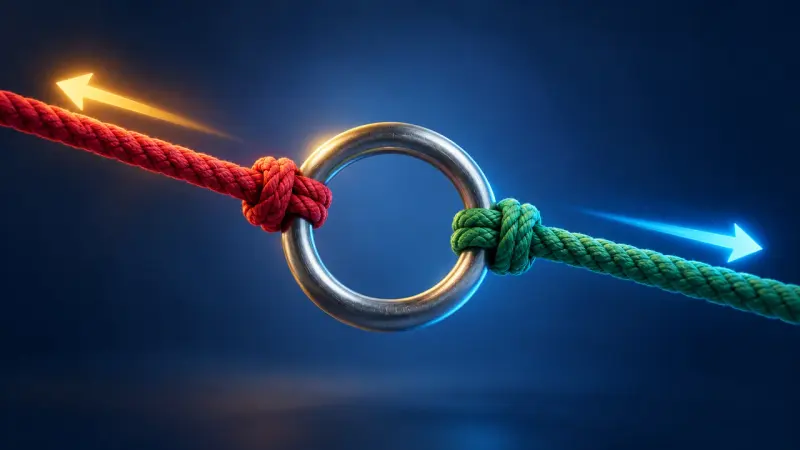
Two forces pull on one point. Use the parallelogram of forces to find the total force or to split a force into two.
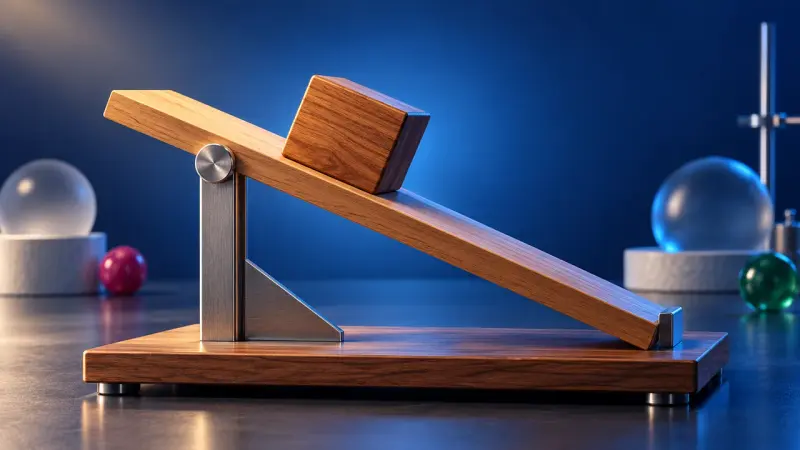
A block sits on a slope. At what angle does it start to slide? The weight is split into two parts to find out.
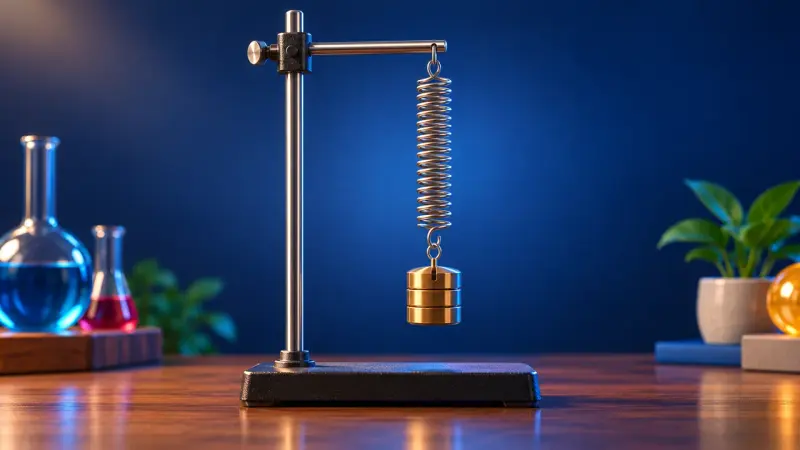
Hang weights on a spring and measure how far it stretches. Double the force means double the stretch.

How can a child lift an adult on a seesaw? With the longer arm. Wheelbarrows and bottle openers use the same trick.
Measuring solar modules in series and parallel and investigating external influences such as tilt and shade; exploring other sources such as galvanic cells or power supplies.
No separate simulation is planned for this.
Optional topics for independent experimenting and evaluating, for example magnifying glasses and optical instruments, colour mixing or motion analysis in sport.
Move a candle in front of a lens and construct the image with three special rays. It becomes sharp on the screen.
The summaries describe the curriculum in our own words. The original text is authoritative. Original text (German): LehrplanPLUS, Gymnasium, Physics, grade 8