
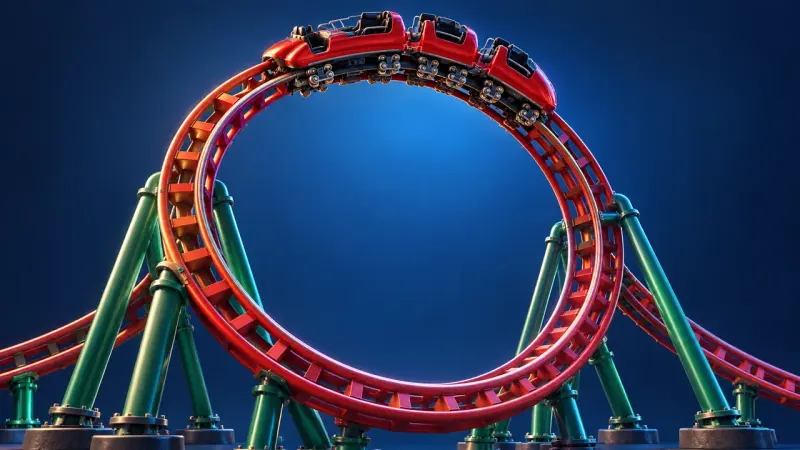
Conservation of energy (roller coaster)
A car rides a roller coaster: energy bars show how potential and kinetic energy turn into each other.
Converting potential, kinetic and elastic energy and balancing them with the conservation of energy; distinguishing and measuring work and power.
A car rides a roller coaster: energy bars show how potential and kinetic energy turn into each other.
Charge as a multiple of the elementary charge, voltage as a potential difference, electrical energy and power in circuits, and the efficiency of devices.
No separate simulation is planned for this.
Photon model of light, colour and photon energy, emission and absorption spectra explained by the energy-level model, and absorption in the Earth’s atmosphere.
No separate simulation is planned for this.
Temperature as the mean kinetic energy of particles, internal energy, states of matter, and the pressure, volume and temperature of a gas.
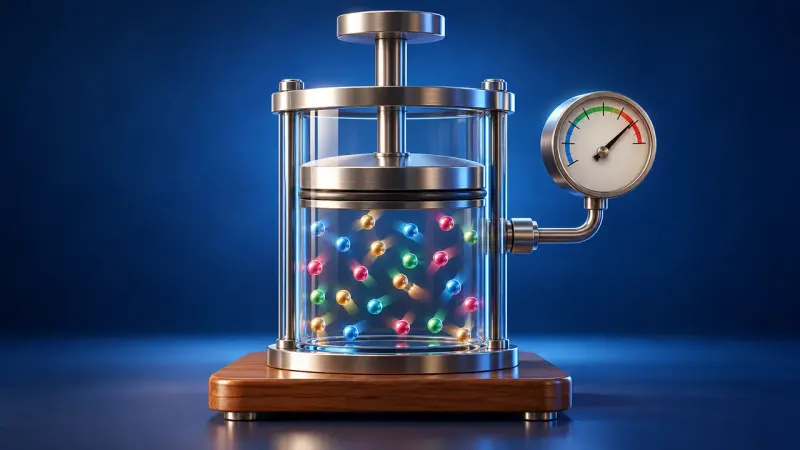
Push the piston halfway in and the pressure doubles. Heat the gas and it pushes the piston out. Pressure, volume and temperature are tightly linked.
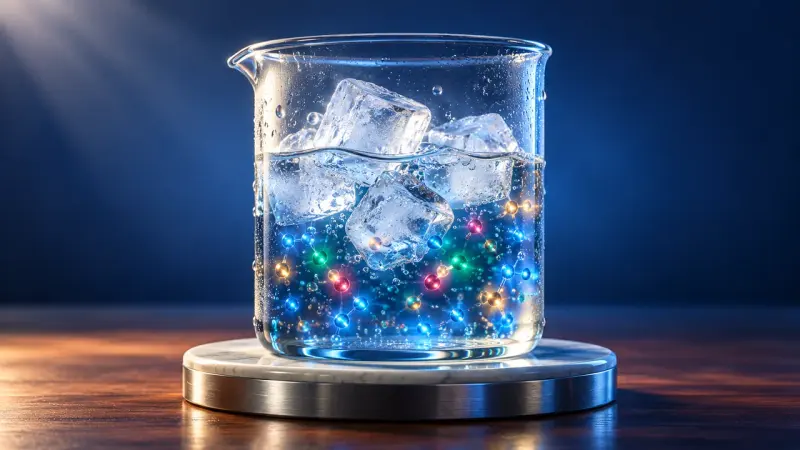
Ice melts, water boils, and the temperature stops rising meanwhile. The particles show where the energy goes in between.
Specific heat capacity, heat as a process quantity, conduction, convection and thermal radiation, and the greenhouse effect and the Earth’s radiation balance.
No separate simulation is planned for this.
Further aspects of the climate system such as sea-level rise, feedbacks and tipping points; checking alternative explanations of global warming with physics.
No separate simulation is planned for this.
Optional topics such as energy in the body, insulation, energy supply, vehicle technology or pressure and buoyancy, documented and presented independently.
No separate simulation is planned for this.
The summaries describe the curriculum in our own words. The original text is authoritative. Original text (German): LehrplanPLUS, Gymnasium, Physics, grade 9