
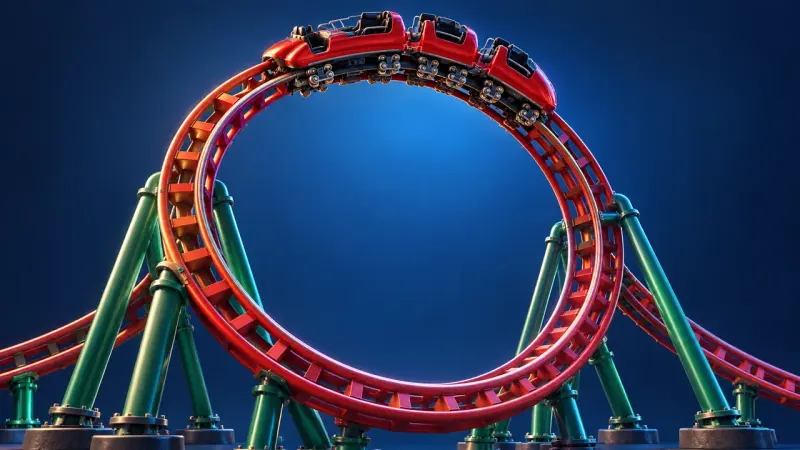
Conservation of energy (roller coaster)
A car rides a roller coaster: energy bars show how potential and kinetic energy turn into each other.
Section 3.2 covers the double grade 9/10; the same content is also listed under grade 10. Simulations are listed only where their grade range fits.
Distinguishing observation from explanation, testing statements experimentally, using models such as the atomic model and explaining the importance of the SI system.
No separate simulation is planned for this.
Forms of energy, energy transfer and dissipation; calculating potential energy, power and efficiency and evaluating careful use of energy.
A car rides a roller coaster: energy bars show how potential and kinetic energy turn into each other.
Components and circuit diagrams, conductors and insulators, measuring current and voltage, rules in series and parallel circuits, and electrical power, effects and dangers of current.

Connect lamps in series or in parallel and measure current and voltage at different points.
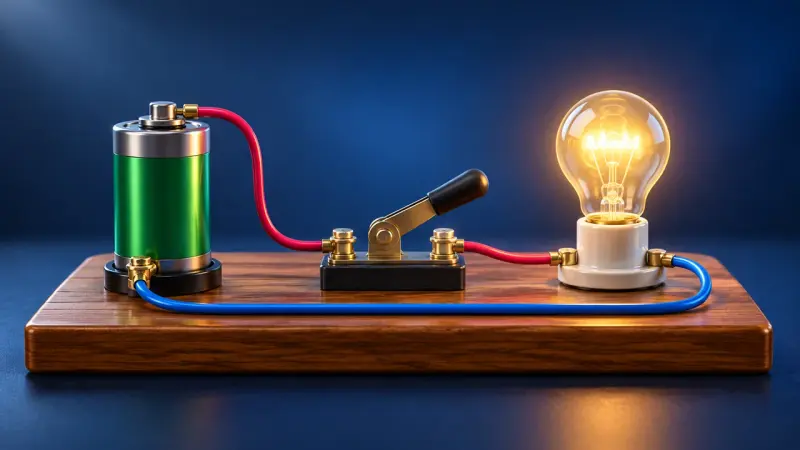
Build a circuit with a battery, a switch and a lamp, as a set-up and as a circuit diagram. When the circuit is closed, the lamp lights up.
Thermal expansion and density, Celsius and Kelvin scales with absolute zero, and the three types of heat transfer with technical applications.
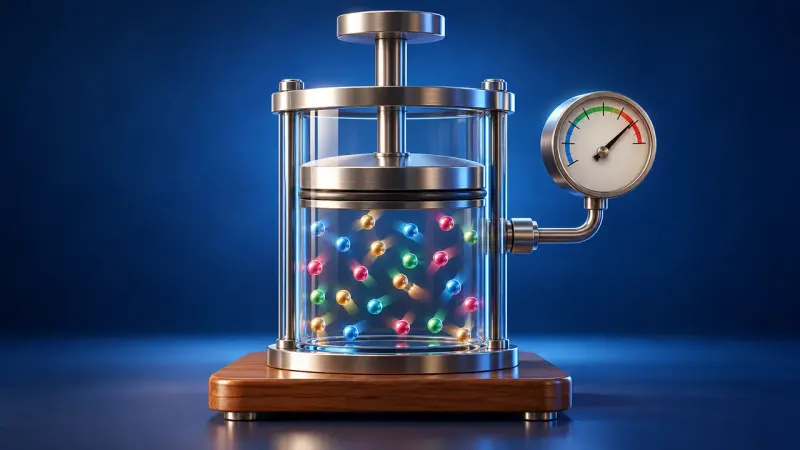
Push the piston halfway in and the pressure doubles. Heat the gas and it pushes the piston out. Pressure, volume and temperature are tightly linked.

Ice melts, water boils, and the temperature stops rising meanwhile. The particles show where the energy goes in between.
Resistance and characteristic curves, equivalent resistance in series and parallel; induction qualitatively, generator, transformer and electrical power supply.
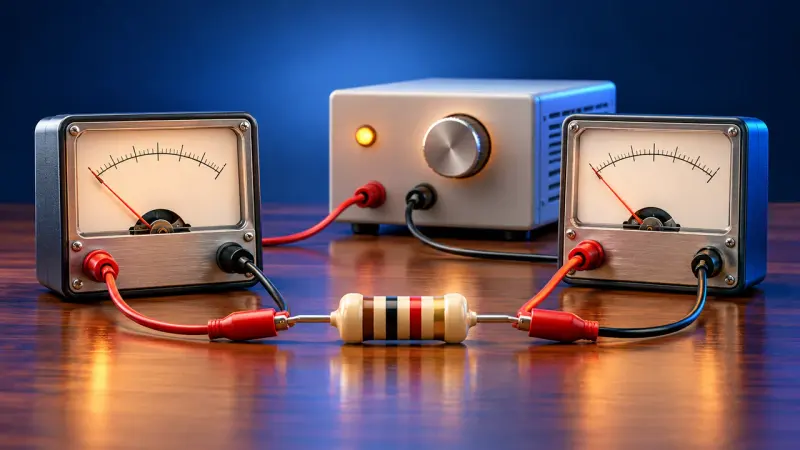
Turn up the voltage and the current rises, always in the same ratio. Point by point the characteristic curve appears, though not quite straight for a lamp.
Connect lamps in series or in parallel and measure current and voltage at different points.
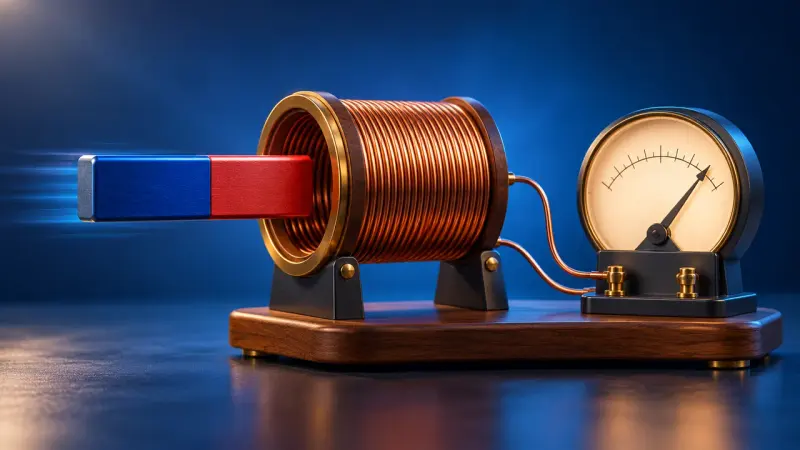
Magnet in, the needle swings. Magnet out, it swings the other way. Every generator works on the same principle.
Calculating heating energy with specific heat capacity and evaluating the natural and man-made greenhouse effect, tipping elements and ways of supplying energy.
No separate simulation is planned for this.
Structure of the atom and isotopes, radioactivity with alpha, beta and gamma radiation and half-life, nuclear fission and fusion, and benefits, risks and radiation protection.
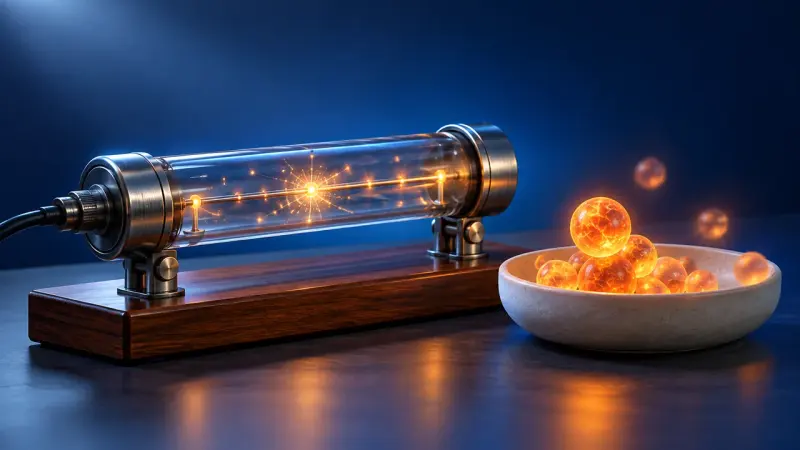
Many nuclei decay at random and a Geiger counter clicks. Even so, after each half-life almost exactly half are left.
The summaries describe the curriculum in our own words. The original text is authoritative. Original text (German): Bildungsplan, Gymnasium, Physics, grade 9/10