
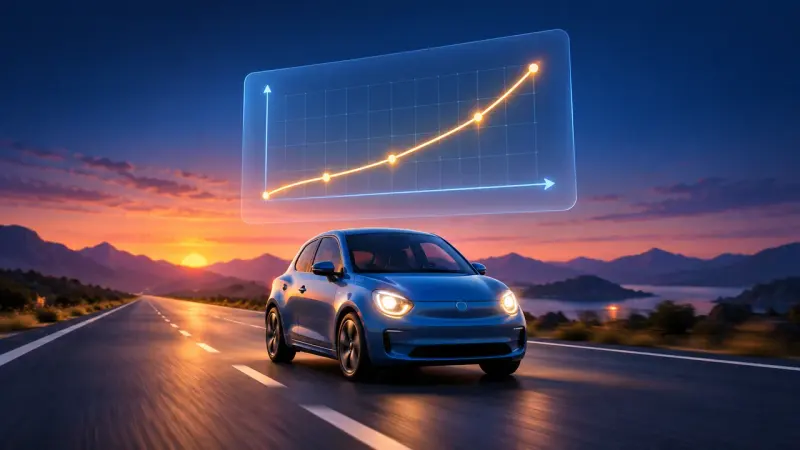
Uniform and accelerated motion (distance–time and velocity–time graphs)
A car drives at a steady speed or speeds up. The graphs for distance, speed and acceleration are drawn live.
Introductory phase of upper secondary (G9: grade 11). Dynamics including kinematics is taught here, in at most half of the time; fields, oscillations and waves, and quantum physics already start here and continue in the qualification phase. Content beyond the basic level is compulsory at the higher level. The numbers are our own.
Describing motion, force and inertia, friction, conservation of energy and momentum.
Position, time, velocity and acceleration, uniform and uniformly accelerated motion, free fall and horizontal projection.
A car drives at a steady speed or speeds up. The graphs for distance, speed and acceleration are drawn live.

A ball falls on Earth, the Moon or Mars and gets faster every second. In a vacuum even a feather keeps up.

Which launch angle goes furthest? On Earth it is 45°, and on the Moon the same ball flies six times as far.
Mass, force and acceleration, the principle of inertia, friction, conservation of energy and iterative prediction of real motion; circular motion can start here.

Two forces pull on one point. Use the parallelogram of forces to find the total force or to split a force into two.
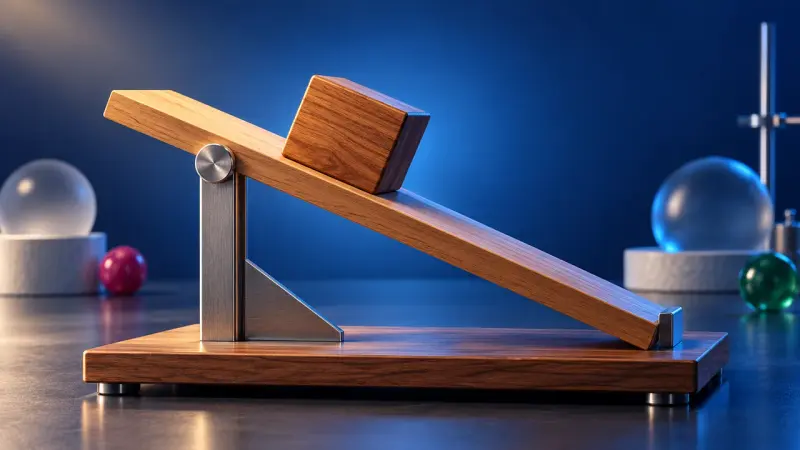
A block sits on a slope. At what angle does it start to slide? The weight is split into two parts to find out.
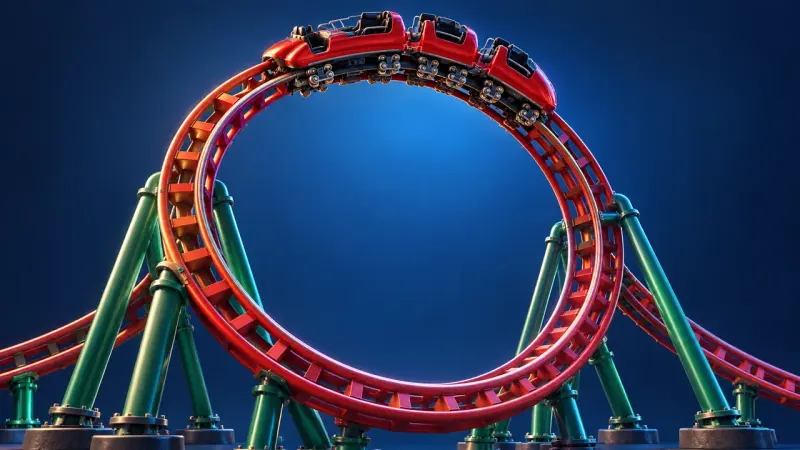
A car rides a roller coaster: energy bars show how potential and kinetic energy turn into each other.

A ball swings round on a string, a car drives through a bend. Which force keeps them on a circular path?
Momentum as a conserved quantity in collisions and interactions.
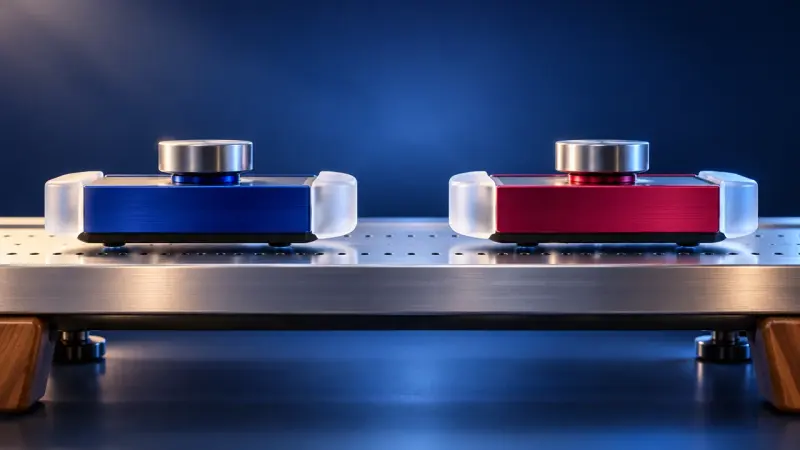
Two gliders collide on an air track. Before and after are compared to see what stays the same.
The field concept, bodies in static fields and changing electromagnetic fields.
Electric, magnetic and gravitational fields, charge and induced charge, field strength, field lines and equipotentials, Coulomb’s law and the law of gravitation, potential, the parallel-plate capacitor with capacitance, energy and charging and discharging, magnetic flux density.

Two charges and the field rearranges itself. A test charge measures where the force is strongest.

A capacitor charges through a resistor and discharges again. The graphs show how voltage and current change over time.
Charges in electric and magnetic fields, the Lorentz force and the Hall effect, circular motion with centripetal force, also in gravitational fields, measuring e/m, accelerators and mass spectrometers.
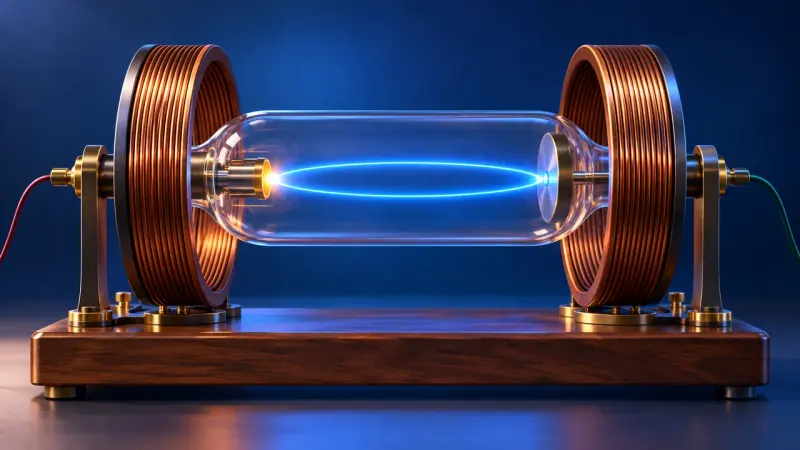
Electrons fly along a glowing circular path in a magnetic field. From the radius you determine a property of the electron.
A ball swings round on a string, a car drives through a bend. Which force keeps them on a circular path?

Too fast and the planet flies off, never to return. A little slower and it traces an ellipse around the Sun, exactly as Kepler's laws say.
Magnetic flux and the law of induction, inductance and self-induction, switching on and off, technical applications and LC circuits.
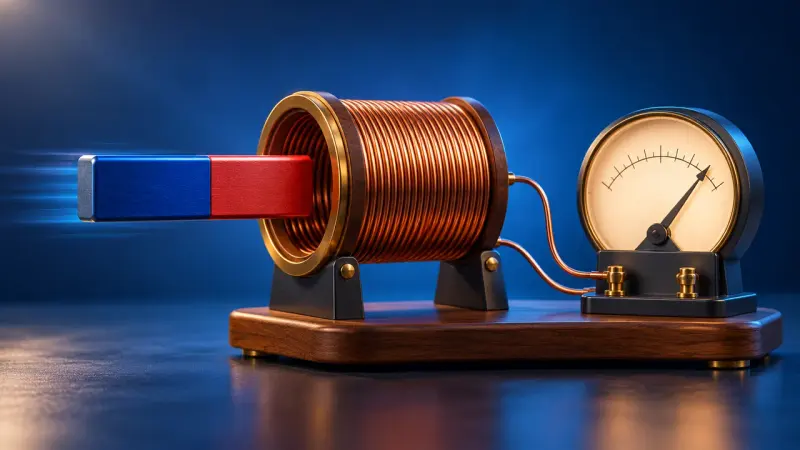
Magnet in, the needle swings. Magnet out, it swings the other way. Every generator works on the same principle.
Oscillations, propagation and superposition of waves, and spectra.
Parameters, the equation of oscillation and the linear force law, damped and forced oscillations with resonance, energy comparison.
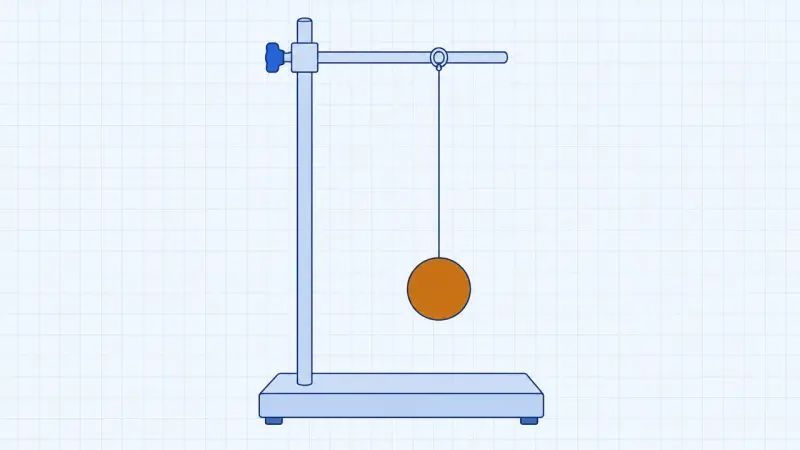
Pull a pendulum aside, let it go and measure how long one swing takes. What does it depend on? Also with large angles and damping.

A mass bounces up and down on a spring. Graphs show position, speed and energy during the oscillation.
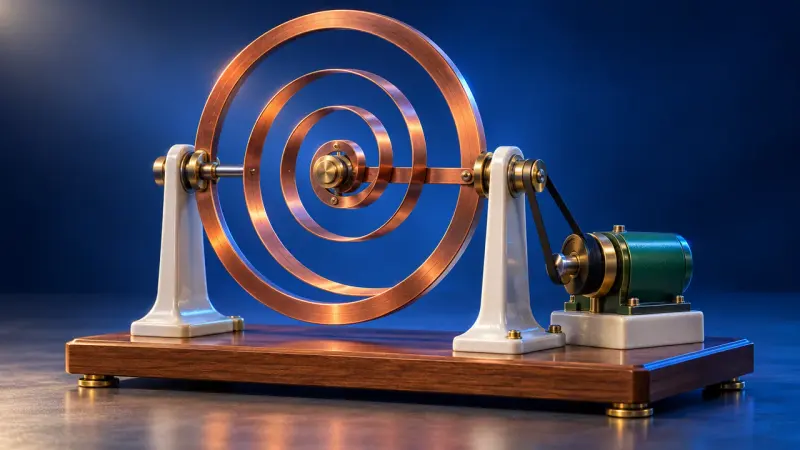
A motor drives an oscillating wheel. If the motor hits exactly the right rhythm, the wheel swings especially strongly: resonance.
Wavelength, frequency and speed, Huygens’ principle, diffraction and refraction, transverse and longitudinal waves, the Doppler effect (qualitative) and polarisation.
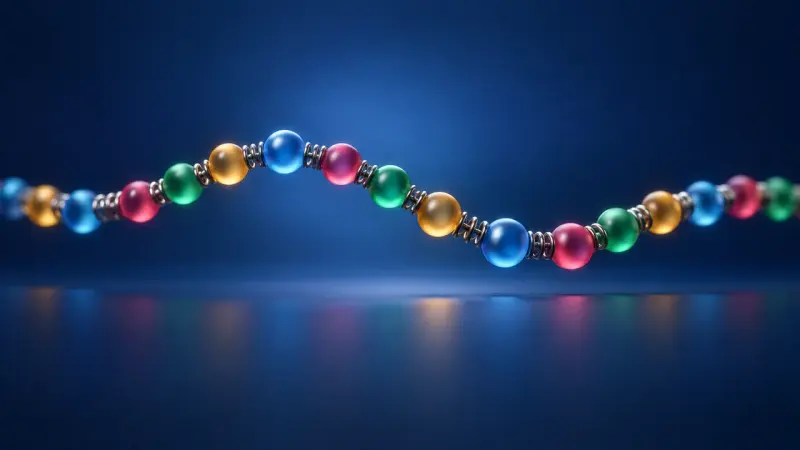
A wave travels through a chain of particles. Each particle only oscillates in place, across or along the direction of travel.
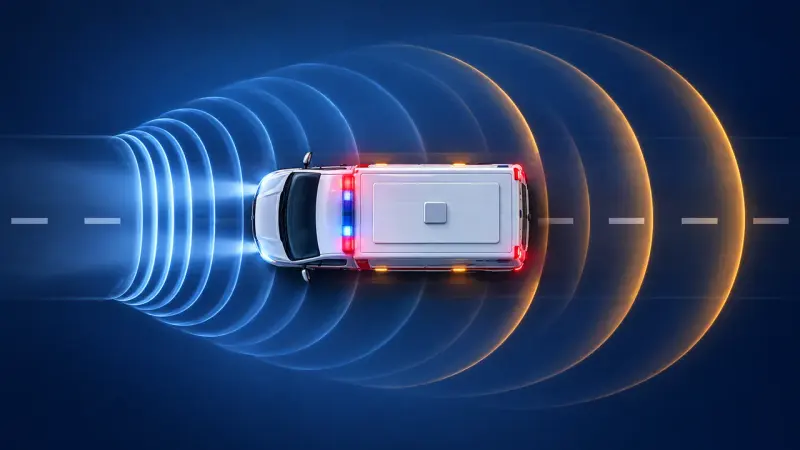
An ambulance drives past and the siren sounds lower. The wave fronts show why. You can also listen to it.
Superposition and interference at double slits, gratings and single slits, interferometers and standing waves.
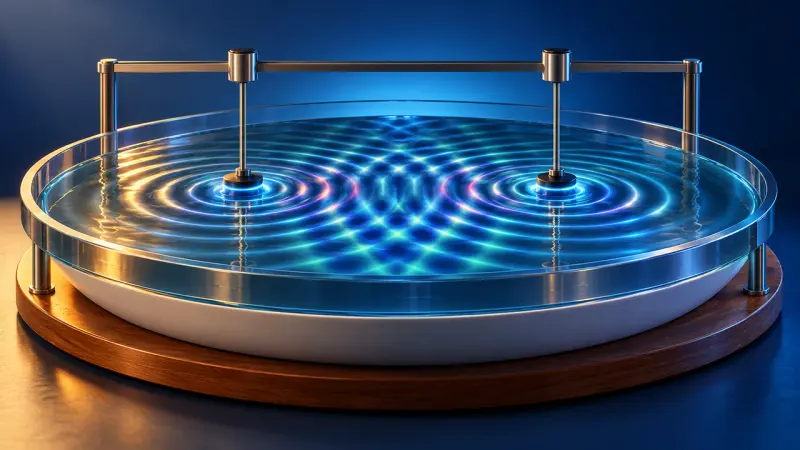
Two circular waves overlap: in some places they reinforce each other, in others they cancel out.
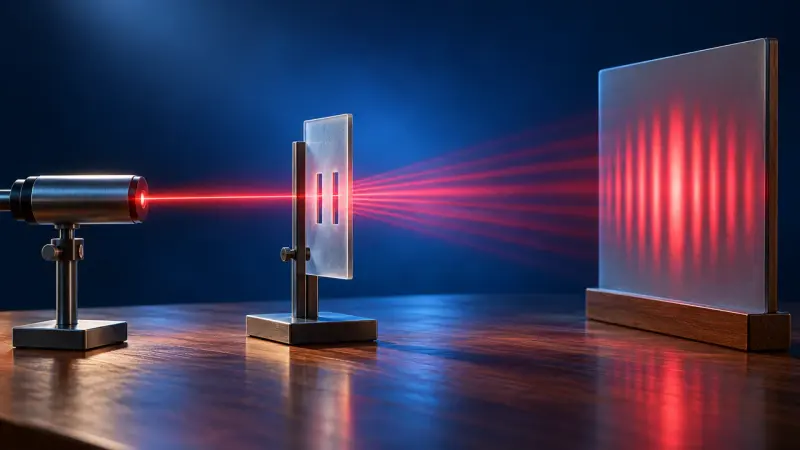
Laser light passes through a double slit or a grating. A pattern of bright and dark stripes appears on the screen.
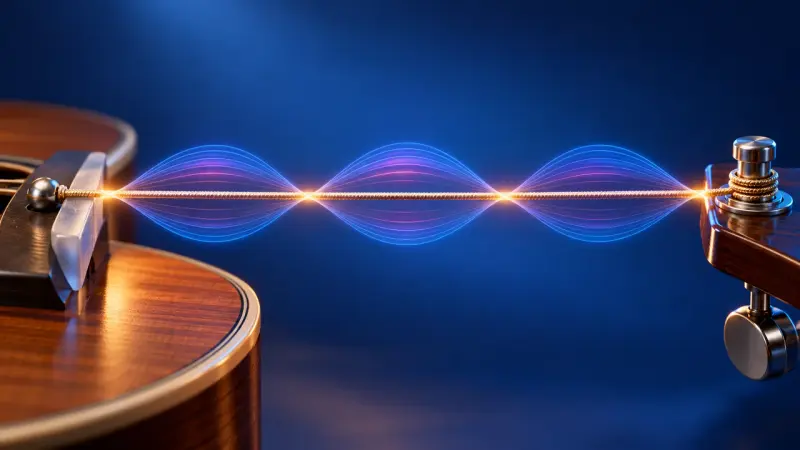
A wave is reflected at the end and a fixed pattern of nodes and antinodes appears, like on a guitar string.
Colours, the electromagnetic spectrum, emission and absorption spectra, discrete and continuous spectra.
Matching simulations are listed under Grade 12/13
Quantum objects and models of the atom.
Basic aspects of quantum theory, the double slit with photons and electrons, the photoelectric effect, the de Broglie wavelength, the X-ray bremsstrahlung spectrum, Bragg reflection, the Compton effect and uncertainty.
Laser light passes through a double slit or a grating. A pattern of bright and dark stripes appears on the screen.
The quantum model of the atom, orbitals and energy levels of hydrogen, line spectra, the potential well, characteristic X-rays and the Pauli principle.
Matching simulations are listed under Grade 12/13
The summaries describe the curriculum in our own words. The original text is authoritative. Original text (German): Fachanforderungen, Gymnasium, Physics, grade 11