
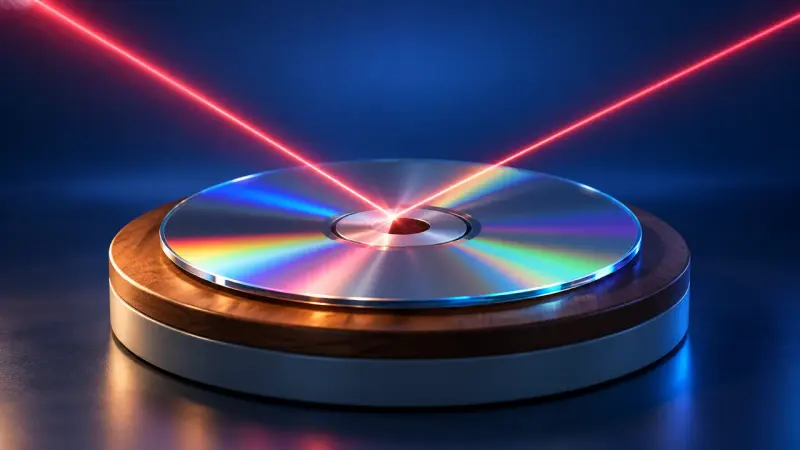
Reflection at a plane mirror
Laser at the mirror, measure the angles: angle of incidence equals angle of reflection, every time. And why does the candle appear just as far behind the mirror?
By the end of lower secondary (grades 7 to 10): the core curriculum does not assign content areas 5–11 to individual grades; each school decides in its own syllabus. The units are therefore the same for grades 7, 8, 9 and 10; they are shown as one stage. The numbers of the focal points are our own.
Mirror images with the law of reflection, refraction and total internal reflection, images formed by converging lenses, the eye and optical devices, as well as the spectrum and colour mixing.
Law of reflection and image formation in a plane mirror.
Laser at the mirror, measure the angles: angle of incidence equals angle of reflection, every time. And why does the candle appear just as far behind the mirror?
Refraction at boundaries, total internal reflection and optical fibres, images formed by converging lenses, in the eye and in optical instruments.

A light ray bends when it passes into glass or water. At a shallow angle it cannot get out at all: total internal reflection, as in an optical fibre.
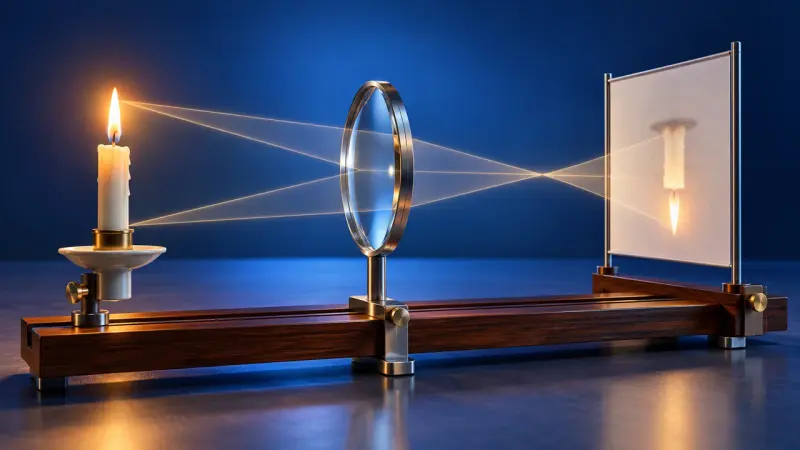
Move a candle in front of a lens and construct the image with three special rays. It becomes sharp on the screen.
Splitting light with a prism, infrared and ultraviolet, absorption and colour mixing (RGB, CMYK).
No separate simulation is planned for this.
Explaining lunar phases, eclipses and seasons with models, planets and other celestial bodies, the light year, gravity and the life cycle of stars.
Lunar phases, lunar and solar eclipses, seasons and planets.
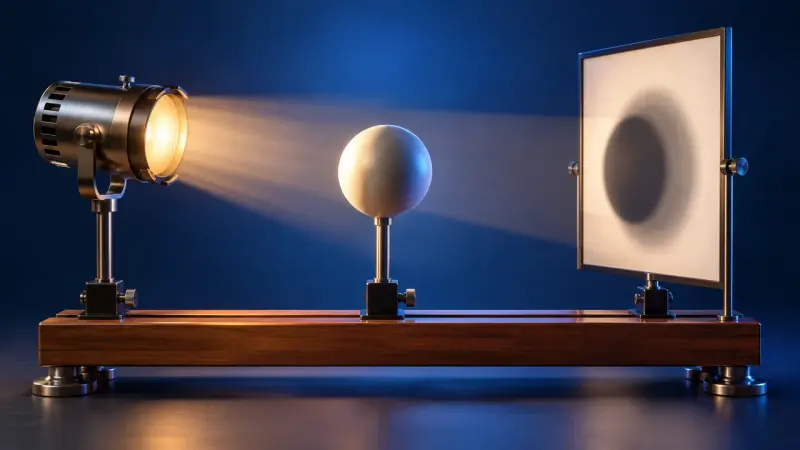
One lamp casts a sharp shadow, two lamps a penumbra. Solar and lunar eclipses form in just the same way.
Celestial objects, distances in light years and typical stages of stellar evolution.
No separate simulation is planned for this.
Describing motion with velocity and acceleration, adding forces as arrows, simple machines and the golden rule of mechanics, forms of energy, conservation of energy and power.
Average and instantaneous velocity, acceleration and position–time graphs.
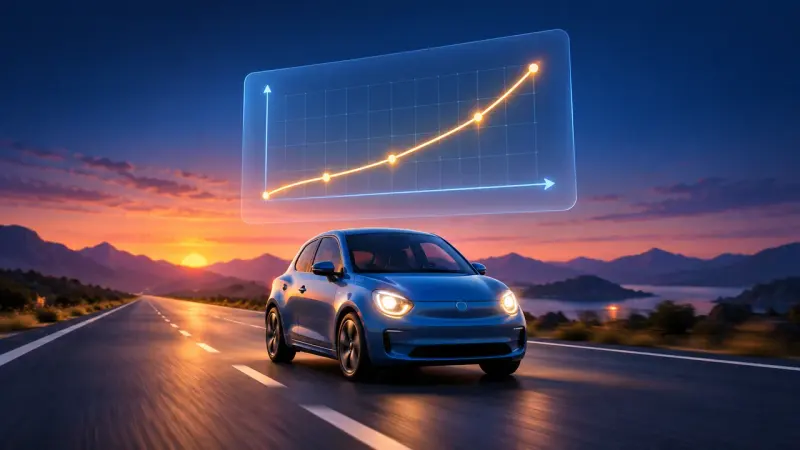
A car drives at a steady speed or speeds up. The graphs for distance, speed and acceleration are drawn live.

A ball falls on Earth, the Moon or Mars and gets faster every second. In a vacuum even a feather keeps up.
Forces change motion or deform bodies; action and reaction, weight and mass, adding forces and friction.
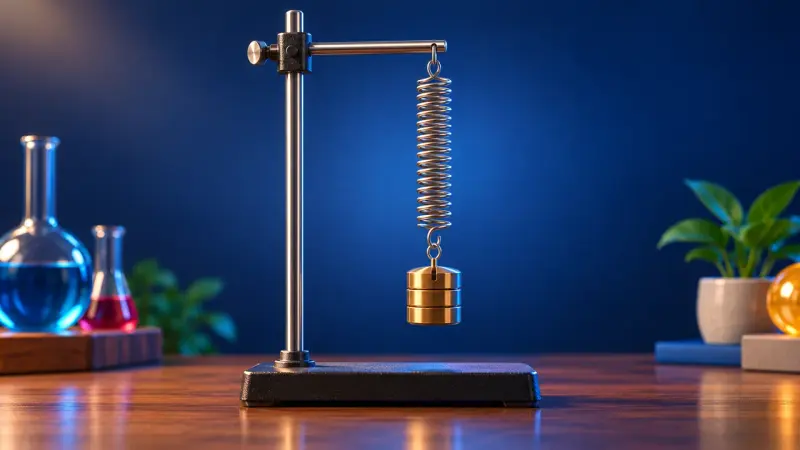
Hang weights on a spring and measure how far it stretches. Double the force means double the stretch.
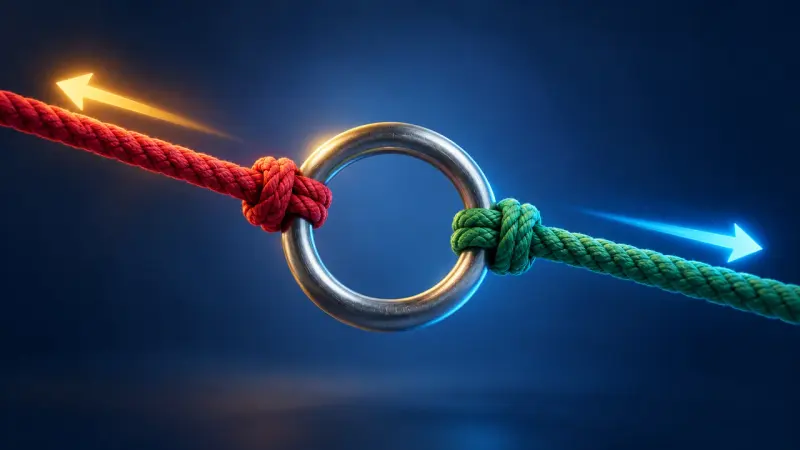
Two forces pull on one point. Use the parallelogram of forces to find the total force or to split a force into two.
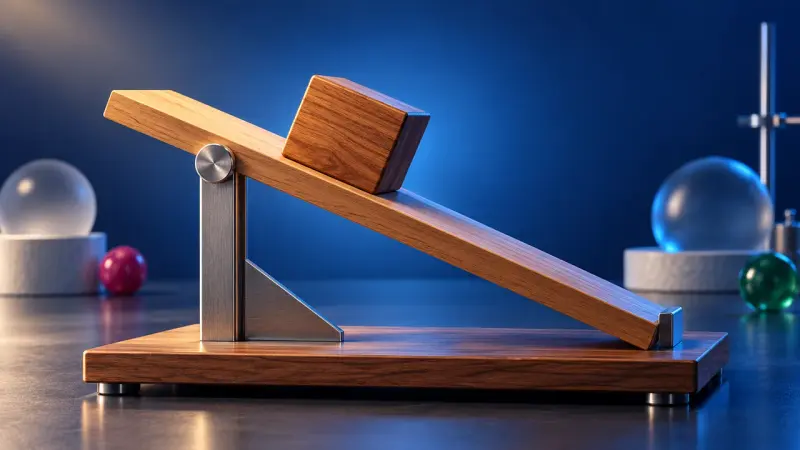
A block sits on a slope. At what angle does it start to slide? The weight is split into two parts to find out.
Simple machines change forces; what is saved in force must be added in distance.

How can a child lift an adult on a seesaw? With the longer arm. Wheelbarrows and bottle openers use the same trick.
A block sits on a slope. At what angle does it start to slide? The weight is split into two parts to find out.
Potential energy, kinetic energy and elastic energy.
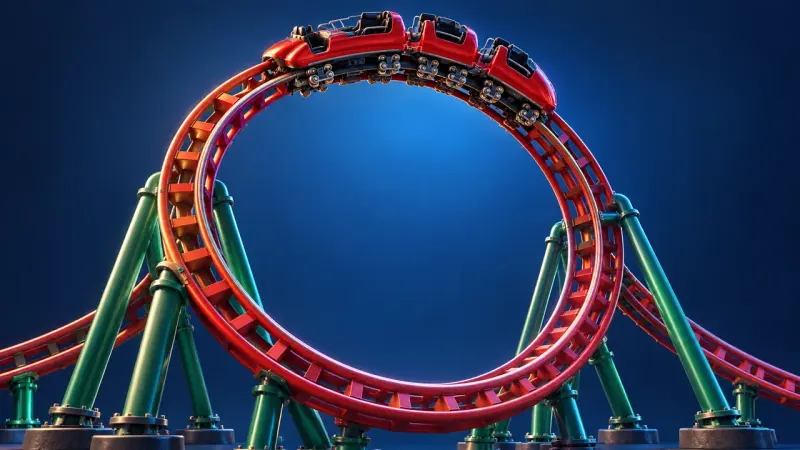
A car rides a roller coaster: energy bars show how potential and kinetic energy turn into each other.
Chains of energy conversion, conservation of energy and power, also compared with one’s own physical power.
A car rides a roller coaster: energy bars show how potential and kinetic energy turn into each other.
Pressure and density in liquids and gases in the particle model, hydrostatic pressure, air pressure and buoyancy according to Archimedes.
Density, hydrostatic pressure, buoyancy and Archimedes’ principle, air pressure; pressure as a result of particle collisions.
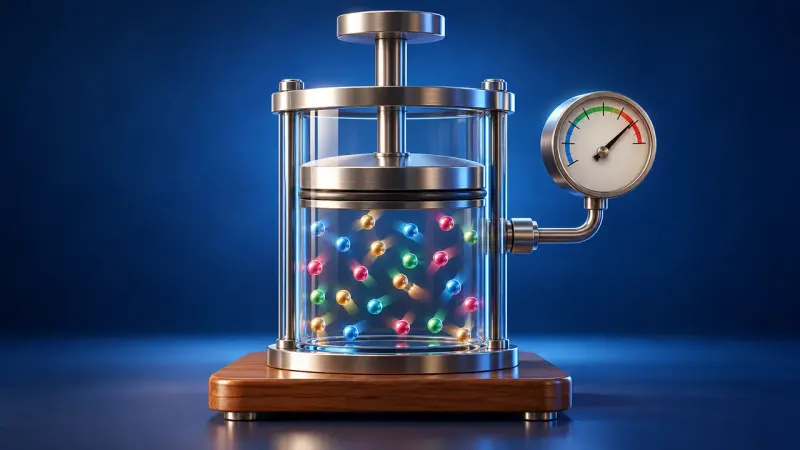
Push the piston halfway in and the pressure doubles. Heat the gas and it pushes the piston out. Pressure, volume and temperature are tightly linked.
Pressure and the effects of force, stating and measuring pressure in pascals.
No separate simulation is planned for this.
Charges and electric fields, voltage, current and resistance in series and parallel circuits, safety at home, and electrical energy, power and costs.
Electric charges and fields, the electroscope, voltage from separating charges.
No separate simulation is planned for this.
Electron–ion-core model, current as transport of charge, resistance and Ohm’s law, series and parallel circuits, safety devices.
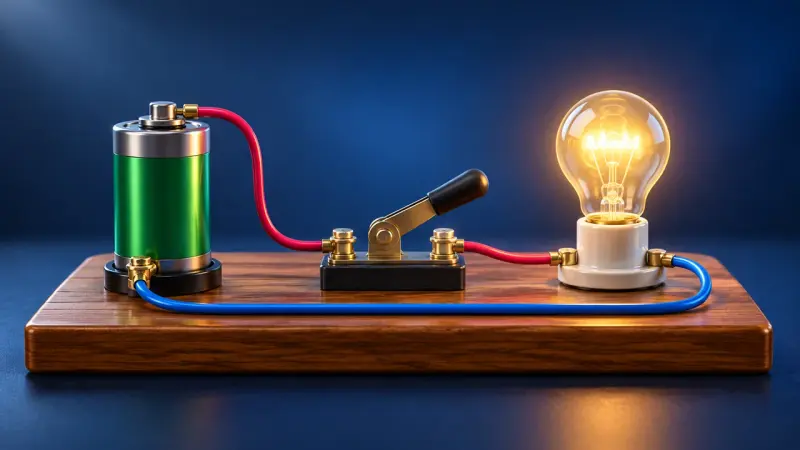
Build a circuit with a battery, a switch and a lamp, as a set-up and as a circuit diagram. When the circuit is closed, the lamp lights up.
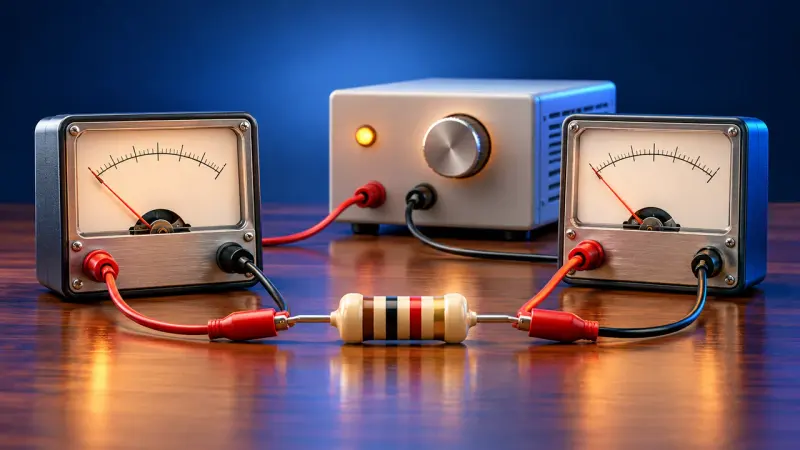
Turn up the voltage and the current rises, always in the same ratio. Point by point the characteristic curve appears, though not quite straight for a lamp.

Connect lamps in series or in parallel and measure current and voltage at different points.
Calculating the energy and power of electrical appliances and working out energy costs.
No separate simulation is planned for this.
Atomic structure, alpha, beta, gamma and X-radiation, decay and half-life, effects and protection, as well as nuclear fission, fusion and nuclear power plants.
Types of radiation, deflection of charged particles in a magnetic field (qualitative), radioactive decay as a random process and half-life.
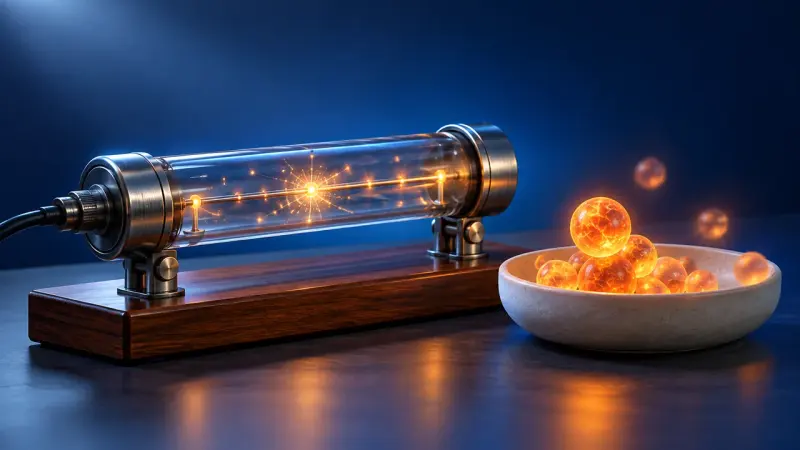
Many nuclei decay at random and a Geiger counter clicks. Even so, after each half-life almost exactly half are left.
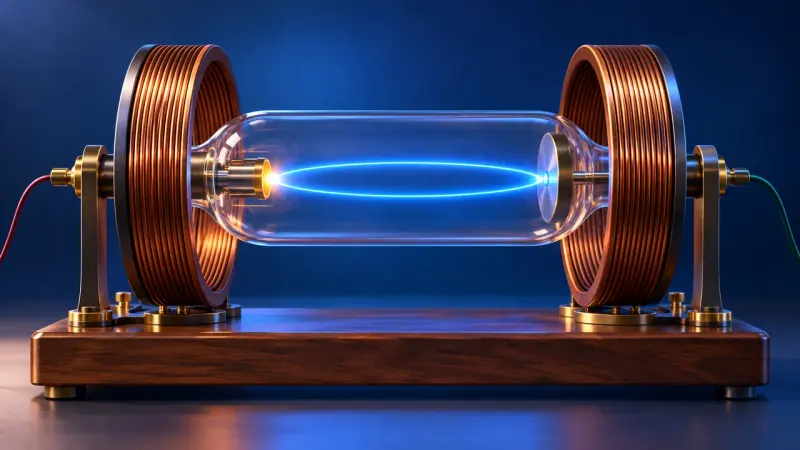
Electrons fly along a glowing circular path in a magnetic field. From the radius you determine a property of the electron.
Detection and absorption of radiation, biological effects, medicine and radiation protection.
No separate simulation is planned for this.
Nuclear fission, nuclear fusion, nuclear power plants and final disposal.
No separate simulation is planned for this.
Induction in generators and transformers, electric motors, alternating voltage, power stations and renewable energy, transmission, efficiency and sustainability.
Magnetic fields of wires and coils, electric motors, generators, alternating voltage and transformers.
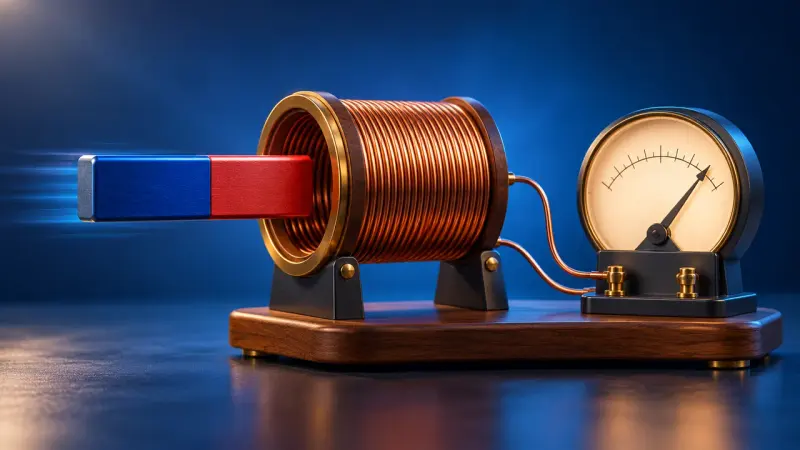
Magnet in, the needle swings. Magnet out, it swings the other way. Every generator works on the same principle.
Power stations and renewable plants, high-voltage transmission, energy dissipation, efficiency, storage and sustainability.
No separate simulation is planned for this.
The summaries describe the curriculum in our own words. The original text is authoritative. Original text (German): Kernlehrplan, Gymnasium, Physics, grade 7–10