PhysicsRhineland-Palatinate curriculum · Gymnasium
Physics – grade 12/13
Qualification phase of the Mainz upper secondary (grades 12 and 13). The curriculum sets no order, so the units are the same for grades 12 and 13 and are shown as one stage. The basic course (GF) covers all nine compulsory modules and five electives, the advanced course (LF) all eleven compulsory modules and seven electives. The numbers are our own.
Unit GF-PCompulsory modules (basic course)
Electric and magnetic fields, induction, oscillations and waves, and quantum objects and the atom.
GF-P.1Field concept for static electric and magnetic fields
Properties of static fields, field line patterns, superposition of fields, electric field strength, magnetic flux density and the field of a coil.
Two charges and the field rearranges itself. A test charge measures where the force is strongest.
Grade 11–12Baden-Württemberg: grade 12/13Bavaria: grade 12Berlin: grade 11Brandenburg: grade 11Bremen: grade 11/12Hamburg: grade 11/12Hesse: grade 12Lower Saxony: grade 12/13North Rhine-Westphalia: grade 12/13Rhineland-Palatinate: grade 12/13Saarland: grade 12Saxony: grade 11Saxony-Anhalt: grade 11/12Schleswig-Holstein: grades 11, 12/13
GF-P.2Energy and energy storage in the electric field
Voltage and field strength in a parallel-plate capacitor, capacitance, field energy and charging and discharging the capacitor.
A capacitor charges through a resistor and discharges again. The graphs show how voltage and current change over time.
Grade 11–12Baden-Württemberg: grade 12/13Bavaria: grade 12Berlin: grade 11Brandenburg: grade 11Bremen: grade 11/12Hamburg: grade 11/12Hesse: grade 12Lower Saxony: grade 12/13North Rhine-Westphalia: grade 12/13Rhineland-Palatinate: grade 12/13Saarland: grade 12Saxony: grade 11Saxony-Anhalt: grade 11/12Schleswig-Holstein: grades 11, 12/13
GF-P.3Interaction of charged bodies with static fields
Force on charges in an electric field, motion in longitudinal and transverse fields, the Lorentz force and motion in a uniform magnetic field.
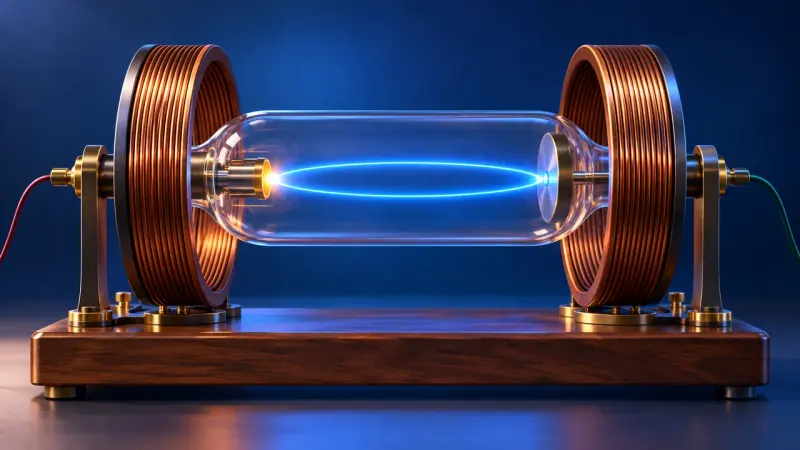
Electrons fly along a glowing circular path in a magnetic field. From the radius you determine a property of the electron.
Grade 10–13Baden-Württemberg: grade 12/13Bavaria: grades 10, 12Berlin: grade 11Brandenburg: grade 11Bremen: grade 11/12Hamburg: grade 11/12Hesse: grade 12Lower Saxony: grade 12/13North Rhine-Westphalia: grades 7–10, 12/13Rhineland-Palatinate: grade 12/13Saarland: grades 10, 12Saxony: grade 11Saxony-Anhalt: grade 11/12Schleswig-Holstein: grades 11, 12/13
GF-P.4Changing electromagnetic fields
Magnetic flux, the law of induction with the average rate of change, the direction of the induced current and a technical application.
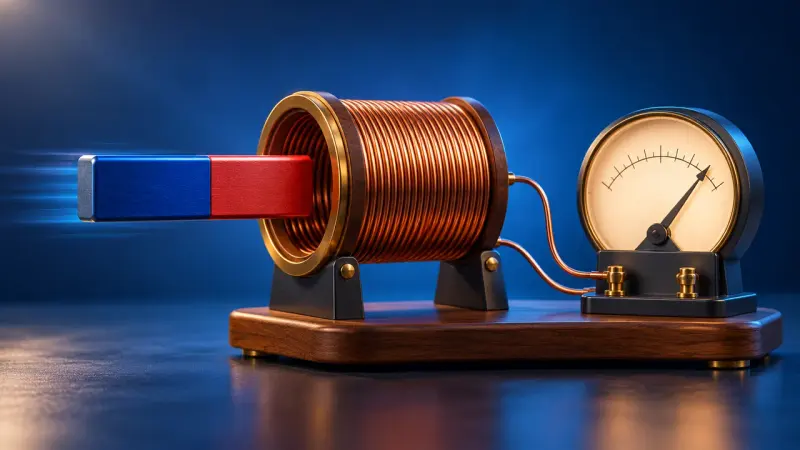
Magnet in, the needle swings. Magnet out, it swings the other way. Every generator works on the same principle.
Grade 9–13Baden-Württemberg: grades 9/10, 12/13Bavaria: grades 10, 12Berlin: grades 9/10, 11Brandenburg: grades 9/10, 11Bremen: grades 7–9, 11/12Hamburg: grades 9, 11/12Hesse: grades 9/10, 12Lower Saxony: grade 12/13North Rhine-Westphalia: grades 7–10, 12/13Rhineland-Palatinate: grades 7–10, 12/13Saarland: grades 10, 12Saxony: grades 9, 11Saxony-Anhalt: grades 9, 11/12Schleswig-Holstein: grades 7–10, 11, 12/13
GF-P.5Harmonic oscillations
Displacement, amplitude, period and frequency, the LC circuit by analogy with the mechanical oscillator, period of oscillation in one example.
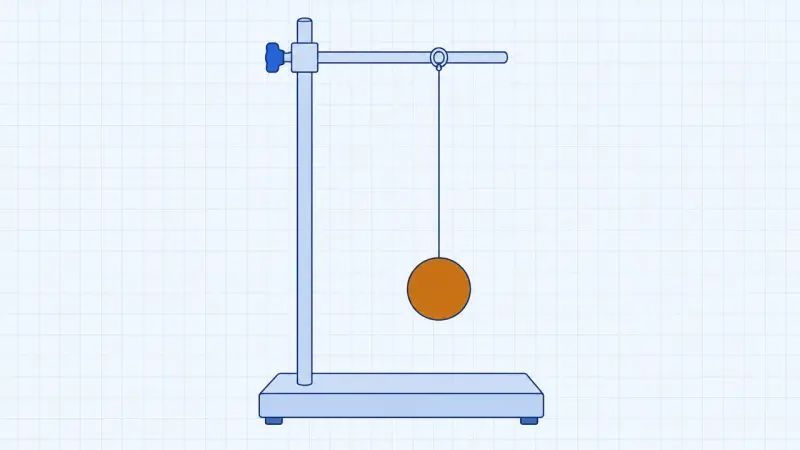
Pull a pendulum aside, let it go and measure how long one swing takes. What does it depend on? Also with large angles and damping.
Grade 10–12Baden-Württemberg: grade 12/13Bavaria: grade 11Berlin: grades 9/10, 11Brandenburg: grades 9/10, 11Bremen: grade 11/12Hamburg: grades 10, 11/12Hesse: grade 12Lower Saxony: grade 12/13North Rhine-Westphalia: grade 12/13Rhineland-Palatinate: grade 12/13Saarland: grade 12Saxony: grades 10, 12Saxony-Anhalt: grade 11/12Schleswig-Holstein: grades 11, 12/13
A mass bounces up and down on a spring. Graphs show position, speed and energy during the oscillation.
Grade 10–12Baden-Württemberg: grade 12/13Bavaria: grades 11, 12Berlin: grades 9/10, 11Brandenburg: grades 9/10, 11Bremen: grade 11/12Hamburg: grades 10, 11/12Hesse: grade 12Lower Saxony: grade 12/13North Rhine-Westphalia: grade 12/13Rhineland-Palatinate: grade 12/13Saarland: grade 12Saxony: grades 10, 12Saxony-Anhalt: grade 11/12Schleswig-Holstein: grades 11, 12/13
GF-P.6Harmonic waves
Generation, propagation and energy transport, wavelength, speed and frequency, transverse and longitudinal, polarisation, refraction, reflection and diffraction.
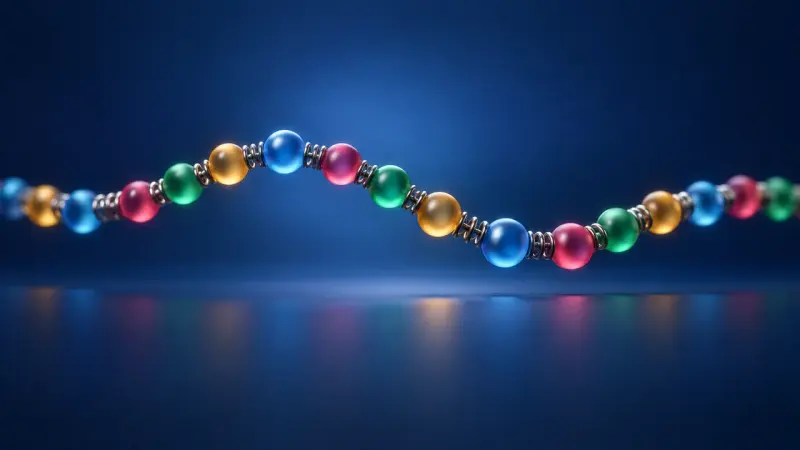
A wave travels through a chain of particles. Each particle only oscillates in place, across or along the direction of travel.
Grade 10–12Baden-Württemberg: grade 12/13Bavaria: grade 11Berlin: grades 9/10, 12Brandenburg: grades 9/10, 12Bremen: grade 11/12Hamburg: grade 11/12Hesse: grade 12Lower Saxony: grade 12/13North Rhine-Westphalia: grade 12/13Rhineland-Palatinate: grades 7–10, 12/13Saarland: grade 12Saxony: grades 10, 12Saxony-Anhalt: grade 11/12Schleswig-Holstein: grades 11, 12/13
GF-P.7Superposition of waves
Standing waves and measuring wavelength, double-slit interference, the spectrum of white light and an overview of electromagnetic waves.
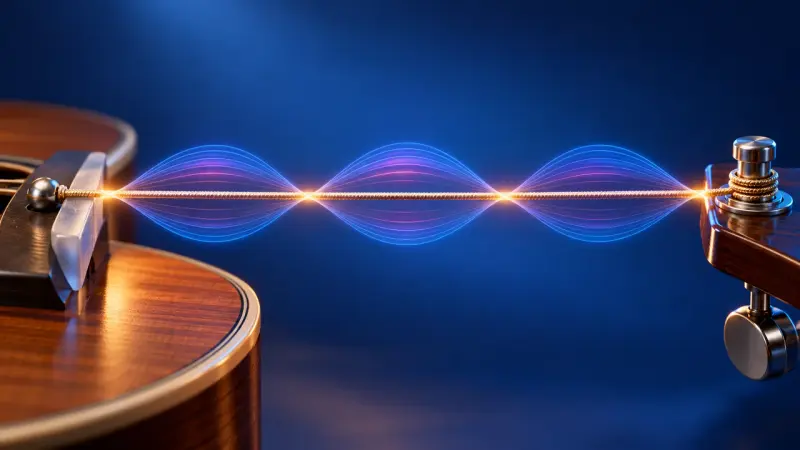
A wave is reflected at the end and a fixed pattern of nodes and antinodes appears, like on a guitar string.
Grade 11–13Baden-Württemberg: grade 12/13Bavaria: grades 11, 12Berlin: grade 12Brandenburg: grade 12Bremen: grade 11/12Hamburg: grade 11/12Hesse: grade 12Lower Saxony: grade 12/13North Rhine-Westphalia: grade 12/13Rhineland-Palatinate: grade 12/13Saarland: grade 12Saxony: grade 12Saxony-Anhalt: grade 11/12Schleswig-Holstein: grades 11, 12/13
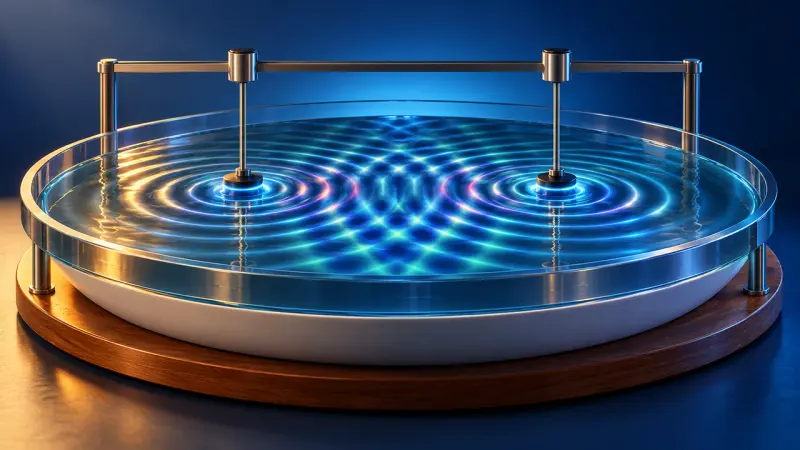
Two circular waves overlap: in some places they reinforce each other, in others they cancel out.
Grade 10–13Baden-Württemberg: grade 12/13Bavaria: grades 11, 12Berlin: grades 9/10, 12Brandenburg: grades 9/10, 12Bremen: grade 11/12Hamburg: grade 11/12Hesse: grade 12Lower Saxony: grade 12/13North Rhine-Westphalia: grade 12/13Rhineland-Palatinate: grade 12/13Saarland: grades 12, 13Saxony: grades 10, 12Saxony-Anhalt: grade 11/12Schleswig-Holstein: grades 11, 12/13
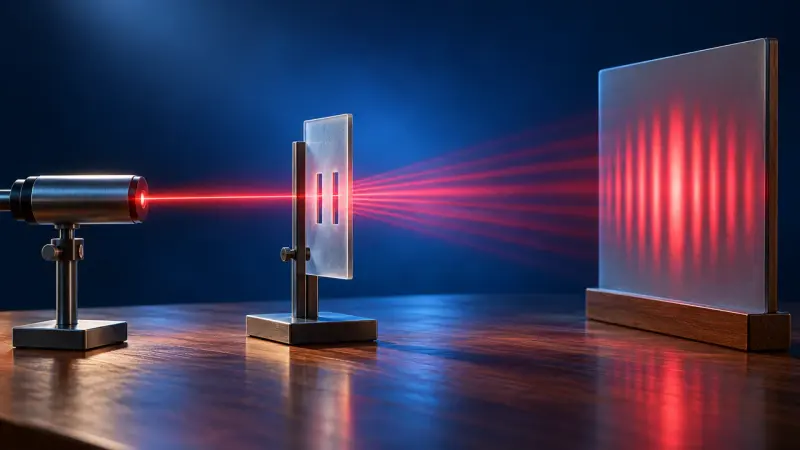
Laser light passes through a double slit or a grating. A pattern of bright and dark stripes appears on the screen.
Grade 10–13Baden-Württemberg: grade 12/13Bavaria: grades 11, 12, 13Berlin: grade 12Brandenburg: grade 12Bremen: grade 11/12Hamburg: grade 11/12Hesse: grade 13Lower Saxony: grade 12/13North Rhine-Westphalia: grade 12/13Rhineland-Palatinate: grade 12/13Saarland: grade 13Saxony: grades 10, 12Saxony-Anhalt: grade 11/12Schleswig-Holstein: grades 11, 12/13
GF-P.8Quantum objects I
Electrons and photons at the double slit, energy and frequency, momentum and wavelength, basic aspects of quantum theory and an estimate of h.
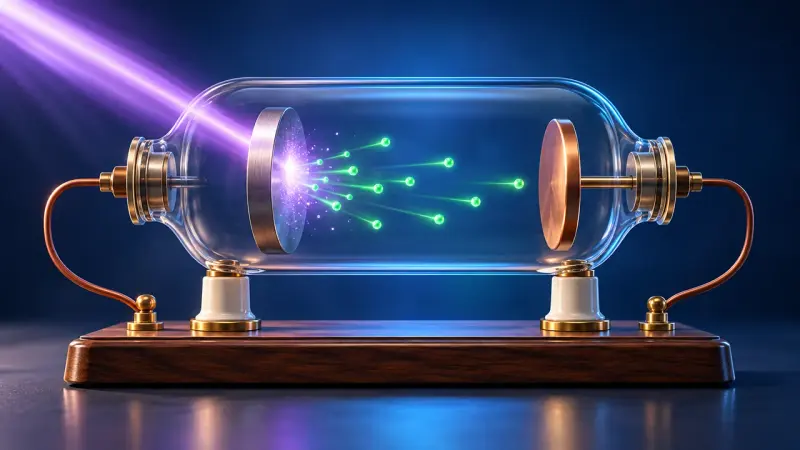
Red light can be as bright as you like, it frees not a single electron. Short-wave light does it at once. A puzzle for waves, not for photons.
Grade 12–13Baden-Württemberg: grade 12/13Bavaria: grade 13Berlin: grade 12Brandenburg: grade 12Bremen: grade 11/12Hamburg: grade 11/12Hesse: grade 13Lower Saxony: grade 12/13North Rhine-Westphalia: grade 12/13Rhineland-Palatinate: grade 12/13Saarland: grade 13Saxony: grade 12Saxony-Anhalt: grade 11/12Schleswig-Holstein: grade 12/13
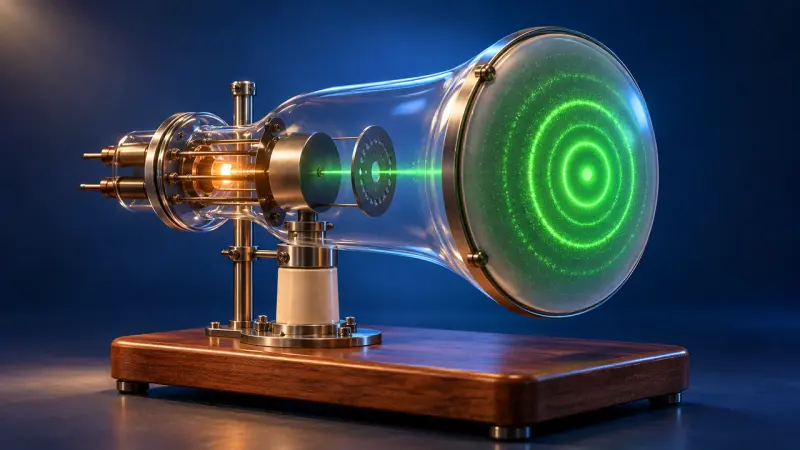
Electrons hit a thin layer of graphite and form rings on the screen, just like waves do.
Grade 12–13 · UniversityBaden-Württemberg: grade 12/13Bavaria: grade 13Berlin: grade 12Brandenburg: grade 12Bremen: grade 11/12Hamburg: grade 11/12Hesse: grade 13Lower Saxony: grade 12/13North Rhine-Westphalia: grade 12/13Rhineland-Palatinate: grade 12/13Saarland: grade 13Saxony: grade 12Saxony-Anhalt: grade 11/12Schleswig-Holstein: grade 12/13
GF-P.9Quantum view of the atom I
Quantised absorption and emission in the hydrogen atom, the energy level model and the orbital model.
Every element glows in its own colours. When an electron drops one level, exactly one line appears in the spectrum.
Grade 12–13Baden-Württemberg: grade 12/13Bavaria: grade 13Berlin: grade 12Brandenburg: grade 12Bremen: grade 11/12Hamburg: grade 11/12Hesse: grade 13Lower Saxony: grade 12/13North Rhine-Westphalia: grade 12/13Rhineland-Palatinate: grade 12/13Saarland: grade 13Saxony: grade 12Saxony-Anhalt: grade 11/12Schleswig-Holstein: grade 12/13
Unit GF-WElective modules (basic course, choose five)
Extensions from particles in fields to cosmology, plus an individual topic.
GF-W.1Applications of particles in fields
Fine-beam tube for e/m, electron deflection tube, particle accelerators, Hall effect.
Electrons fly along a glowing circular path in a magnetic field. From the radius you determine a property of the electron.
Grade 10–13Baden-Württemberg: grade 12/13Bavaria: grades 10, 12Berlin: grade 11Brandenburg: grade 11Bremen: grade 11/12Hamburg: grade 11/12Hesse: grade 12Lower Saxony: grade 12/13North Rhine-Westphalia: grades 7–10, 12/13Rhineland-Palatinate: grade 12/13Saarland: grades 10, 12Saxony: grade 11Saxony-Anhalt: grade 11/12Schleswig-Holstein: grades 11, 12/13
GF-W.2Oscillation phenomena
Damped, forced and coupled oscillations and resonance.
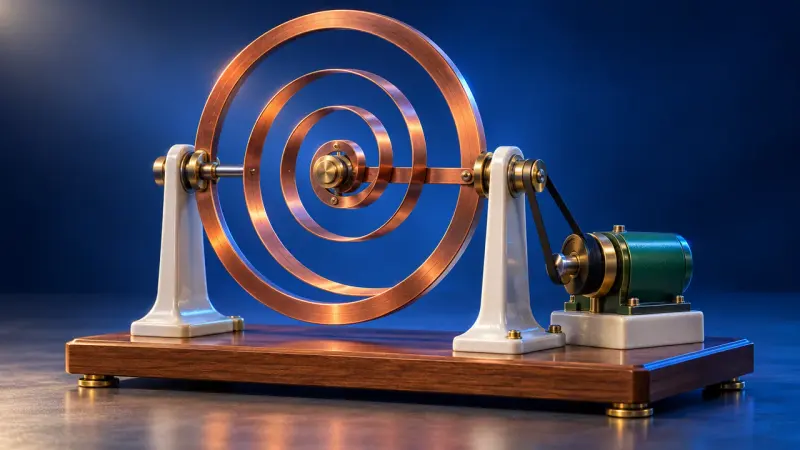
A motor drives an oscillating wheel. If the motor hits exactly the right rhythm, the wheel swings especially strongly: resonance.
Grade 10–13 · UniversityBaden-Württemberg: grade 12/13Bavaria: grades 11, 12Berlin: grades 9/10, 11Brandenburg: grades 9/10, 11Bremen: grade 11/12Hamburg: grade 11/12Hesse: grade 12Lower Saxony: grade 12/13North Rhine-Westphalia: grade 12/13Rhineland-Palatinate: grades 7–10, 12/13Saarland: grades 12, 13Saxony: grades 10, 12Saxony-Anhalt: grade 11/12Schleswig-Holstein: grades 11, 12/13
GF-W.3Acoustics
Sound as a longitudinal wave, beats, standing waves and resonance, Fourier analysis of sounds.
A wave travels through a chain of particles. Each particle only oscillates in place, across or along the direction of travel.
Grade 10–12Baden-Württemberg: grade 12/13Bavaria: grade 11Berlin: grades 9/10, 12Brandenburg: grades 9/10, 12Bremen: grade 11/12Hamburg: grade 11/12Hesse: grade 12Lower Saxony: grade 12/13North Rhine-Westphalia: grade 12/13Rhineland-Palatinate: grades 7–10, 12/13Saarland: grade 12Saxony: grades 10, 12Saxony-Anhalt: grade 11/12Schleswig-Holstein: grades 11, 12/13
A wave is reflected at the end and a fixed pattern of nodes and antinodes appears, like on a guitar string.
Grade 11–13Baden-Württemberg: grade 12/13Bavaria: grades 11, 12Berlin: grade 12Brandenburg: grade 12Bremen: grade 11/12Hamburg: grade 11/12Hesse: grade 12Lower Saxony: grade 12/13North Rhine-Westphalia: grade 12/13Rhineland-Palatinate: grade 12/13Saarland: grade 12Saxony: grade 12Saxony-Anhalt: grade 11/12Schleswig-Holstein: grades 11, 12/13
GF-W.4Light as a wave phenomenon
Interference and polarisation in nature and technology.
Two circular waves overlap: in some places they reinforce each other, in others they cancel out.
Grade 10–13Baden-Württemberg: grade 12/13Bavaria: grades 11, 12Berlin: grades 9/10, 12Brandenburg: grades 9/10, 12Bremen: grade 11/12Hamburg: grade 11/12Hesse: grade 12Lower Saxony: grade 12/13North Rhine-Westphalia: grade 12/13Rhineland-Palatinate: grade 12/13Saarland: grades 12, 13Saxony: grades 10, 12Saxony-Anhalt: grade 11/12Schleswig-Holstein: grades 11, 12/13
Laser light passes through a double slit or a grating. A pattern of bright and dark stripes appears on the screen.
Grade 10–13Baden-Württemberg: grade 12/13Bavaria: grades 11, 12, 13Berlin: grade 12Brandenburg: grade 12Bremen: grade 11/12Hamburg: grade 11/12Hesse: grade 13Lower Saxony: grade 12/13North Rhine-Westphalia: grade 12/13Rhineland-Palatinate: grade 12/13Saarland: grade 13Saxony: grades 10, 12Saxony-Anhalt: grade 11/12Schleswig-Holstein: grades 11, 12/13
GF-W.5Electromagnetic waves
Feedback, the open oscillating circuit, propagation and modulation, applications and the spectrum.
No separate simulation is planned for this.
GF-W.6AC circuits
RMS values, impedance and phase shift, real and reactive power.
No separate simulation is planned for this.
GF-W.7Electronics
Basic circuits, intrinsic and extrinsic conduction, diode and transistor.
No separate simulation is planned for this.
GF-W.8Solid-state physics
The band model and properties of solids.
No separate simulation is planned for this.
GF-W.9Quantum objects II
Interpretations of quantum theory, the uncertainty principle and experimental evidence such as electron diffraction and the Hallwachs effect.
Electrons hit a thin layer of graphite and form rings on the screen, just like waves do.
Grade 12–13 · UniversityBaden-Württemberg: grade 12/13Bavaria: grade 13Berlin: grade 12Brandenburg: grade 12Bremen: grade 11/12Hamburg: grade 11/12Hesse: grade 13Lower Saxony: grade 12/13North Rhine-Westphalia: grade 12/13Rhineland-Palatinate: grade 12/13Saarland: grade 13Saxony: grade 12Saxony-Anhalt: grade 11/12Schleswig-Holstein: grade 12/13
Red light can be as bright as you like, it frees not a single electron. Short-wave light does it at once. A puzzle for waves, not for photons.
Grade 12–13Baden-Württemberg: grade 12/13Bavaria: grade 13Berlin: grade 12Brandenburg: grade 12Bremen: grade 11/12Hamburg: grade 11/12Hesse: grade 13Lower Saxony: grade 12/13North Rhine-Westphalia: grade 12/13Rhineland-Palatinate: grade 12/13Saarland: grade 13Saxony: grade 12Saxony-Anhalt: grade 11/12Schleswig-Holstein: grade 12/13
GF-W.10Quantum view of the atom II
The Franck–Hertz experiment, resonance absorption, luminescence, lasers and spectral analysis.
Every element glows in its own colours. When an electron drops one level, exactly one line appears in the spectrum.
Grade 12–13Baden-Württemberg: grade 12/13Bavaria: grade 13Berlin: grade 12Brandenburg: grade 12Bremen: grade 11/12Hamburg: grade 11/12Hesse: grade 13Lower Saxony: grade 12/13North Rhine-Westphalia: grade 12/13Rhineland-Palatinate: grade 12/13Saarland: grade 13Saxony: grade 12Saxony-Anhalt: grade 11/12Schleswig-Holstein: grade 12/13
GF-W.11Nuclear physics
Radionuclides, decay, fission and fusion, the laws of absorption and decay, binding energy.
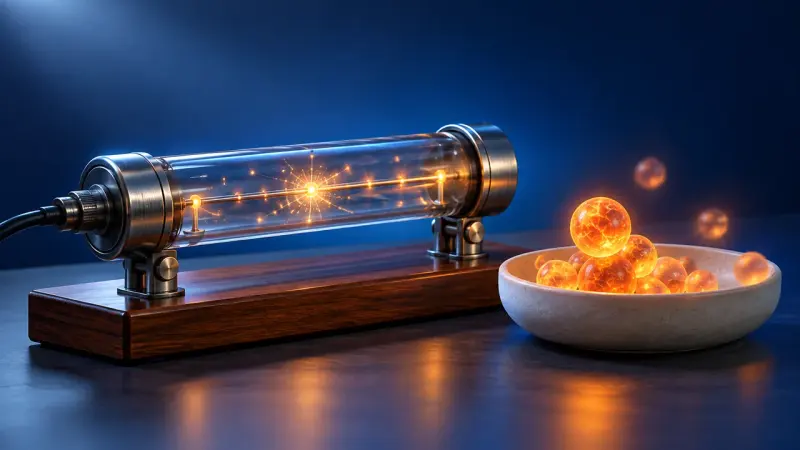
Many nuclei decay at random and a Geiger counter clicks. Even so, after each half-life almost exactly half are left.
Grade 8–13Baden-Württemberg: grade 9/10Bavaria: grades 10, 13Berlin: grade 9/10Brandenburg: grade 9/10Bremen: grade 7–9Hamburg: grades 8, 9Hesse: grades 9/10, 13Lower Saxony: grades 9/10, 11, 12/13North Rhine-Westphalia: grades 7–10, 12/13Rhineland-Palatinate: grades 7–10, 12/13Saarland: grades 10, 11Saxony: grades 9, 12Saxony-Anhalt: grade 10Schleswig-Holstein: grades 7–10, 12/13
GF-W.12Radiation biophysics
Dose, biological effects, radiation protection and medical uses.
No separate simulation is planned for this.
GF-W.13Particle physics
Fundamental particles and interactions, the Standard Model and open questions.
No separate simulation is planned for this.
GF-W.14Entropy
Entropy as an energy carrier, entropy production and Carnot efficiency.
No separate simulation is planned for this.
GF-W.15Thermodynamic machines
Ideal gas laws, heat pump and Stirling engine, Carnot efficiency.
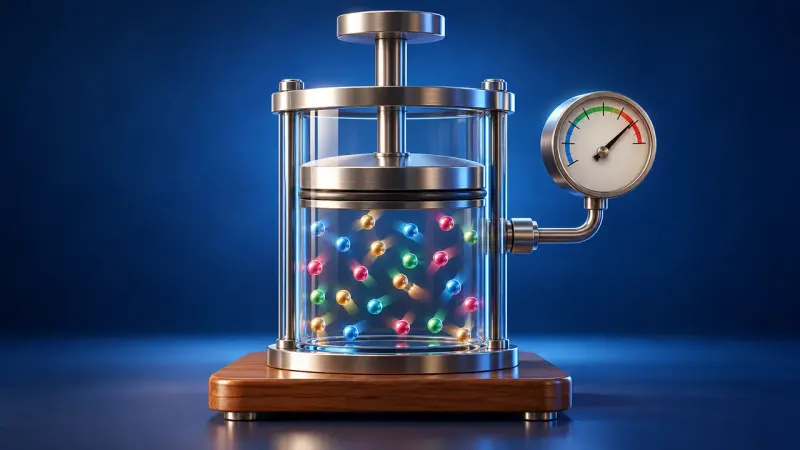
Push the piston halfway in and the pressure doubles. Heat the gas and it pushes the piston out. Pressure, volume and temperature are tightly linked.
Grade 8–13 · UniversityBaden-Württemberg: grade 9/10Bavaria: grade 9Berlin: grade 7/8Brandenburg: grade 7/8Bremen: grade 10Hesse: grade 9/10Lower Saxony: grade 9/10North Rhine-Westphalia: grade 7–10Rhineland-Palatinate: grades 7–10, 12/13Saarland: grades 8, 10Saxony: grade 12Saxony-Anhalt: grade 7/8Schleswig-Holstein: grade 12/13
GF-W.16Energy supply
Basic principle and comparison of energy supply technologies, sustainability.
No separate simulation is planned for this.
GF-W.17Relativistic kinematics
Relativity of simultaneity, time dilation and length contraction, spacetime diagrams.
No separate simulation is planned for this.
GF-W.18Relativistic dynamics
Mass–energy equivalence, the speed limit and time in a gravitational field.
No separate simulation is planned for this.
GF-W.19Astrophysics
Properties of the Sun, stellar evolution and the standard solar model.
No separate simulation is planned for this.
GF-W.20Cosmology
Structure and evolution of the universe, the Big Bang and background radiation.
No separate simulation is planned for this.
GF-W.21Chaos and fractals – non-linear dynamical systems
Chaotic phenomena, features of chaotic systems and fractal structures.
No separate simulation is planned for this.
GF-W.22Fluid dynamics
Types of flow, the continuity equation, Bernoulli’s equation and dynamic lift.
No separate simulation is planned for this.
GF-W.23Physics as an evolving science
Scientific revolutions and ways of working in physics in their historical and social context.
No separate simulation is planned for this.
GF-W.24Individual topic
Freely chosen content, mainly for evaluation skills, for example sustainability or climate change.
No separate simulation is planned for this.
Unit LF-PCompulsory modules (advanced course)
Fields with energy storage in capacitor and coil, induction, oscillations and waves, quantum physics, atomic and nuclear physics, and energy and entropy.
LF-P.1Field concept for static electric and magnetic fields
As in the basic course, plus induction of charge and polarisation, magnetisation and Coulomb’s law.
Two charges and the field rearranges itself. A test charge measures where the force is strongest.
Grade 11–12Baden-Württemberg: grade 12/13Bavaria: grade 12Berlin: grade 11Brandenburg: grade 11Bremen: grade 11/12Hamburg: grade 11/12Hesse: grade 12Lower Saxony: grade 12/13North Rhine-Westphalia: grade 12/13Rhineland-Palatinate: grade 12/13Saarland: grade 12Saxony: grade 11Saxony-Anhalt: grade 11/12Schleswig-Holstein: grades 11, 12/13
LF-P.2Energy and energy storage in electric and magnetic fields
Potential and voltage, the capacitor with capacitance, energy and charging and discharging; the coil with flux density, inductance and field energy.
A capacitor charges through a resistor and discharges again. The graphs show how voltage and current change over time.
Grade 11–12Baden-Württemberg: grade 12/13Bavaria: grade 12Berlin: grade 11Brandenburg: grade 11Bremen: grade 11/12Hamburg: grade 11/12Hesse: grade 12Lower Saxony: grade 12/13North Rhine-Westphalia: grade 12/13Rhineland-Palatinate: grade 12/13Saarland: grade 12Saxony: grade 11Saxony-Anhalt: grade 11/12Schleswig-Holstein: grades 11, 12/13
LF-P.3Interaction of charged bodies with static fields
As in the basic course, plus the Hall effect, circular paths in a magnetic field (quantitative) and crossed fields.
Electrons fly along a glowing circular path in a magnetic field. From the radius you determine a property of the electron.
Grade 10–13Baden-Württemberg: grade 12/13Bavaria: grades 10, 12Berlin: grade 11Brandenburg: grade 11Bremen: grade 11/12Hamburg: grade 11/12Hesse: grade 12Lower Saxony: grade 12/13North Rhine-Westphalia: grades 7–10, 12/13Rhineland-Palatinate: grade 12/13Saarland: grades 10, 12Saxony: grade 11Saxony-Anhalt: grade 11/12Schleswig-Holstein: grades 11, 12/13
LF-P.4Changing electromagnetic fields I
The law of induction also in differential form, direction of the induced current, self-induction and switching a coil on and off.
Magnet in, the needle swings. Magnet out, it swings the other way. Every generator works on the same principle.
Grade 9–13Baden-Württemberg: grades 9/10, 12/13Bavaria: grades 10, 12Berlin: grades 9/10, 11Brandenburg: grades 9/10, 11Bremen: grades 7–9, 11/12Hamburg: grades 9, 11/12Hesse: grades 9/10, 12Lower Saxony: grade 12/13North Rhine-Westphalia: grades 7–10, 12/13Rhineland-Palatinate: grades 7–10, 12/13Saarland: grades 10, 12Saxony: grades 9, 11Saxony-Anhalt: grades 9, 11/12Schleswig-Holstein: grades 7–10, 11, 12/13
LF-P.5Harmonic oscillations
Parameters of oscillation, the LC circuit, the linear force law, the simple pendulum with the small-angle approximation and deriving the period.
Pull a pendulum aside, let it go and measure how long one swing takes. What does it depend on? Also with large angles and damping.
Grade 10–12Baden-Württemberg: grade 12/13Bavaria: grade 11Berlin: grades 9/10, 11Brandenburg: grades 9/10, 11Bremen: grade 11/12Hamburg: grades 10, 11/12Hesse: grade 12Lower Saxony: grade 12/13North Rhine-Westphalia: grade 12/13Rhineland-Palatinate: grade 12/13Saarland: grade 12Saxony: grades 10, 12Saxony-Anhalt: grade 11/12Schleswig-Holstein: grades 11, 12/13
A mass bounces up and down on a spring. Graphs show position, speed and energy during the oscillation.
Grade 10–12Baden-Württemberg: grade 12/13Bavaria: grades 11, 12Berlin: grades 9/10, 11Brandenburg: grades 9/10, 11Bremen: grade 11/12Hamburg: grades 10, 11/12Hesse: grade 12Lower Saxony: grade 12/13North Rhine-Westphalia: grade 12/13Rhineland-Palatinate: grade 12/13Saarland: grade 12Saxony: grades 10, 12Saxony-Anhalt: grade 11/12Schleswig-Holstein: grades 11, 12/13
LF-P.6Oscillations and waves
Damped, forced and coupled oscillations with resonance; generation, quantities and mathematical description of harmonic waves.
A motor drives an oscillating wheel. If the motor hits exactly the right rhythm, the wheel swings especially strongly: resonance.
Grade 10–13 · UniversityBaden-Württemberg: grade 12/13Bavaria: grades 11, 12Berlin: grades 9/10, 11Brandenburg: grades 9/10, 11Bremen: grade 11/12Hamburg: grade 11/12Hesse: grade 12Lower Saxony: grade 12/13North Rhine-Westphalia: grade 12/13Rhineland-Palatinate: grades 7–10, 12/13Saarland: grades 12, 13Saxony: grades 10, 12Saxony-Anhalt: grade 11/12Schleswig-Holstein: grades 11, 12/13
A wave travels through a chain of particles. Each particle only oscillates in place, across or along the direction of travel.
Grade 10–12Baden-Württemberg: grade 12/13Bavaria: grade 11Berlin: grades 9/10, 12Brandenburg: grades 9/10, 12Bremen: grade 11/12Hamburg: grade 11/12Hesse: grade 12Lower Saxony: grade 12/13North Rhine-Westphalia: grade 12/13Rhineland-Palatinate: grades 7–10, 12/13Saarland: grade 12Saxony: grades 10, 12Saxony-Anhalt: grade 11/12Schleswig-Holstein: grades 11, 12/13
LF-P.7Harmonic waves and their superposition
Refraction, reflection and diffraction, standing waves, interference at double and single slits, measuring wavelength and the interferometer.
A wave is reflected at the end and a fixed pattern of nodes and antinodes appears, like on a guitar string.
Grade 11–13Baden-Württemberg: grade 12/13Bavaria: grades 11, 12Berlin: grade 12Brandenburg: grade 12Bremen: grade 11/12Hamburg: grade 11/12Hesse: grade 12Lower Saxony: grade 12/13North Rhine-Westphalia: grade 12/13Rhineland-Palatinate: grade 12/13Saarland: grade 12Saxony: grade 12Saxony-Anhalt: grade 11/12Schleswig-Holstein: grades 11, 12/13
Two circular waves overlap: in some places they reinforce each other, in others they cancel out.
Grade 10–13Baden-Württemberg: grade 12/13Bavaria: grades 11, 12Berlin: grades 9/10, 12Brandenburg: grades 9/10, 12Bremen: grade 11/12Hamburg: grade 11/12Hesse: grade 12Lower Saxony: grade 12/13North Rhine-Westphalia: grade 12/13Rhineland-Palatinate: grade 12/13Saarland: grades 12, 13Saxony: grades 10, 12Saxony-Anhalt: grade 11/12Schleswig-Holstein: grades 11, 12/13
Laser light passes through a double slit or a grating. A pattern of bright and dark stripes appears on the screen.
Grade 10–13Baden-Württemberg: grade 12/13Bavaria: grades 11, 12, 13Berlin: grade 12Brandenburg: grade 12Bremen: grade 11/12Hamburg: grade 11/12Hesse: grade 13Lower Saxony: grade 12/13North Rhine-Westphalia: grade 12/13Rhineland-Palatinate: grade 12/13Saarland: grade 13Saxony: grades 10, 12Saxony-Anhalt: grade 11/12Schleswig-Holstein: grades 11, 12/13
LF-P.8Quantum objects I
As in the basic course, plus the delayed-choice experiment, the coincidence method, the probabilistic interpretation with |Ψ|² and position–momentum uncertainty.
Red light can be as bright as you like, it frees not a single electron. Short-wave light does it at once. A puzzle for waves, not for photons.
Grade 12–13Baden-Württemberg: grade 12/13Bavaria: grade 13Berlin: grade 12Brandenburg: grade 12Bremen: grade 11/12Hamburg: grade 11/12Hesse: grade 13Lower Saxony: grade 12/13North Rhine-Westphalia: grade 12/13Rhineland-Palatinate: grade 12/13Saarland: grade 13Saxony: grade 12Saxony-Anhalt: grade 11/12Schleswig-Holstein: grade 12/13
Electrons hit a thin layer of graphite and form rings on the screen, just like waves do.
Grade 12–13 · UniversityBaden-Württemberg: grade 12/13Bavaria: grade 13Berlin: grade 12Brandenburg: grade 12Bremen: grade 11/12Hamburg: grade 11/12Hesse: grade 13Lower Saxony: grade 12/13North Rhine-Westphalia: grade 12/13Rhineland-Palatinate: grade 12/13Saarland: grade 13Saxony: grade 12Saxony-Anhalt: grade 11/12Schleswig-Holstein: grade 12/13
LF-P.9Quantum view of the atom I
Quantised absorption and emission, the X-ray spectrum, the energy level model, the potential well, the orbital model and an outlook on many-electron systems.
Every element glows in its own colours. When an electron drops one level, exactly one line appears in the spectrum.
Grade 12–13Baden-Württemberg: grade 12/13Bavaria: grade 13Berlin: grade 12Brandenburg: grade 12Bremen: grade 11/12Hamburg: grade 11/12Hesse: grade 13Lower Saxony: grade 12/13North Rhine-Westphalia: grade 12/13Rhineland-Palatinate: grade 12/13Saarland: grade 13Saxony: grade 12Saxony-Anhalt: grade 11/12Schleswig-Holstein: grade 12/13
LF-P.10Nuclear physics
Nuclear model, binding energy, decay, fission and fusion, the laws of absorption and decay and links to quantum mechanics.
Many nuclei decay at random and a Geiger counter clicks. Even so, after each half-life almost exactly half are left.
Grade 8–13Baden-Württemberg: grade 9/10Bavaria: grades 10, 13Berlin: grade 9/10Brandenburg: grade 9/10Bremen: grade 7–9Hamburg: grades 8, 9Hesse: grades 9/10, 13Lower Saxony: grades 9/10, 11, 12/13North Rhine-Westphalia: grades 7–10, 12/13Rhineland-Palatinate: grades 7–10, 12/13Saarland: grades 10, 11Saxony: grades 9, 12Saxony-Anhalt: grade 10Schleswig-Holstein: grades 7–10, 12/13
LF-P.11Energy and entropy
Energy flows and carriers, entropy, entropy production, thermodynamic machines and Carnot efficiency.
Push the piston halfway in and the pressure doubles. Heat the gas and it pushes the piston out. Pressure, volume and temperature are tightly linked.
Grade 8–13 · UniversityBaden-Württemberg: grade 9/10Bavaria: grade 9Berlin: grade 7/8Brandenburg: grade 7/8Bremen: grade 10Hesse: grade 9/10Lower Saxony: grade 9/10North Rhine-Westphalia: grade 7–10Rhineland-Palatinate: grades 7–10, 12/13Saarland: grades 8, 10Saxony: grade 12Saxony-Anhalt: grade 7/8Schleswig-Holstein: grade 12/13
Unit LF-WElective modules (advanced course, choose seven)
Extensions from particles in fields to cosmology, plus an individual topic.
LF-W.1Applications of particles in fields
Fine-beam tube, electron deflection tube, particle accelerators, mass spectrometer and MHD generator.
Electrons fly along a glowing circular path in a magnetic field. From the radius you determine a property of the electron.
Grade 10–13Baden-Württemberg: grade 12/13Bavaria: grades 10, 12Berlin: grade 11Brandenburg: grade 11Bremen: grade 11/12Hamburg: grade 11/12Hesse: grade 12Lower Saxony: grade 12/13North Rhine-Westphalia: grades 7–10, 12/13Rhineland-Palatinate: grade 12/13Saarland: grades 10, 12Saxony: grade 11Saxony-Anhalt: grade 11/12Schleswig-Holstein: grades 11, 12/13
LF-W.2Changing electromagnetic fields II
Maxwell’s equations, fields and frames of reference, the Lorentz transformation.
No separate simulation is planned for this.
LF-W.3Acoustics
Sound as a longitudinal wave, the Doppler effect, beats, standing waves and resonance, Fourier analysis.
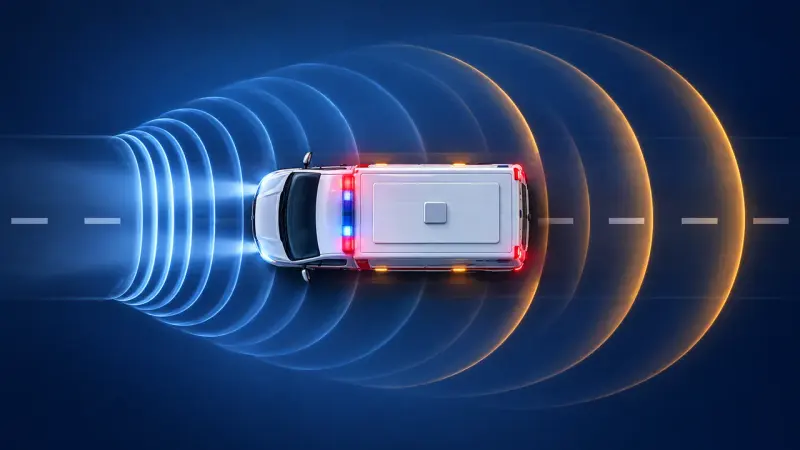
An ambulance drives past and the siren sounds lower. The wave fronts show why. You can also listen to it.
Grade 10–12Baden-Württemberg: grade 12/13Bremen: grade 11/12Rhineland-Palatinate: grade 12/13Saxony: grade 12Schleswig-Holstein: grades 11, 12/13
A wave travels through a chain of particles. Each particle only oscillates in place, across or along the direction of travel.
Grade 10–12Baden-Württemberg: grade 12/13Bavaria: grade 11Berlin: grades 9/10, 12Brandenburg: grades 9/10, 12Bremen: grade 11/12Hamburg: grade 11/12Hesse: grade 12Lower Saxony: grade 12/13North Rhine-Westphalia: grade 12/13Rhineland-Palatinate: grades 7–10, 12/13Saarland: grade 12Saxony: grades 10, 12Saxony-Anhalt: grade 11/12Schleswig-Holstein: grades 11, 12/13
A wave is reflected at the end and a fixed pattern of nodes and antinodes appears, like on a guitar string.
Grade 11–13Baden-Württemberg: grade 12/13Bavaria: grades 11, 12Berlin: grade 12Brandenburg: grade 12Bremen: grade 11/12Hamburg: grade 11/12Hesse: grade 12Lower Saxony: grade 12/13North Rhine-Westphalia: grade 12/13Rhineland-Palatinate: grade 12/13Saarland: grade 12Saxony: grade 12Saxony-Anhalt: grade 11/12Schleswig-Holstein: grades 11, 12/13
LF-W.4Light as a wave phenomenon
Interference and polarisation in nature and technology.
Two circular waves overlap: in some places they reinforce each other, in others they cancel out.
Grade 10–13Baden-Württemberg: grade 12/13Bavaria: grades 11, 12Berlin: grades 9/10, 12Brandenburg: grades 9/10, 12Bremen: grade 11/12Hamburg: grade 11/12Hesse: grade 12Lower Saxony: grade 12/13North Rhine-Westphalia: grade 12/13Rhineland-Palatinate: grade 12/13Saarland: grades 12, 13Saxony: grades 10, 12Saxony-Anhalt: grade 11/12Schleswig-Holstein: grades 11, 12/13
Laser light passes through a double slit or a grating. A pattern of bright and dark stripes appears on the screen.
Grade 10–13Baden-Württemberg: grade 12/13Bavaria: grades 11, 12, 13Berlin: grade 12Brandenburg: grade 12Bremen: grade 11/12Hamburg: grade 11/12Hesse: grade 13Lower Saxony: grade 12/13North Rhine-Westphalia: grade 12/13Rhineland-Palatinate: grade 12/13Saarland: grade 13Saxony: grades 10, 12Saxony-Anhalt: grade 11/12Schleswig-Holstein: grades 11, 12/13
LF-W.5Electromagnetic waves
Feedback, the open oscillating circuit, propagation and modulation, applications and the spectrum.
No separate simulation is planned for this.
LF-W.6AC circuits
RMS values, impedance and phase shift, real and reactive power.
No separate simulation is planned for this.
LF-W.7Electronics
Basic circuits, intrinsic and extrinsic conduction, diode and transistor.
No separate simulation is planned for this.
LF-W.8Solid-state physics
The band model and properties of solids.
No separate simulation is planned for this.
LF-W.9Quantum objects II
Interpretations of quantum theory and experimental evidence such as electron diffraction and the Hallwachs effect.
Electrons hit a thin layer of graphite and form rings on the screen, just like waves do.
Grade 12–13 · UniversityBaden-Württemberg: grade 12/13Bavaria: grade 13Berlin: grade 12Brandenburg: grade 12Bremen: grade 11/12Hamburg: grade 11/12Hesse: grade 13Lower Saxony: grade 12/13North Rhine-Westphalia: grade 12/13Rhineland-Palatinate: grade 12/13Saarland: grade 13Saxony: grade 12Saxony-Anhalt: grade 11/12Schleswig-Holstein: grade 12/13
Red light can be as bright as you like, it frees not a single electron. Short-wave light does it at once. A puzzle for waves, not for photons.
Grade 12–13Baden-Württemberg: grade 12/13Bavaria: grade 13Berlin: grade 12Brandenburg: grade 12Bremen: grade 11/12Hamburg: grade 11/12Hesse: grade 13Lower Saxony: grade 12/13North Rhine-Westphalia: grade 12/13Rhineland-Palatinate: grade 12/13Saarland: grade 13Saxony: grade 12Saxony-Anhalt: grade 11/12Schleswig-Holstein: grade 12/13
LF-W.10Interaction of quantum objects
Compton and Hallwachs effects, pair production, electron diffraction, Bragg reflection and how X-rays arise.
Red light can be as bright as you like, it frees not a single electron. Short-wave light does it at once. A puzzle for waves, not for photons.
Grade 12–13Baden-Württemberg: grade 12/13Bavaria: grade 13Berlin: grade 12Brandenburg: grade 12Bremen: grade 11/12Hamburg: grade 11/12Hesse: grade 13Lower Saxony: grade 12/13North Rhine-Westphalia: grade 12/13Rhineland-Palatinate: grade 12/13Saarland: grade 13Saxony: grade 12Saxony-Anhalt: grade 11/12Schleswig-Holstein: grade 12/13
Electrons hit a thin layer of graphite and form rings on the screen, just like waves do.
Grade 12–13 · UniversityBaden-Württemberg: grade 12/13Bavaria: grade 13Berlin: grade 12Brandenburg: grade 12Bremen: grade 11/12Hamburg: grade 11/12Hesse: grade 13Lower Saxony: grade 12/13North Rhine-Westphalia: grade 12/13Rhineland-Palatinate: grade 12/13Saarland: grade 13Saxony: grade 12Saxony-Anhalt: grade 11/12Schleswig-Holstein: grade 12/13
LF-W.11Quantum view of the atom II
The Franck–Hertz experiment, resonance absorption, luminescence, lasers and spectral analysis.
Every element glows in its own colours. When an electron drops one level, exactly one line appears in the spectrum.
Grade 12–13Baden-Württemberg: grade 12/13Bavaria: grade 13Berlin: grade 12Brandenburg: grade 12Bremen: grade 11/12Hamburg: grade 11/12Hesse: grade 13Lower Saxony: grade 12/13North Rhine-Westphalia: grade 12/13Rhineland-Palatinate: grade 12/13Saarland: grade 13Saxony: grade 12Saxony-Anhalt: grade 11/12Schleswig-Holstein: grade 12/13
LF-W.12Radiation biophysics
Dose, biological effects, radiation protection, dose–effect curves and medical uses.
Many nuclei decay at random and a Geiger counter clicks. Even so, after each half-life almost exactly half are left.
Grade 8–13Baden-Württemberg: grade 9/10Bavaria: grades 10, 13Berlin: grade 9/10Brandenburg: grade 9/10Bremen: grade 7–9Hamburg: grades 8, 9Hesse: grades 9/10, 13Lower Saxony: grades 9/10, 11, 12/13North Rhine-Westphalia: grades 7–10, 12/13Rhineland-Palatinate: grades 7–10, 12/13Saarland: grades 10, 11Saxony: grades 9, 12Saxony-Anhalt: grade 10Schleswig-Holstein: grades 7–10, 12/13
LF-W.13Particle physics
The Standard Model, fundamental interactions, experimental findings and open questions.
No separate simulation is planned for this.
LF-W.14Energy supply
Basic principle and comparison of energy supply technologies, sustainability.
No separate simulation is planned for this.
LF-W.15Relativistic kinematics
Relativity of simultaneity, time dilation and length contraction, spacetime diagrams.
No separate simulation is planned for this.
LF-W.16Relativistic dynamics
Mass–energy equivalence, the speed limit and time in a gravitational field.
No separate simulation is planned for this.
LF-W.17Astrophysics
Properties of the Sun, stellar evolution and the standard solar model.
No separate simulation is planned for this.
LF-W.18Cosmology
Structure and evolution of the universe, the Big Bang and background radiation.
No separate simulation is planned for this.
LF-W.19Chaos and fractals – non-linear dynamical systems
Chaotic phenomena, features of chaotic systems and fractal structures.
No separate simulation is planned for this.
LF-W.20Fluid dynamics
Types of flow, the continuity equation, Bernoulli’s equation and dynamic lift.
No separate simulation is planned for this.
LF-W.21Individual topic
Freely chosen content, mainly for evaluation skills, for example sustainability or climate change.
No separate simulation is planned for this.