
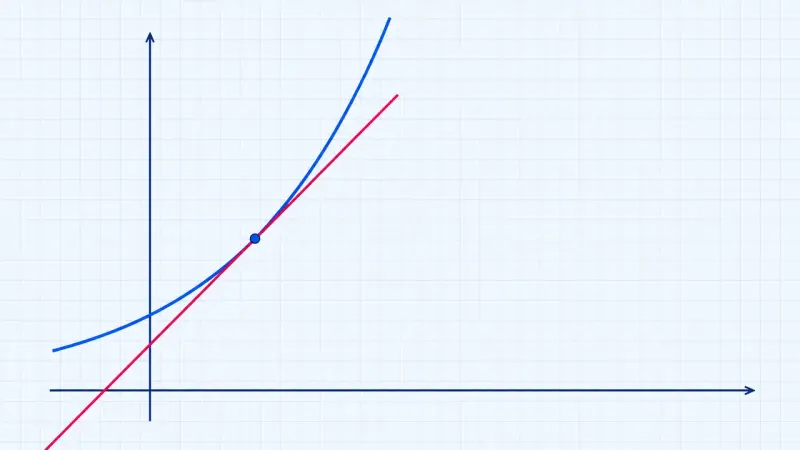
The natural exponential function
Why is the number e so special? For the exponential function, the graph and its derivative are exactly the same.
MathematicsNorth Rhine-Westphalia curriculum · Gymnasium
Qualification phase (G9: grades 12 and 13). The core curriculum distinguishes basic and advanced courses but does not distribute the content over half-years, so the units are the same for grades 12 and 13. The focal points of the advanced course are shown; “advanced course only” marks what the basic course leaves out. The letters A, G and S are the curriculum’s; the numbers are our own.
Exponential functions and the natural exponential function, product and chain rules, optimisation and reconstructing functions from conditions, and integral calculus up to the fundamental theorem.
Polynomial and exponential functions; advanced course only: general sine and cosine functions and the natural logarithm.
Why is the number e so special? For the exponential function, the graph and its derivative are exactly the same.

The logarithm answers the question: to what power do I raise the base to get this number? With graphs, rules and exponential equations.
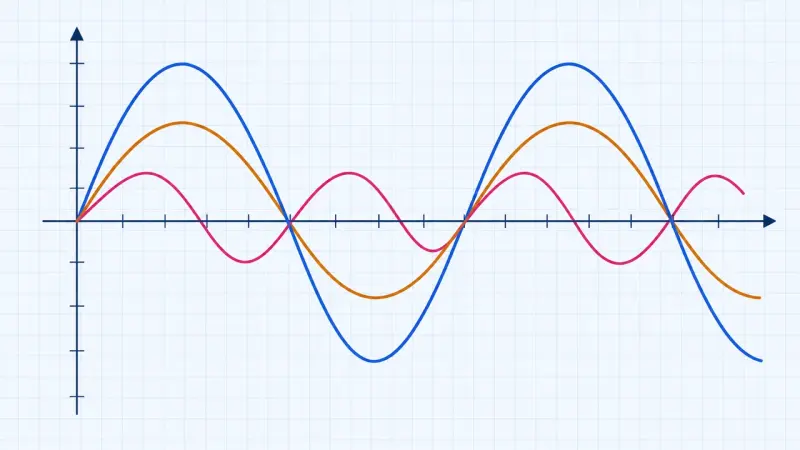
Up to three of your own functions at once, with a table of values, zeros and intersections. The tool for anything that can be a graph.
Shape, domain and range, zeros, symmetry, behaviour for large x and inverse functions (basic course using the square root function).
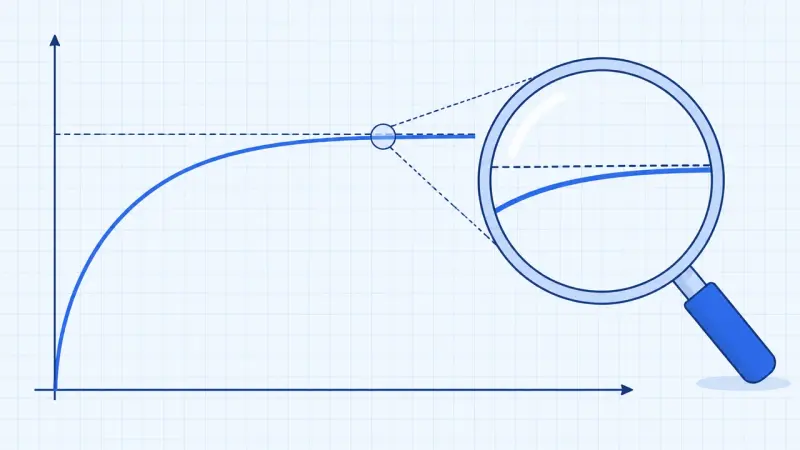
What happens to a graph when x gets very large? A point runs outwards and a magnifier shows how close it gets to the asymptote.
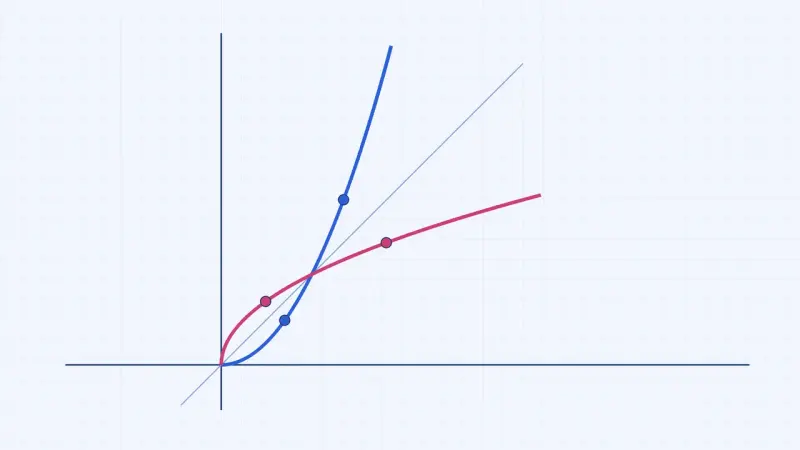
Reflect the graph in y = x and the inverse function appears. It only works if no function value occurs twice.
Product and chain rules, optimisation with constraints, reconstructing functions from conditions and functions with parameters (families of functions in the advanced course).

Which box holds the most, which can uses the least metal? Five everyday problems show how to find the best solution with the derivative.

One parameter, infinitely many graphs. Where do the maxima go as k grows? Along a curve of their own, the locus.

Analyse a graph step by step: zeros, maximum and minimum points, inflection points and where it rises or falls.
Riemann sums, signed area, accumulation, integral and antiderivative functions, definite integral and the fundamental theorem; advanced course only: improper integrals and volumes of revolution.
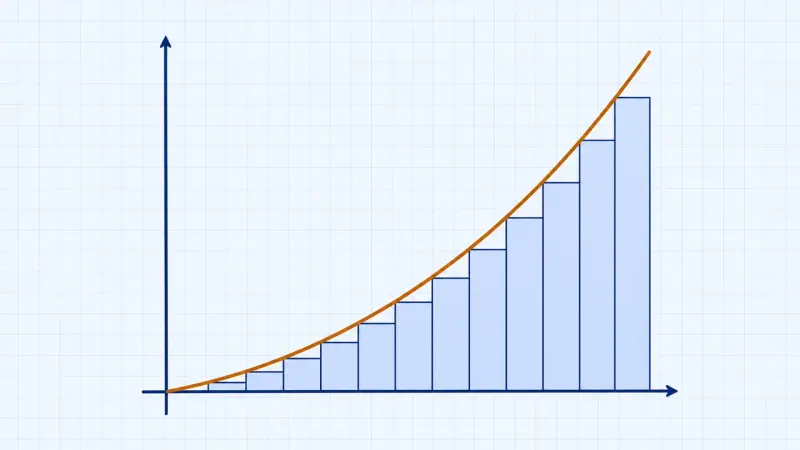
Fill the area under a graph with rectangles. The more rectangles, the more precisely you get the value of the integral.
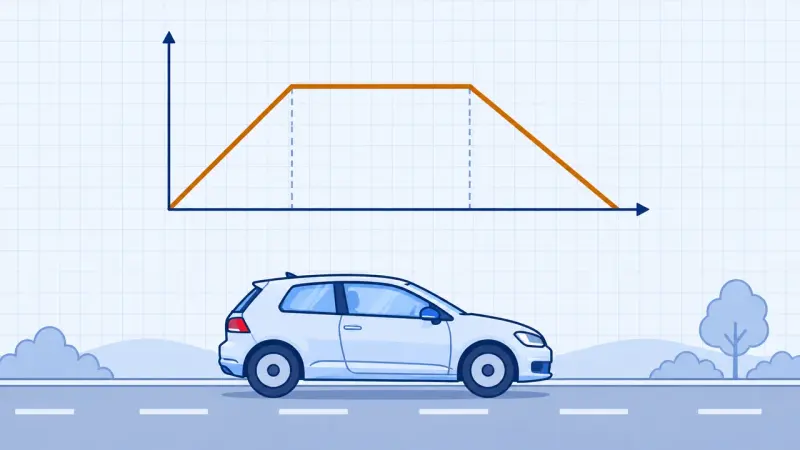
From the speed of a car you get the distance travelled: the area under the curve shows the total change.

The height of one graph becomes the slope of another. If you understand bank balances, the antiderivative comes quicker than you think.
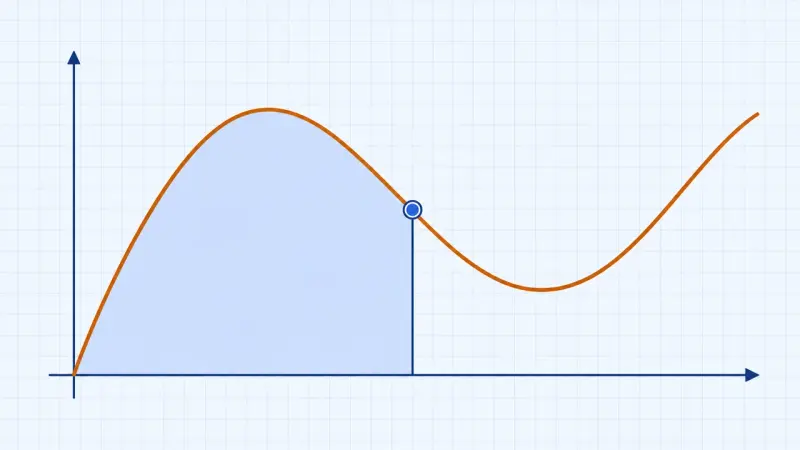
The area under a graph grows as you move along. Its rate of change is exactly the function itself: this is the fundamental theorem.
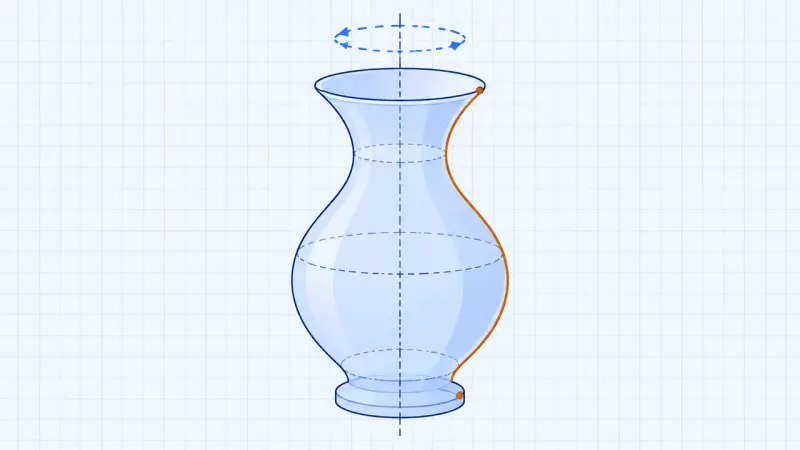
The area under a graph rotates about the x-axis and becomes a solid. Its volume is calculated with thin discs.
Dot product, planes in parametric and coordinate form, intersections and angles, systems of linear equations, and in the advanced course relative positions and distances.
Dot product: orthogonality, magnitude and angle between vectors.
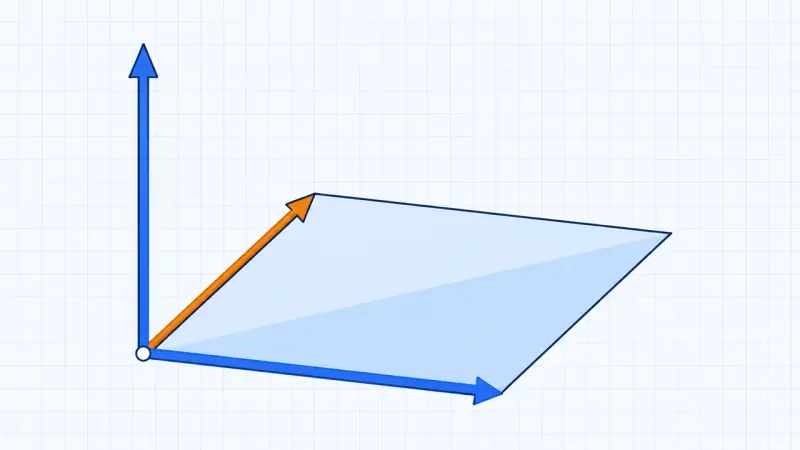
The dot product tells you the angle between two vectors; the cross product gives a perpendicular vector and an area.
Parametric form, coordinate form and normal vector (advanced course: normal form), orientation in space.
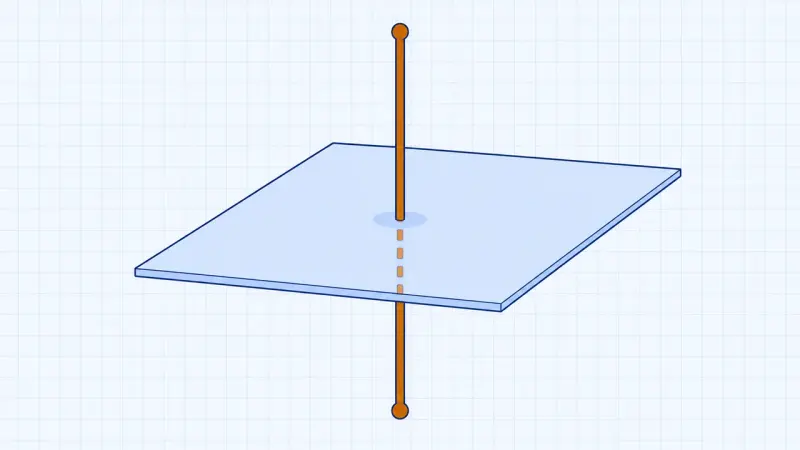
A point travels along a line through space, two vectors span a plane. Parametric, normal and coordinate forms all describe the same thing.
Angles between lines, between a line and a plane, and between planes.

Do the lines meet, run parallel or pass each other by? In a 3D space you can turn, intersections, angles and distances become visible.
Intersections of lines and planes.
Do the lines meet, run parallel or pass each other by? In a 3D space you can turn, intersections, angles and distances become visible.
A point travels along a line through space, two vectors span a plane. Parametric, normal and coordinate forms all describe the same thing.
Advanced course only: positions and distances of points, lines and planes in all combinations, reflections in planes.
Do the lines meet, run parallel or pass each other by? In a 3D space you can turn, intersections, angles and distances become visible.
An algorithmic method for up to three unknowns, interpreting solution sets.
No separate simulation is planned for this.
Multi-stage random experiments and conditional probabilities, random variables with expectation and spread, the binomial distribution, and in the advanced course prediction and confidence intervals and the normal distribution.
Urn models, tree diagrams, two-way tables, complementary events, conditional probabilities, independence and path rules.

A two-way table, a Venn diagram and a tree diagram show the same data and are linked. Change one and the others follow.
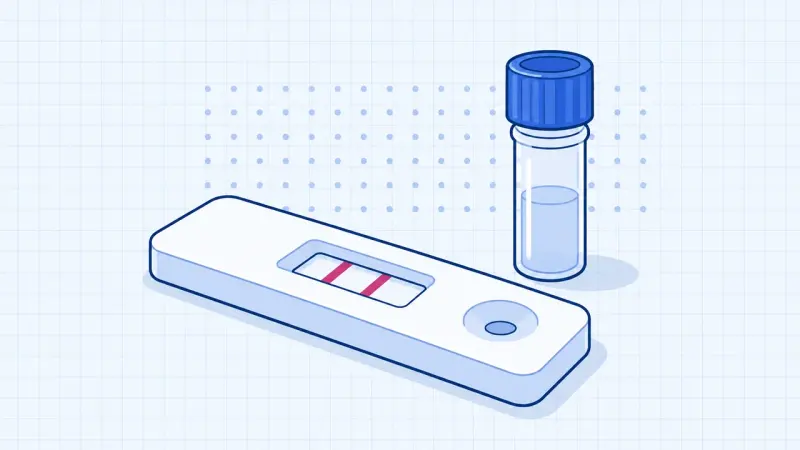
A medical test is positive, but how likely is it that you are really ill? 1000 people show why the answer is often surprising.

How likely is it that two people in a class share a birthday? From just 23 people on, it is more likely than not.
Expected value, variance and standard deviation.

The histogram of the binomial distribution: choose a range and read off the probability directly.
Probability distributions and their measures.
No separate simulation is planned for this.
Measures and histograms, the effect of n and p; advanced course only: binomial coefficient and sigma rules.
The histogram of the binomial distribution: choose a range and read off the probability directly.
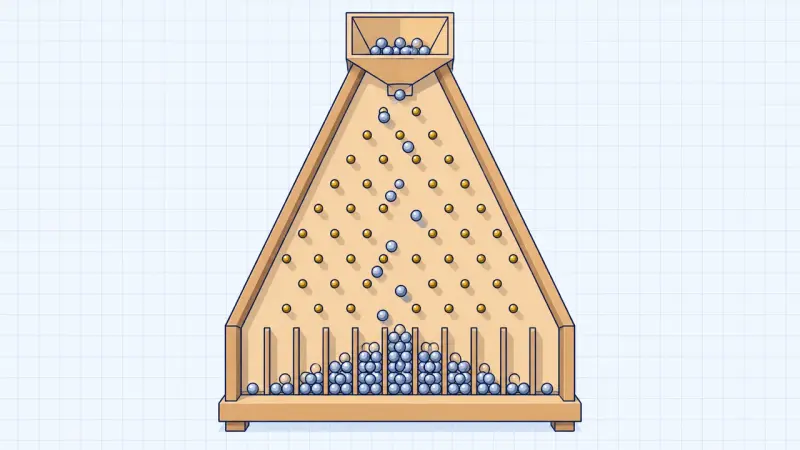
Left or right at every pin, purely by chance. Yet every time the balls pile up into the same bell shape.
Advanced course only: prediction interval, confidence interval and required sample size.
No separate simulation is planned for this.
Advanced course only: density function (Gaussian bell curve), parameters μ and σ and the cumulative distribution function as an integral function.
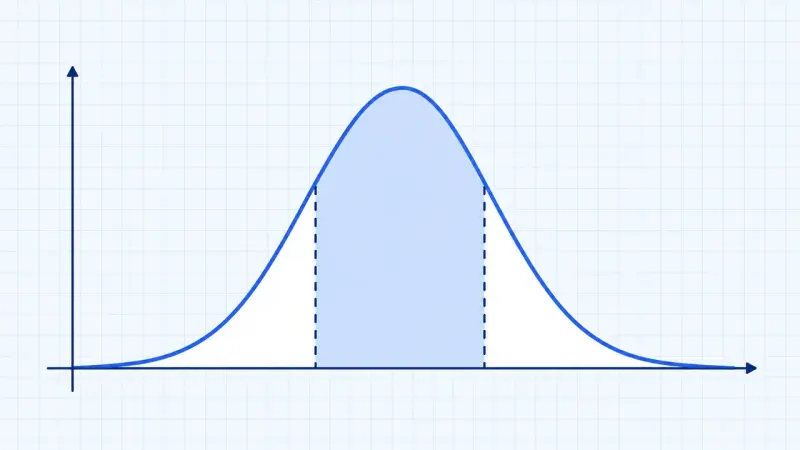
How many bottles are underfilled? Under the bell curve every probability is an area, with the sigma rules as a rule of thumb.
The summaries describe the curriculum in our own words. The original text is authoritative. Original text (German): Kernlehrplan, Gymnasium, Mathematics, grade 12/13