

Place value and rounding
Ten counters make a ten, ten tens make a hundred. Once you have seen the bundling, reading millions and rounding them is no longer a mystery.
Grade 5: the framework curriculum for grades 1–10 is organised by levels A–H, not by grades; schools that start in grade 5 work at level C–D in grade 5. In Berlin the Gymnasium usually starts in grade 7; some start in grade 5. Units are the subject areas, sub-units their topics; the numbers are our own.
Large natural numbers in the place-value chart, divisibility rules, primes, multiples and divisors; fractions as parts, expanding, simplifying, comparing and ordering them on the number line; decimals.
Ten counters make a ten, ten tens make a hundred. Once you have seen the bundling, reading millions and rounding them is no longer a mystery.

Break numbers down into prime factors, check divisibility rules and find primes with a sieve. This also gives you the gcd and the lcm.
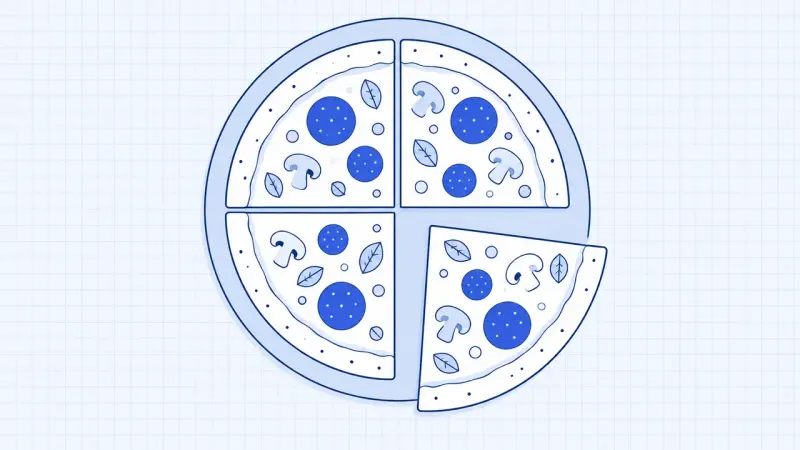
Pizza, cake or a line: share it out fairly first, then colour some pieces. That is exactly what a fraction means.

Compare two fractions as bars or circles. When you expand a fraction, the pieces get smaller but the amount stays the same.
Understanding and carrying out the four operations with fractions, fractions as operators, order of operations and brackets, written methods and estimating.

An expression drawn as a tree: whatever hangs lowest is calculated first. The order of operations stops being a rule and becomes visible.
Distinguishing, measuring and estimating lengths, areas, volumes and angles, converting units and giving quantities as decimals.

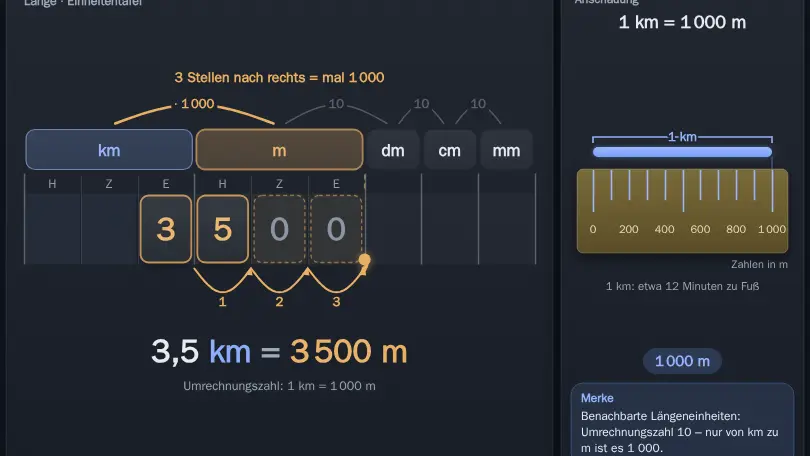
3.5 km is 3500 m, but 3.5 m² is 35,000 cm². The unit table shows why the decimal point jumps twice as far for areas.

Line up the protractor, hit the zero point, read the right scale. The estimation game then shows how well your eye already measures.
Calculating the perimeter of polygons, the area of rectangles and the volume of cuboids, also composite ones; quantities in word problems.
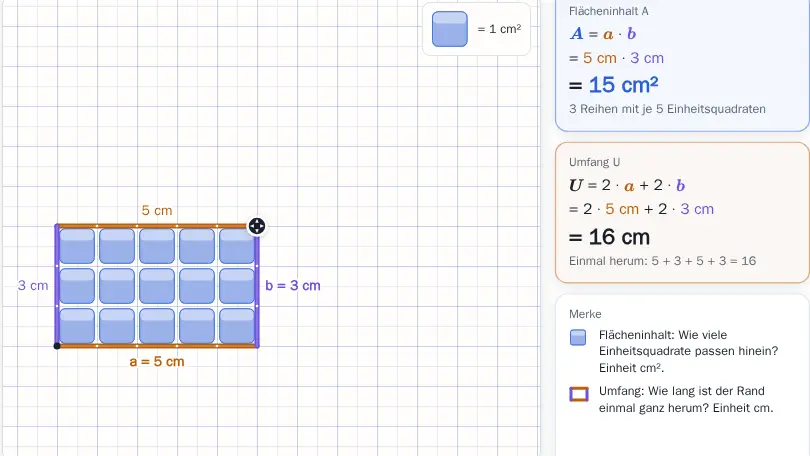

Count the squares or walk once around? An ant makes the difference between area and perimeter tangible.
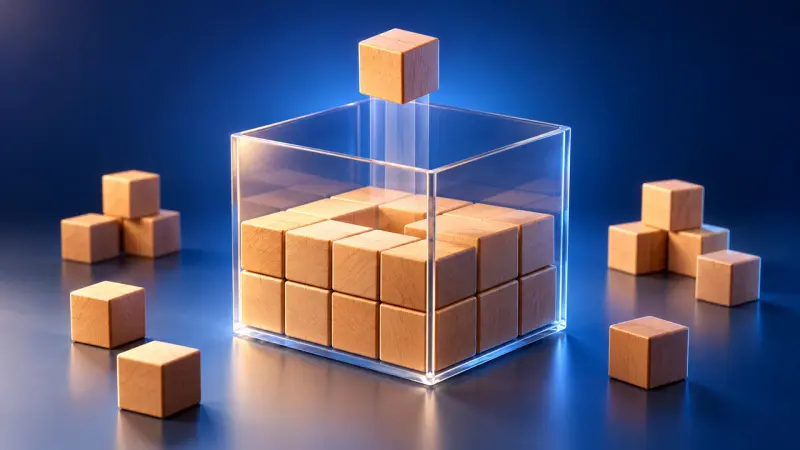
First a row of cubes, then a layer, then the whole cuboid. Length times width times height follows naturally from filling it.
Describing solids, angles and triangles, quadrilaterals and how they relate (“house of quadrilaterals”), angles at intersecting lines, nets, drawing in the coordinate system.
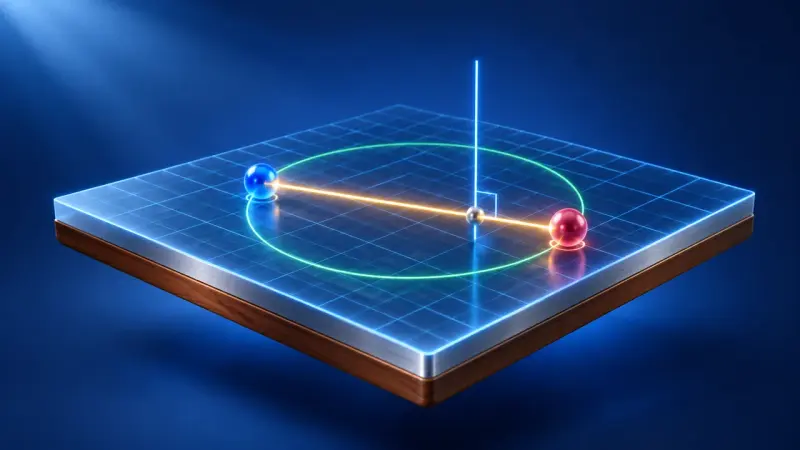
Place and read points in a coordinate system, draw segments and lines and check whether they are parallel or perpendicular.

Move one corner and the square becomes a kite. When does a quadrilateral get which name?

Two lines cross and one of them turns. Which angles stay equal? At parallel lines they are called corresponding and alternate angles.

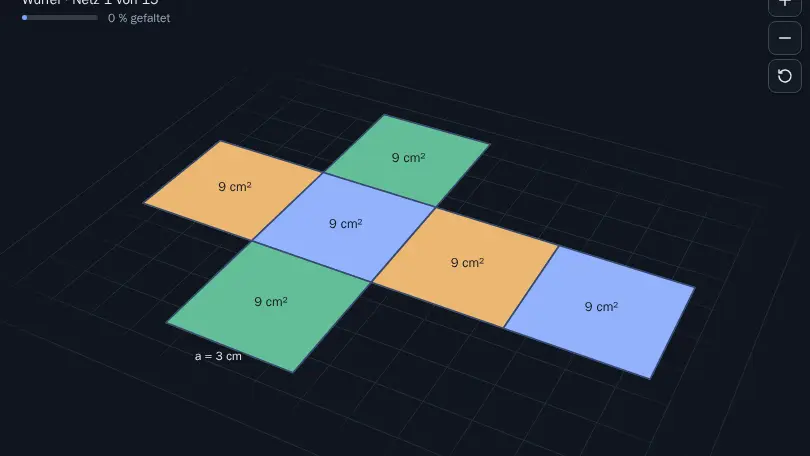
Fold nets of a cube, cuboid, prism, pyramid and cylinder into a solid in 3D and calculate the surface area.
Recognising congruent figures, drawing reflections and translations, making tessellations.

In a line or in a point: the shape flips over, and every construction step with the set square stays visible.
Representing situations by numerical terms and equations, variables as placeholders, using the laws of arithmetic and solving simple equations with the inverse operation.
An expression drawn as a tree: whatever hangs lowest is calculated first. The order of operations stops being a rule and becomes visible.
Recording measurements and showing them in tables and charts, finding minimum, maximum and range.
Matching simulations are listed under Grade 6, Grade 7, Grade 8, Grade 9
Solving counting problems systematically, giving relative frequencies of single-stage experiments as fractions.

How many outfits or ice cream combinations are there? A tree diagram grows step by step and shows why you multiply the options.
The summaries describe the curriculum in our own words. The original text is authoritative. Original text (German): Rahmenlehrplan, Gymnasium, Mathematics, grade 5