

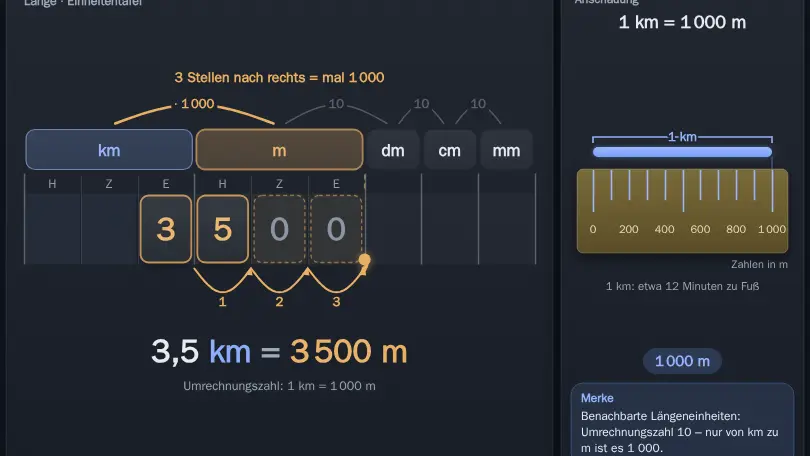
Converting units with a place-value chart
3.5 km is 3500 m, but 3.5 m² is 35,000 cm². The unit table shows why the decimal point jumps twice as far for areas.
Understand units, area, volume and surface area: decompose, complete, tile and rotate solids.
3.5 km is 3500 m, but 3.5 m² is 35,000 cm². The unit table shows why the decimal point jumps twice as far for areas.
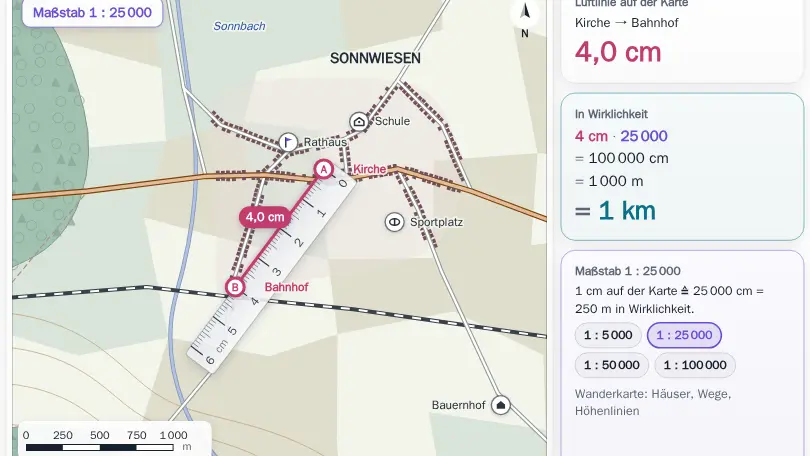

Measure on a map with a ruler and use the scale to work out the real distance.
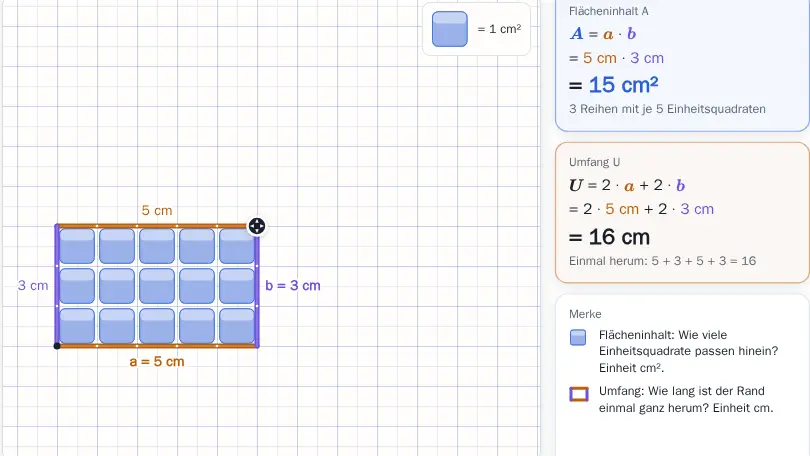

Count the squares or walk once around? An ant makes the difference between area and perimeter tangible.
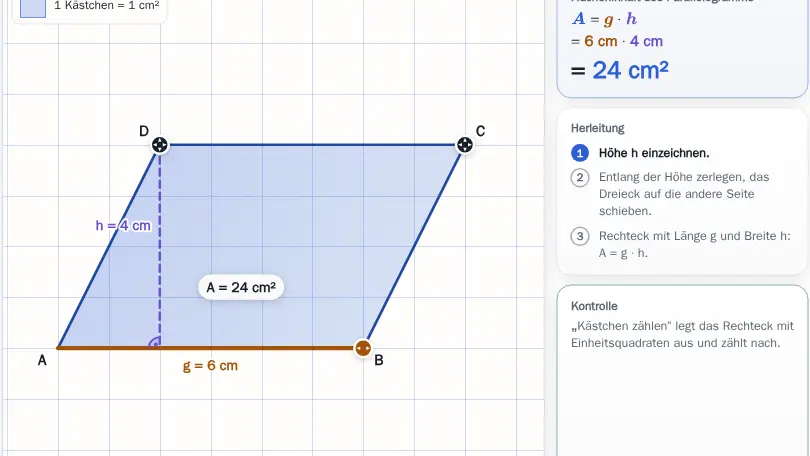
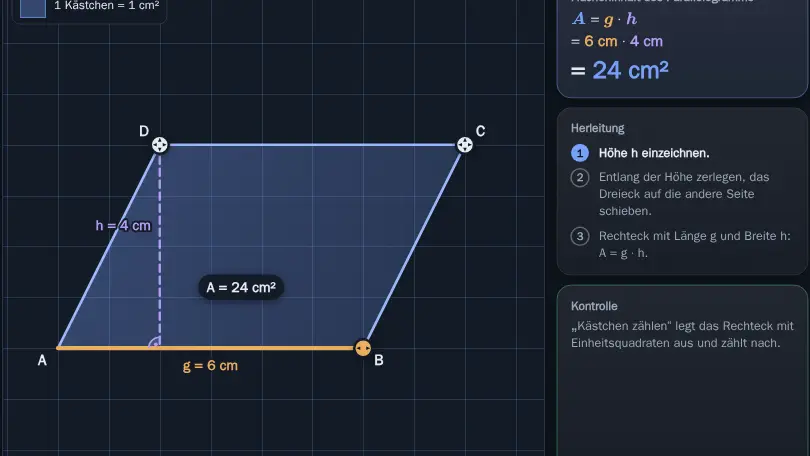
Cut off a triangle and put it on the other side: the parallelogram becomes a rectangle. Triangles and trapeziums work the same way.

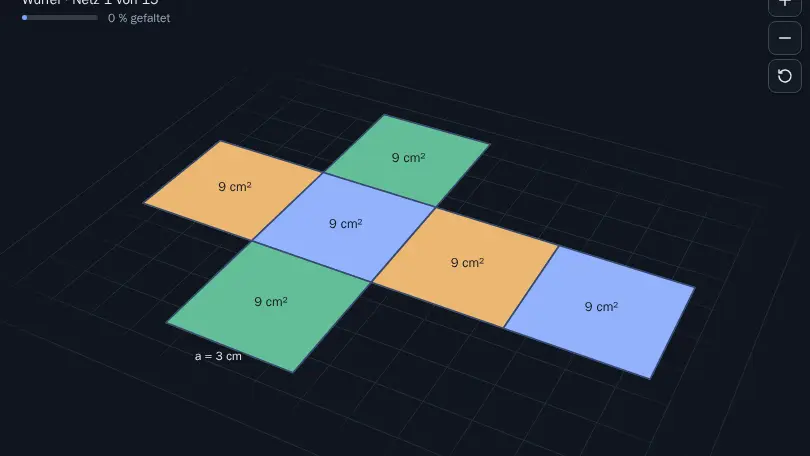
Fold nets of a cube, cuboid, prism, pyramid and cylinder into a solid in 3D and calculate the surface area.
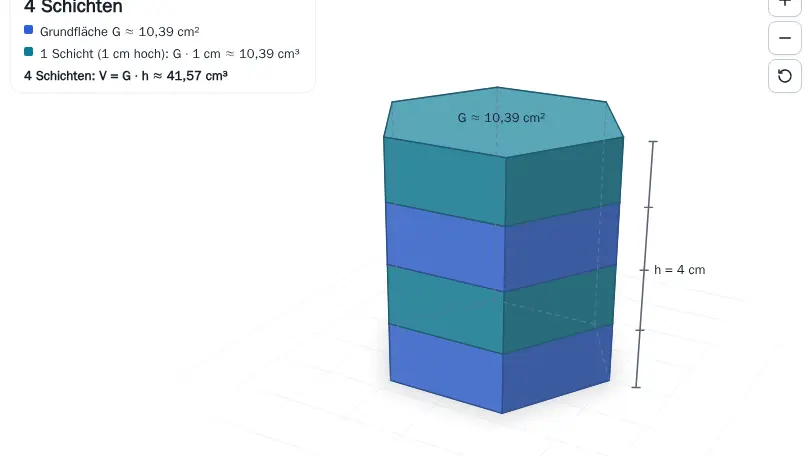
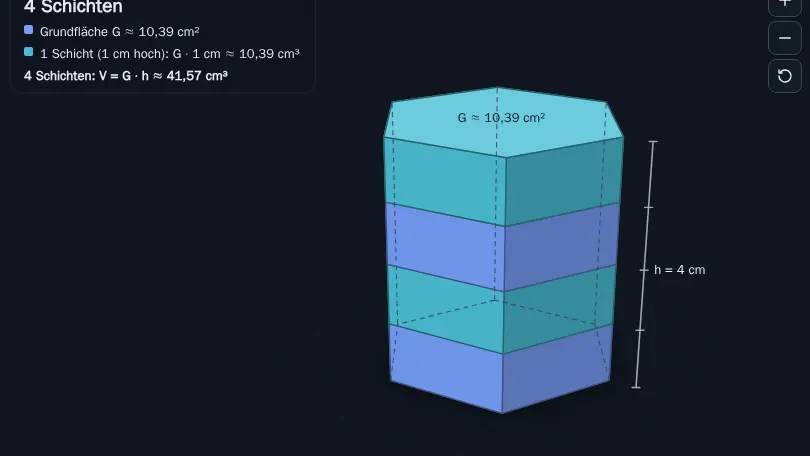
Layer by layer a prism grows upwards, and the curved surface of a cylinder unrolls into a rectangle.

Pour three times and the prism is full: a pyramid holds exactly one third. Cones and spheres can be turned and measured in 3D.

Push a stack of coins sideways: the shape changes, but the volume stays the same. This is Cavalieri's principle.
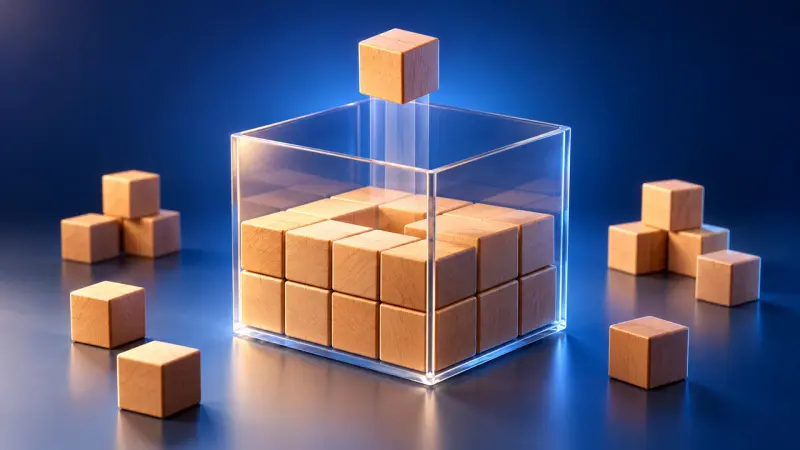
First a row of cubes, then a layer, then the whole cuboid. Length times width times height follows naturally from filling it.

A wheel rolls once and travels a bit more than three times its diameter. Cut into pieces, the circle becomes a rectangle and the area formula follows.